
Bio Green Foods / Food Ingredients & Additives
Unsere Lebensmittelzutaten
Entdecken Sie unser Sortiment an Konservierungsstoffen, Säuerungsmitteln, Süßungsmitteln, Hydrokolloiden und Phosphaten
Zeige 61–80 of 94 Produkte
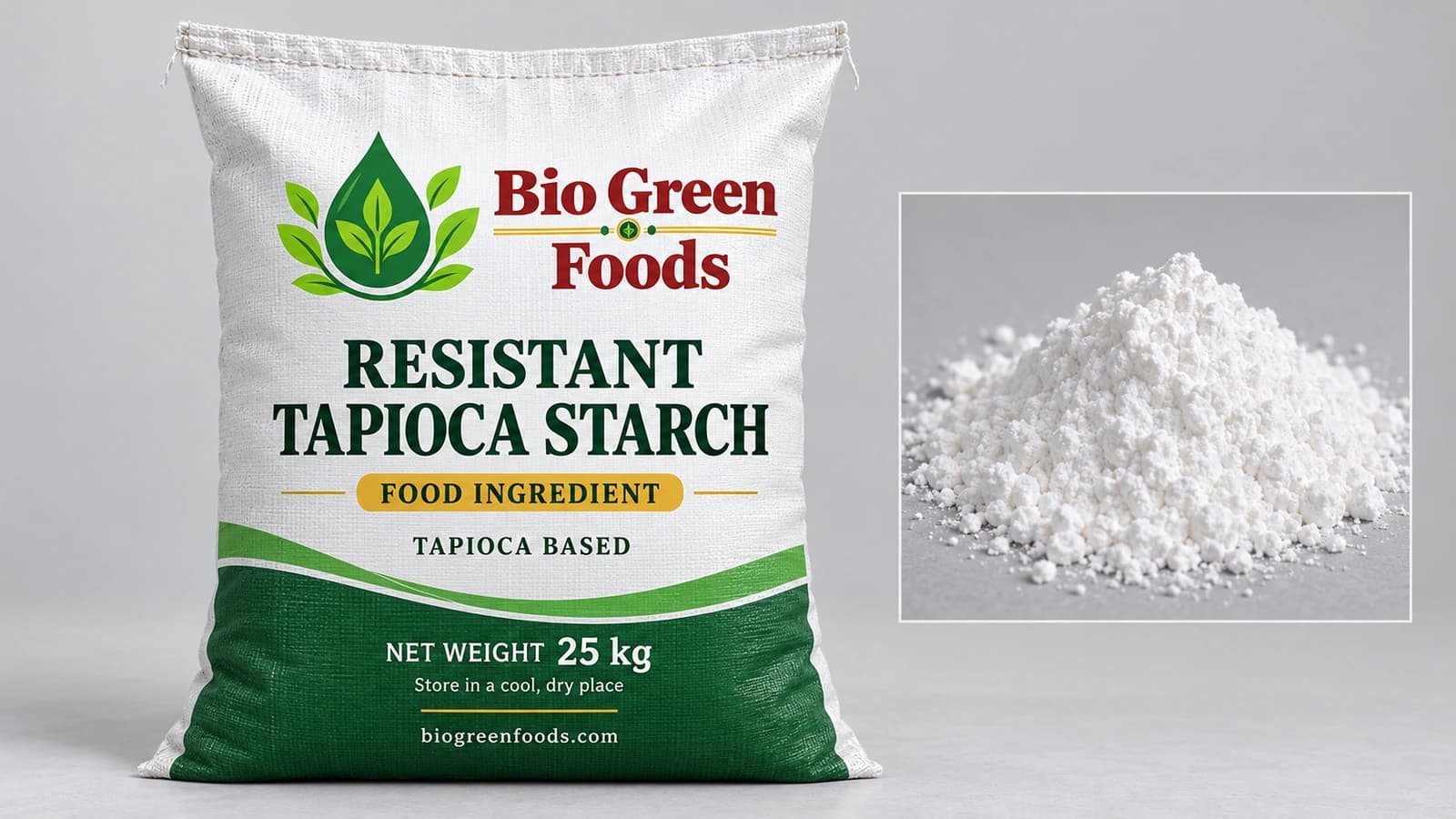
Resistente Tapiokastärke
Tapiokastärke, die unverdaut in den Dickdarm gelangt und auf dem Etikett als Ballaststoff zählt. Ein weisses, geschmacksneutrales Pulver mit geringer Wasserbindung, das Ballaststoffe erhöht und verfügbare Kohlenhydrate senkt, ohne die Texturnachteile von Kleie oder Inulin.
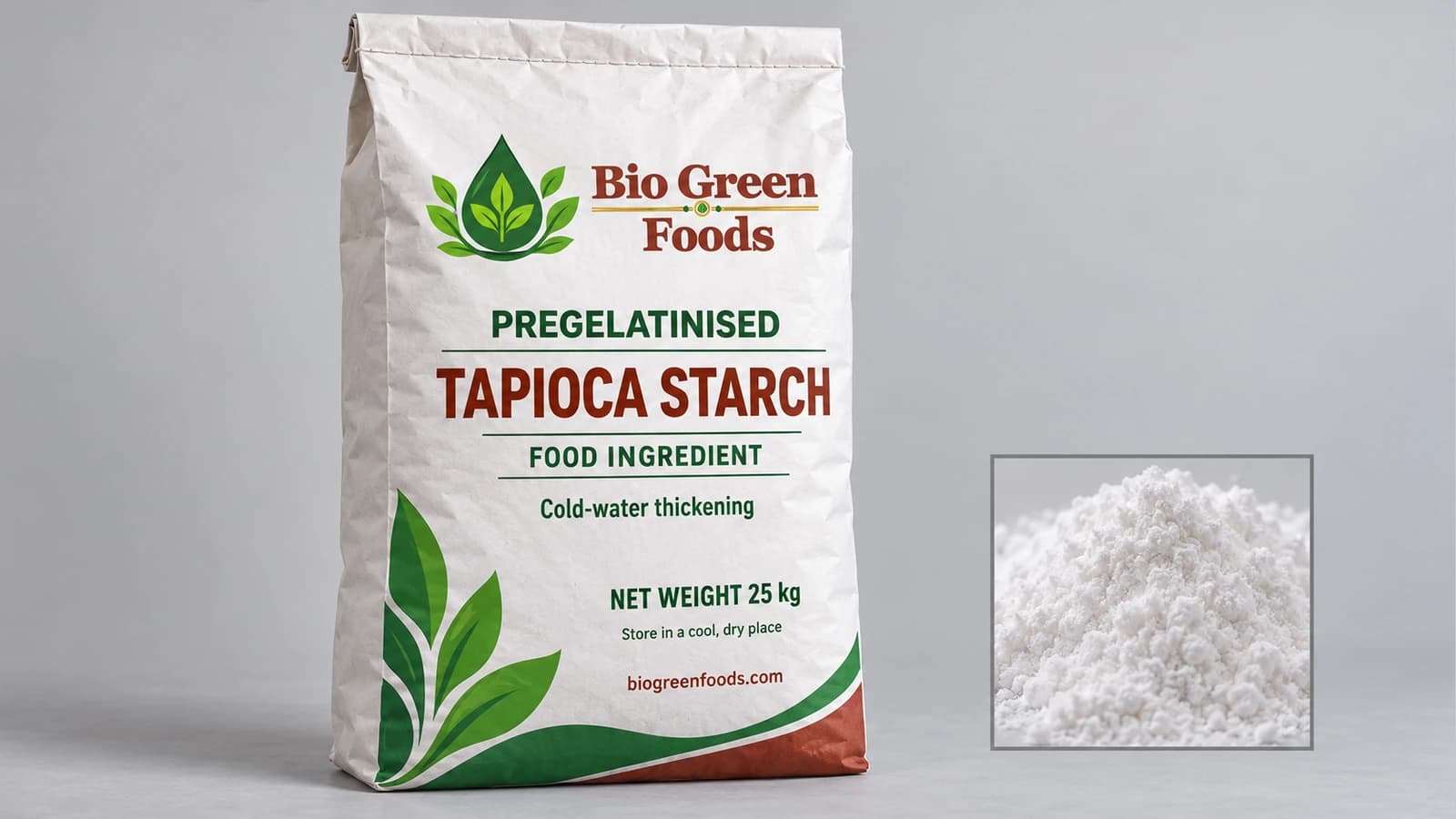
Vorverkleisterte Tapiokastärke
Bereits gekochte und getrocknete Tapiokastärke, die in kaltem Wasser ohne jede Wärmezufuhr quillt und andickt. Geliefert mit 8 Prozent Feuchte gegenüber 14 Prozent bei den ungekochten Qualitäten.
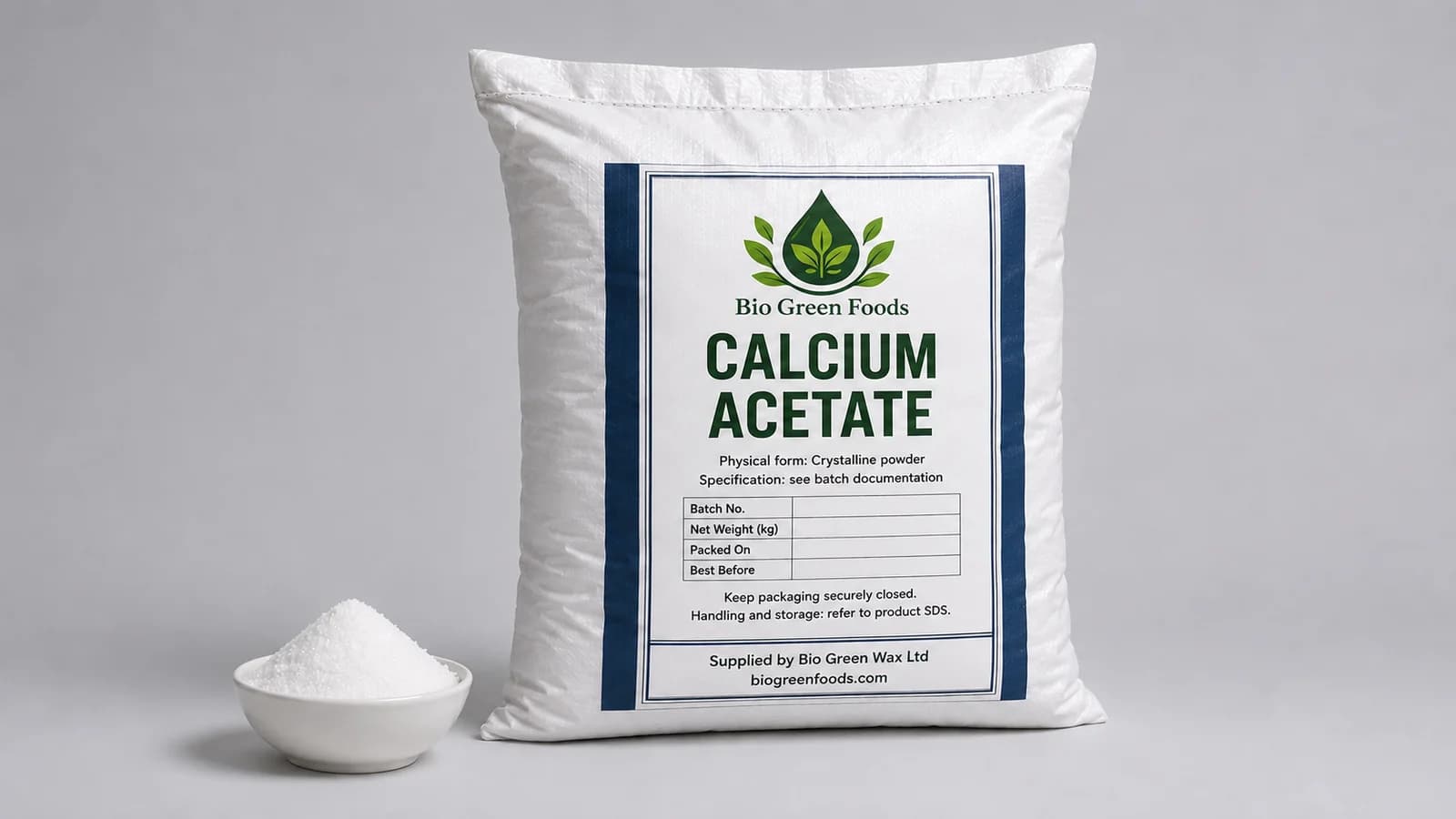
Calciumacetat
Calciumacetat (E263, CAS 62-54-4) ist das Calciumsalz der Essigsäure, ein weißes hygroskopisches Pulver. In Lebensmitteln wirkt es an zwei Fronten zugleich: Es hemmt Schimmel und Fadenziehen in Brot und liefert zugleich Calcium und festigt pflanzliches Gewebe.
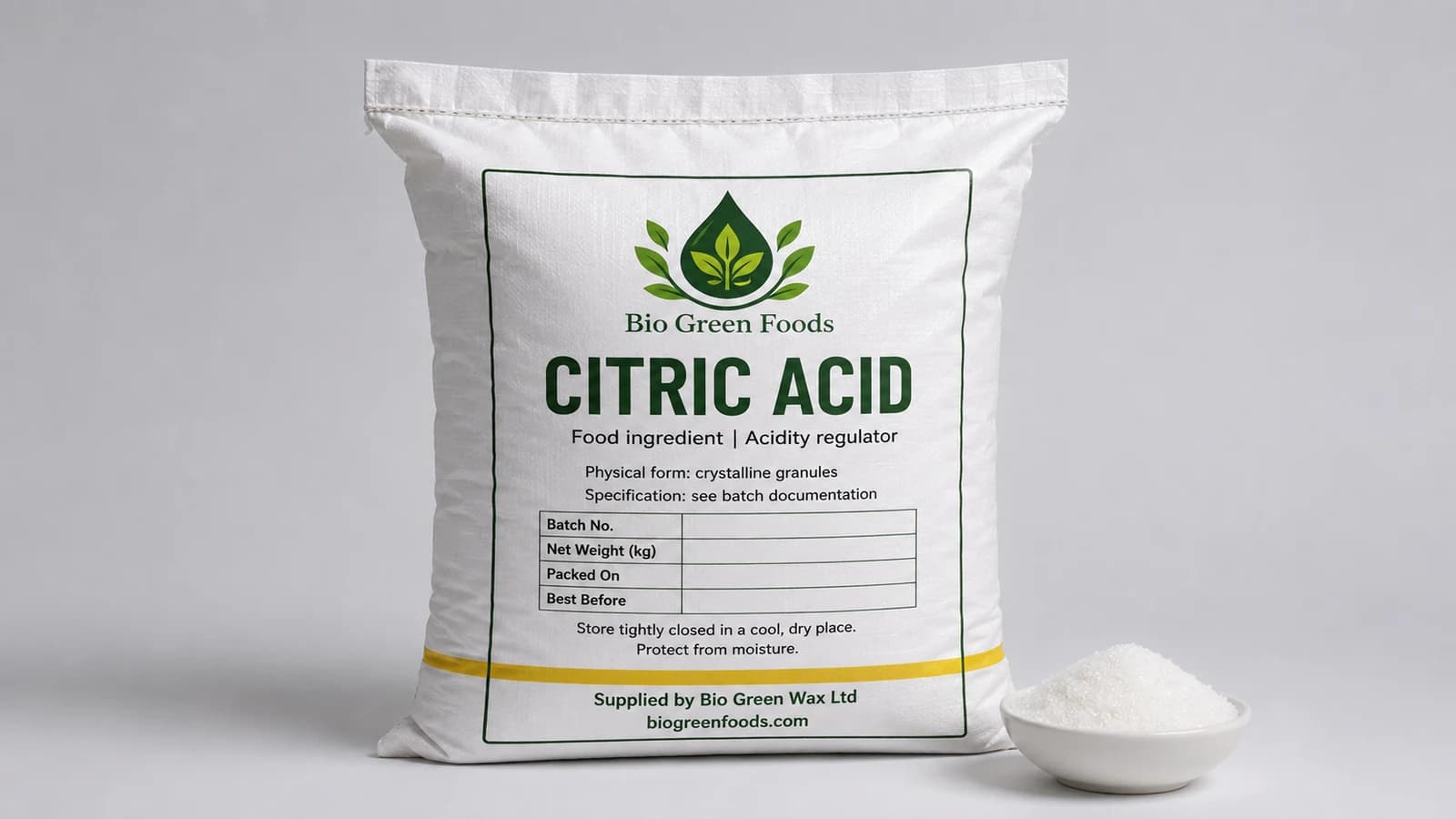
Citronensäure
Citronensäure (E330, CAS 77-92-9) ist das weltweit am häufigsten eingesetzte Säuerungsmittel für Lebensmittel. Sie wird durch Fermentation von Zucker mit Aspergillus niger hergestellt, verleiht einen klaren sauren Geschmack, reguliert den pH-Wert und bindet Metallionen, die andernfalls Geschmack und Farbe beeinträchtigen würden.
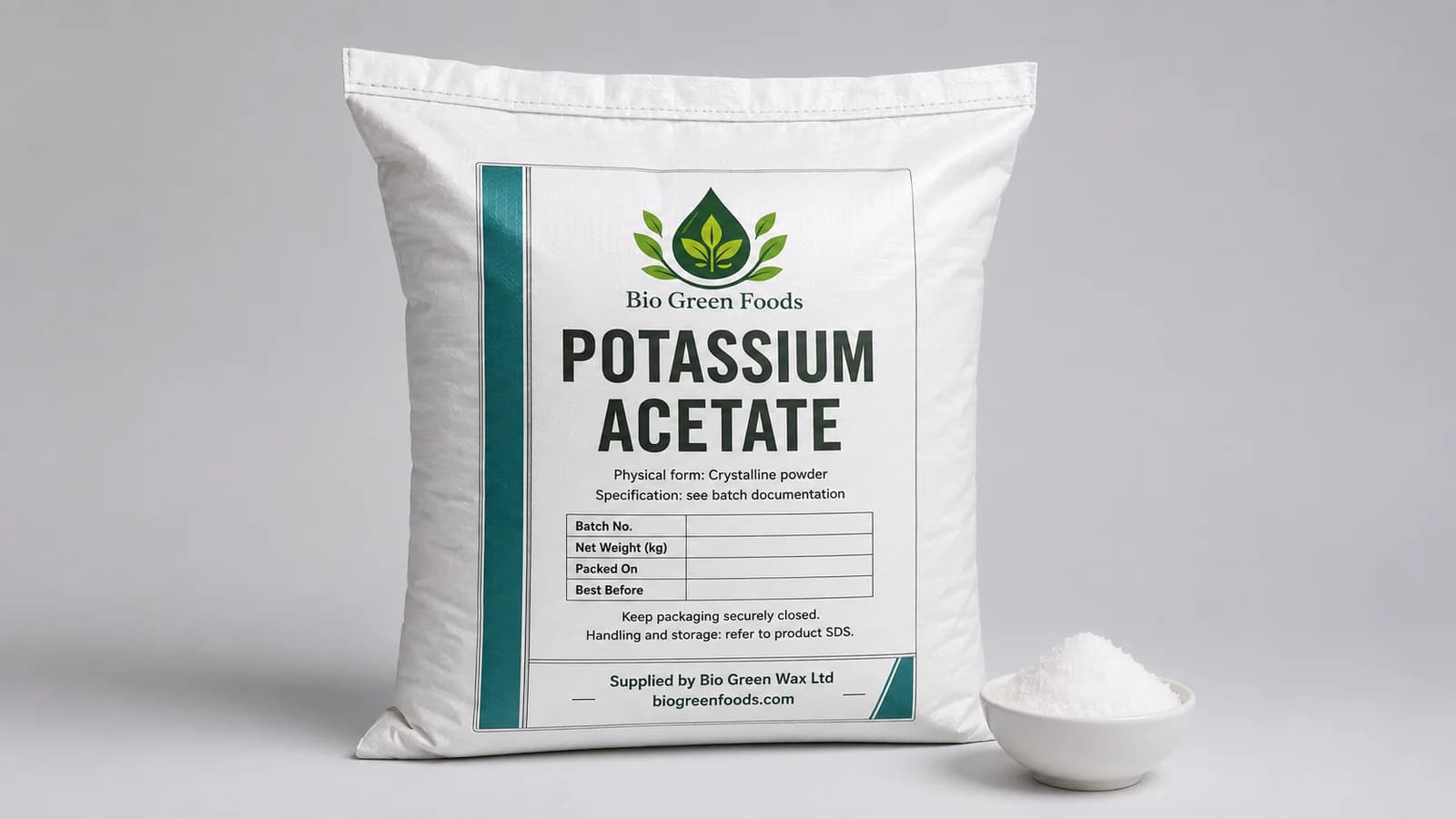
Kaliumacetat
Kaliumacetat (E261, CAS 127-08-2) ist das Kaliumsalz der Essigsäure, ein weißer, zerfließlicher Feststoff. Es puffert den Säuregrad und hemmt das mikrobielle Wachstum, wobei es Kalium statt Natrium einträgt, was für Rezepturumstellungen zur Salzreduktion geeignet ist.
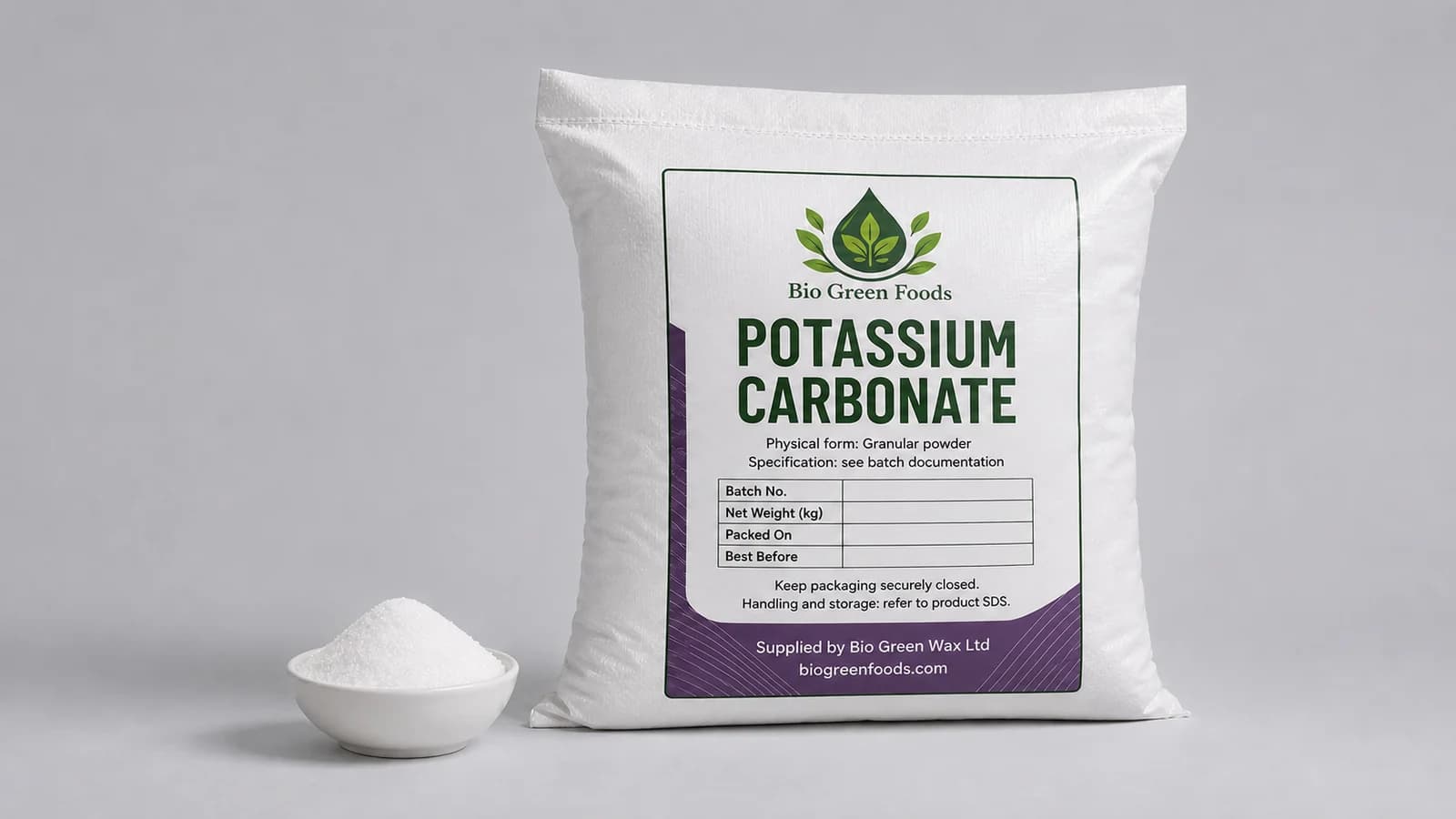
Kaliumcarbonat
Kaliumcarbonat (E501i, CAS 584-08-7) ist ein stark alkalisches weißes Salz, historisch Pottasche genannt. In Lebensmitteln wird es dort eingesetzt, wo die Alkalität selbst das Ziel ist: Alkalisieren von Kakao, elastische Ramen-Nudeln und beschleunigtes Trocknen von Weintrauben.
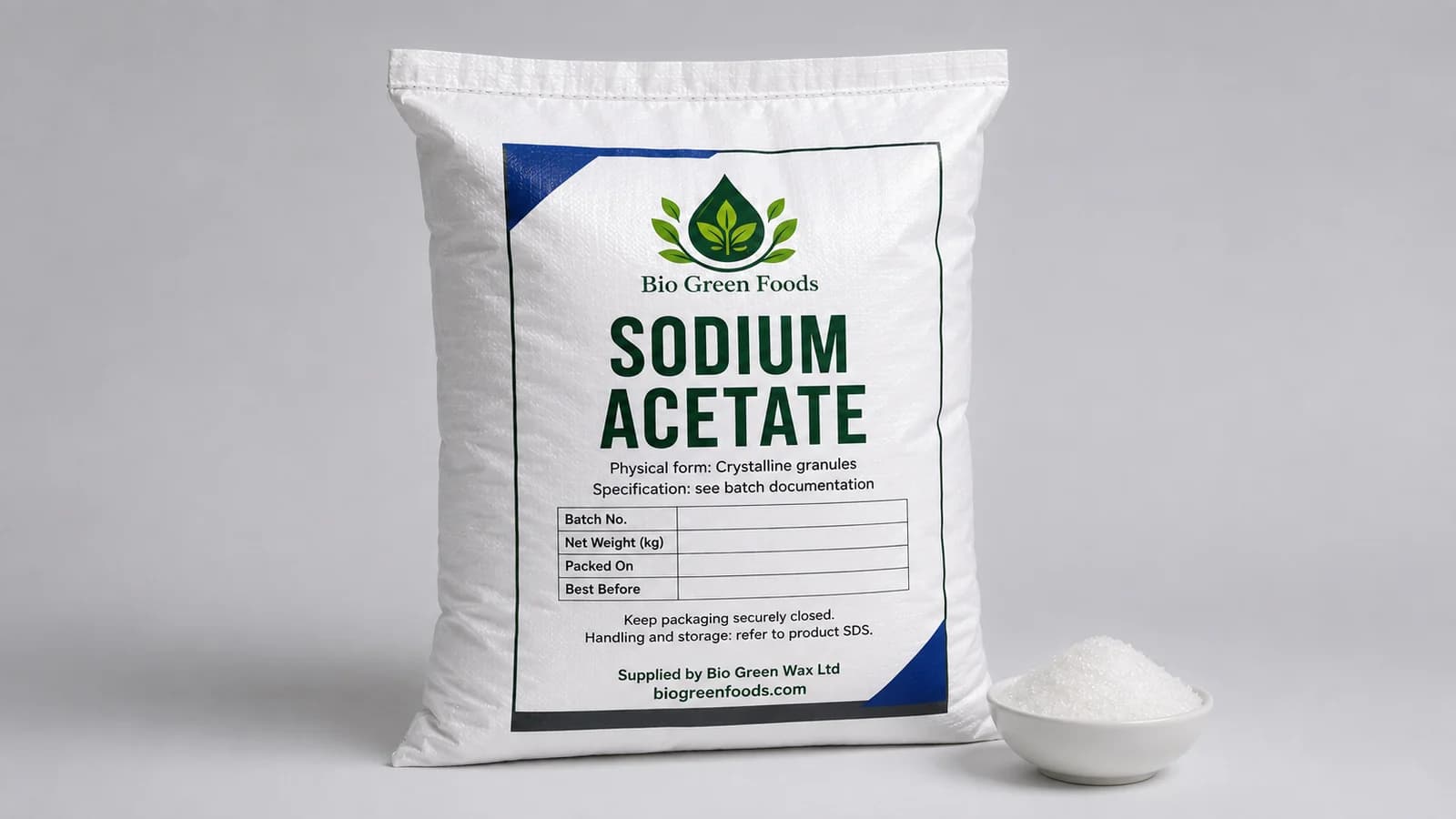
Natriumacetat
Natriumacetat (E262i, CAS 127-09-3) ist das Natriumsalz der Essigsäure. Zusammen mit seiner Diacetat-Form liefert es die Essignote in Salz-Essig-Würzungen und ist ein übliches antimikrobielles Mittel in verzehrfertigem Fleisch.
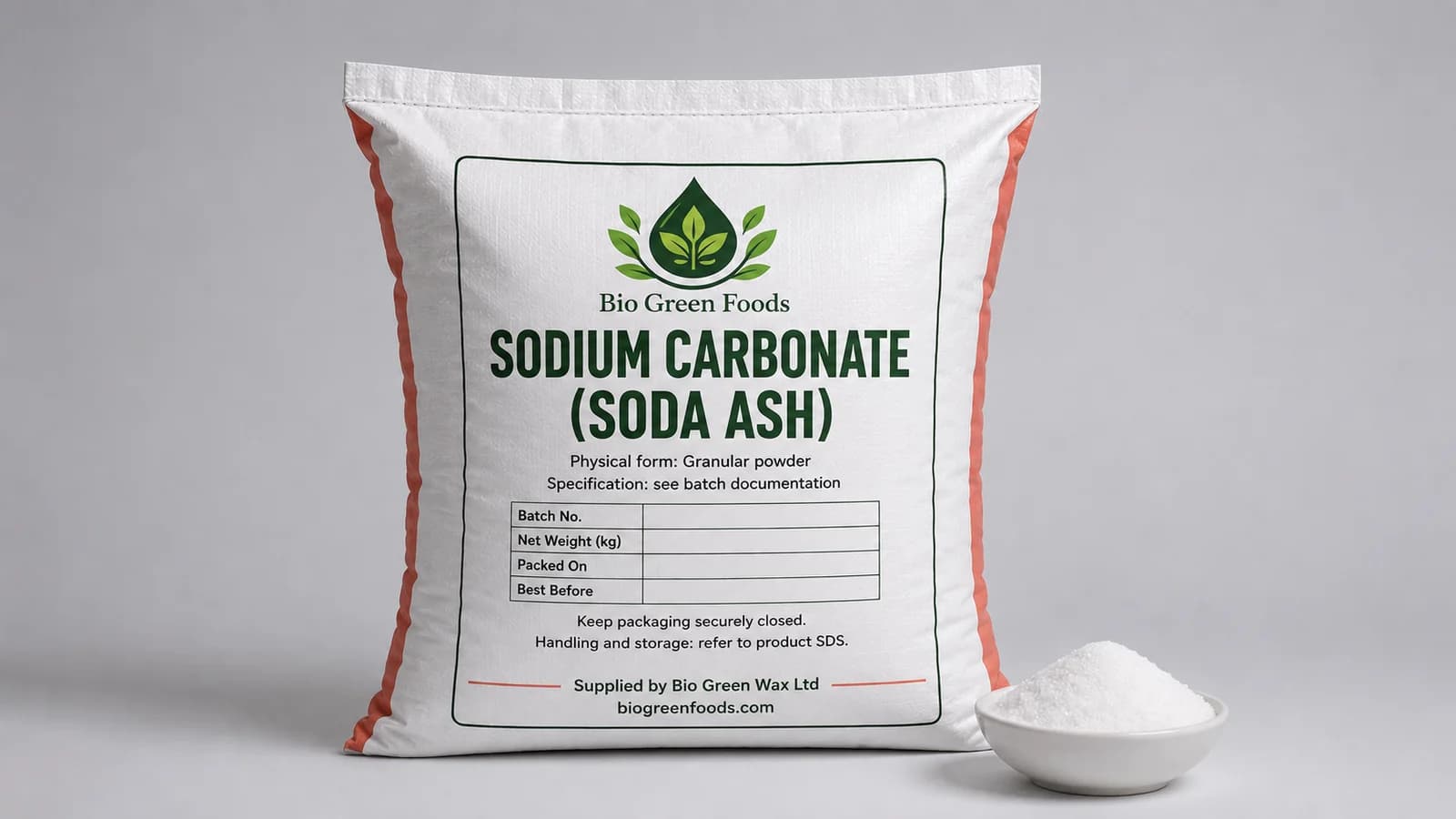
Natriumcarbonat (Soda)
Natriumcarbonat (E500i, CAS 497-19-8), allgemein als Soda bezeichnet, ist deutlich alkalischer als Bicarbonat. In Lebensmitteln dient es der alkalischen Behandlung und nicht der Lockerung, insbesondere bei der Nudelherstellung und in der Kakaoverarbeitung.
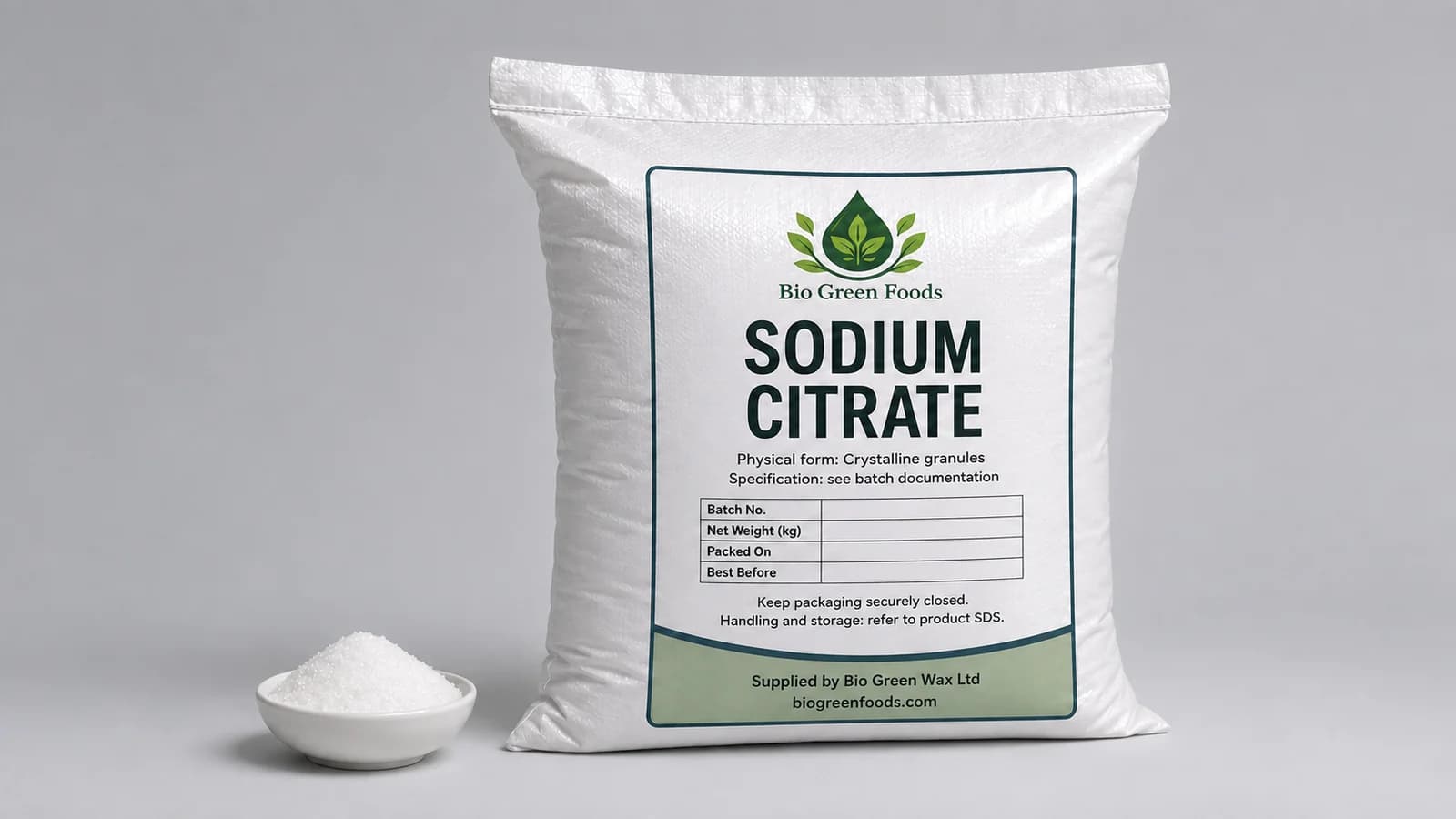
Natriumcitrat
Natriumcitrat (E331, CAS 68-04-2) ist das Natriumsalz der Citronensäure und wird als Puffer, Komplexbildner und Schmelzsalz eingesetzt. Es ist die Zutat, die aus gewöhnlichem Hartkäse eine glatte, nicht brechende Käsesauce möglich macht.
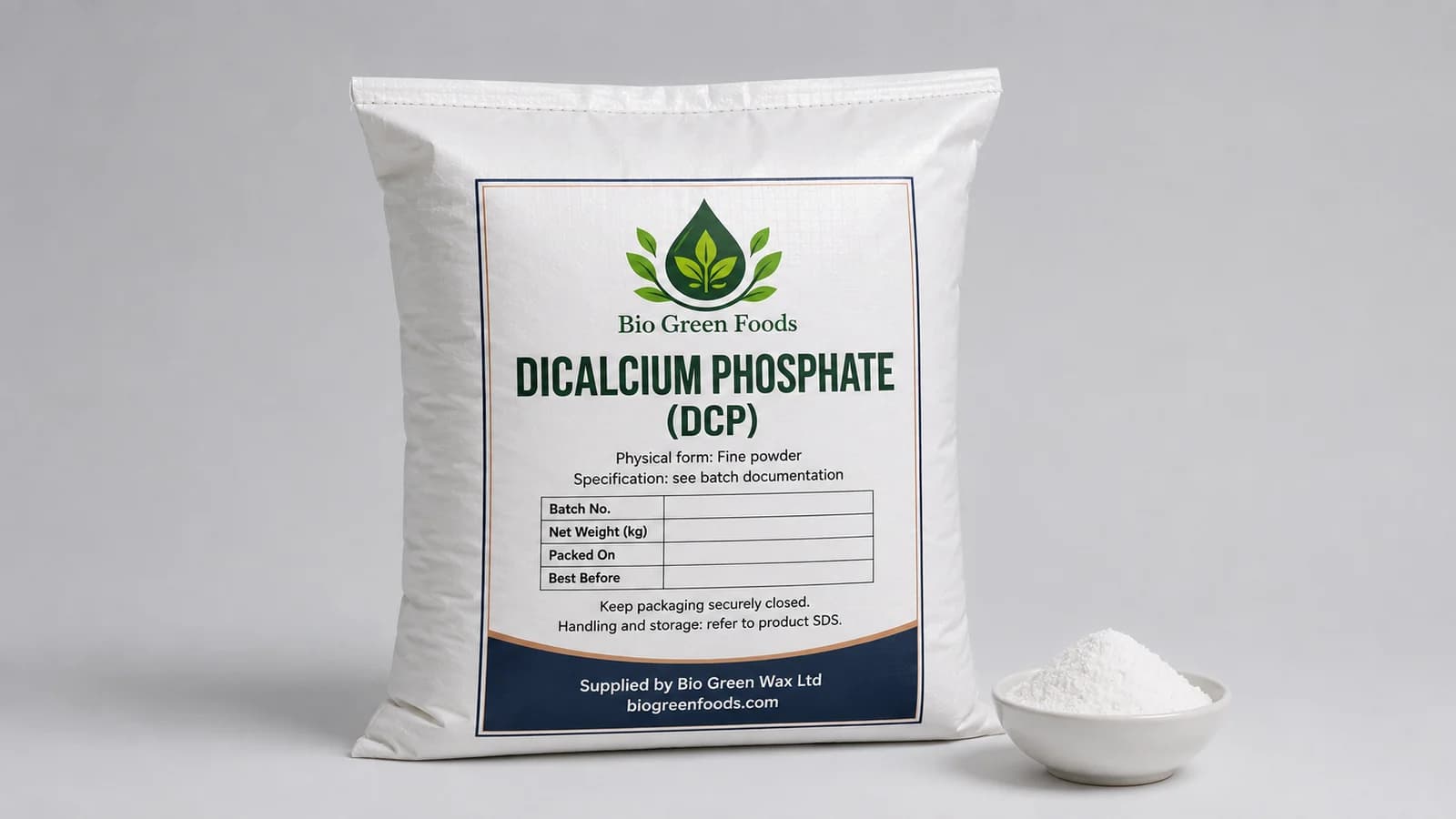
Dicalciumphosphat (DCP)
Dicalciumphosphat (E341ii, CAS 7757-93-9) ist Calciumhydrogenphosphat, ein weißes, unlösliches Pulver. Es dient sowohl der Anreicherung mit Calcium und Phosphor als auch als langsam wirkendes Backtriebsäuerungsmittel, das das Gas spät freisetzt, nämlich beim Backen und nicht beim Mischen.
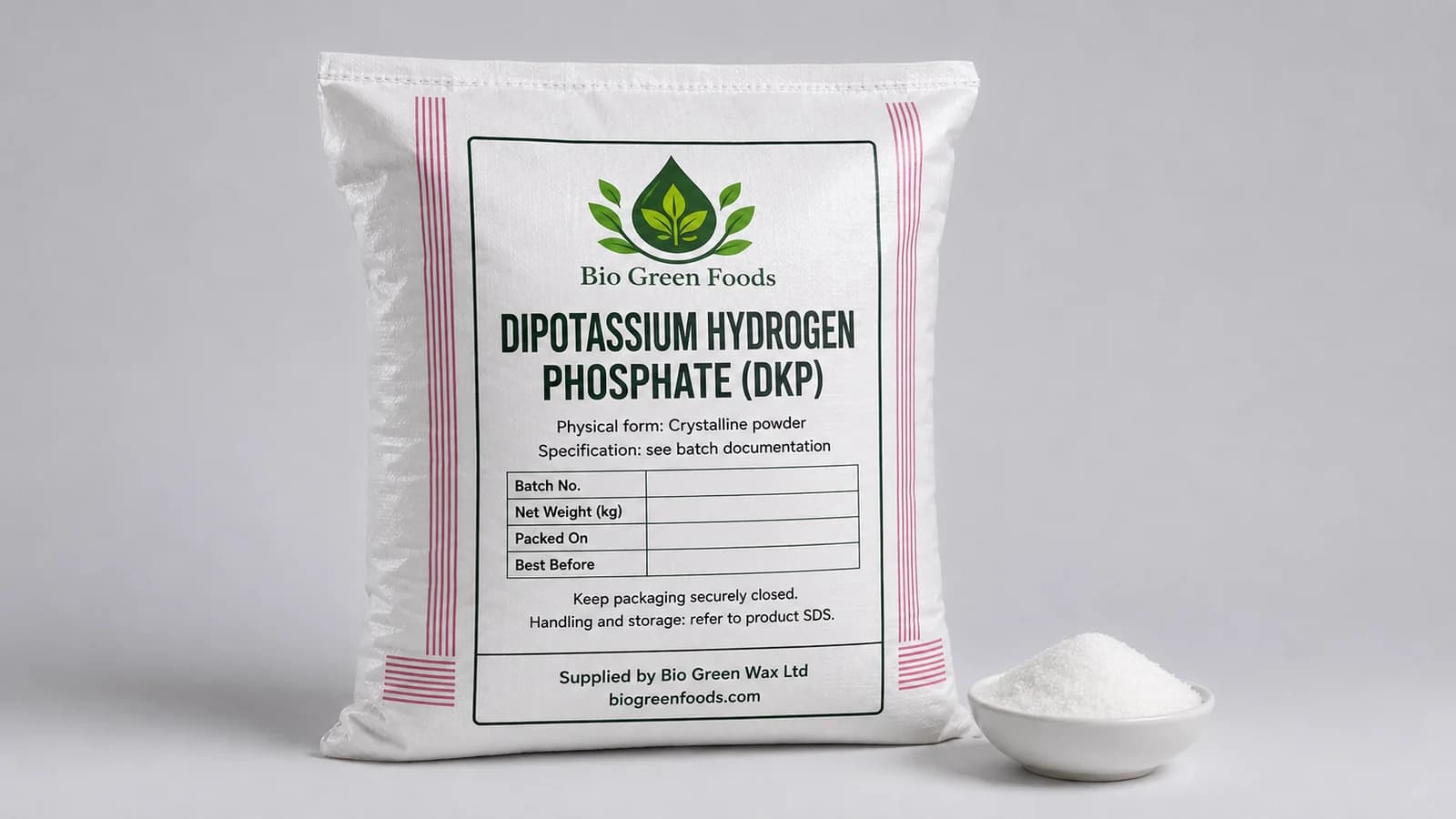
Dikaliumhydrogenphosphat (DKP)
Dikaliumhydrogenphosphat (E340ii, CAS 7758-11-4) ist ein alkalisches Puffersalz. Seine bekannteste Aufgabe ist es, das Ausflocken (Feathering) von Kaffeeweißer beim Einrühren in heißen Kaffee zu verhindern, indem es den pH-Wert oberhalb des Punktes hält, an dem die Proteine gerinnen.
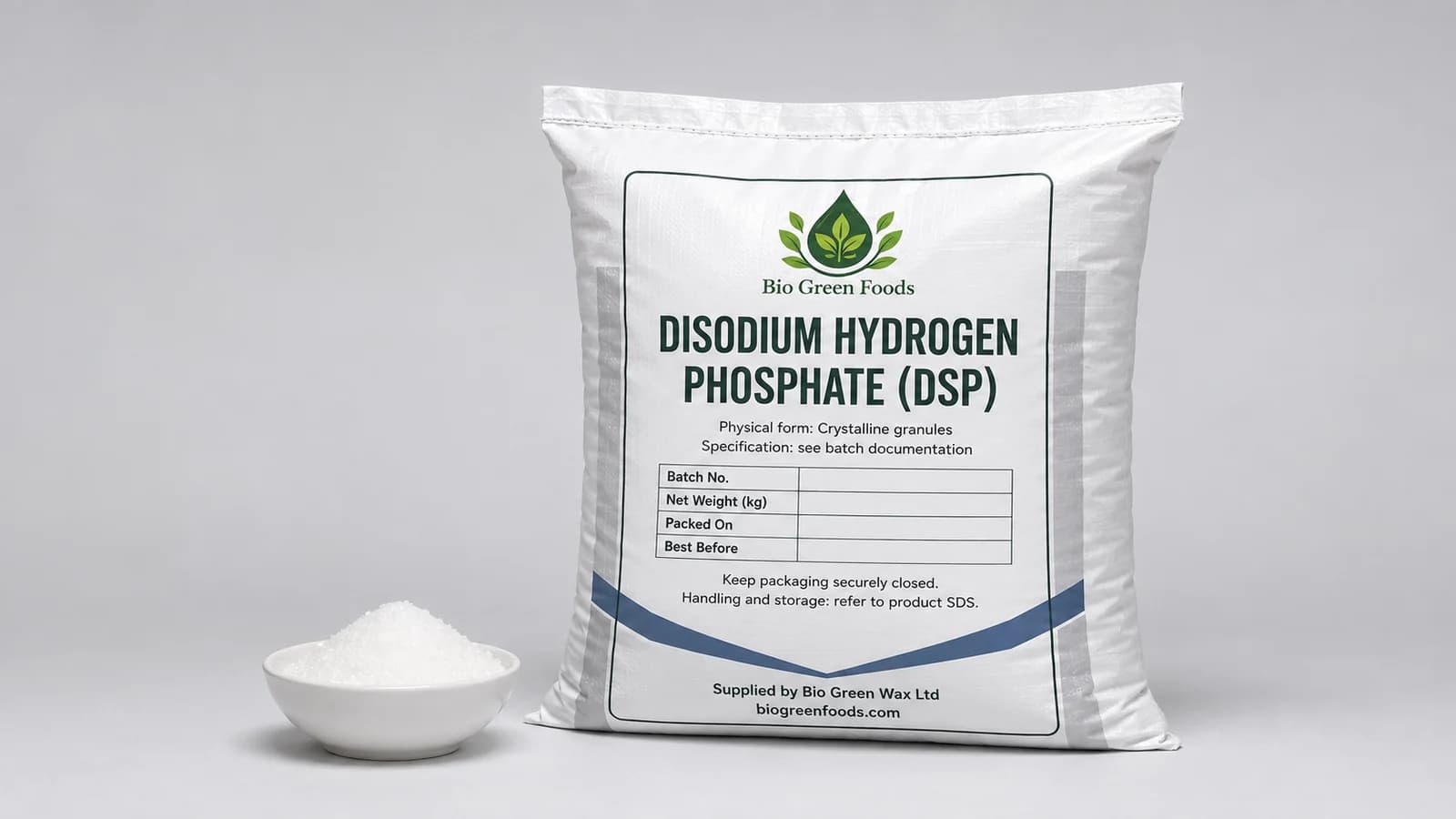
Dinatriumhydrogenphosphat (DSP)
Dinatriumhydrogenphosphat (E339ii, CAS 7558-79-4) ist ein alkalischer Phosphatpuffer und ein Schmelzsalz. In Schmelzkäse löst es das Casein aus seinen Calciumbindungen, wodurch der Käse gleichmäßig schmilzt, statt sich in Öl und Bruch zu trennen.
Maltodextrin
Maltodextrin (CAS 9050-36-6) ist nur teilweise hydrolysierte Stärke mit einem Dextroseäquivalent unter 20. Es ist geschmacksneutral statt süß, löst sich leicht und wird als Füllstoff, Trägerstoff und Fettersatz eingesetzt, nicht als Zucker.
Sorbit Pulver
Sorbit Pulver (E420i, CAS 50-70-4) ist die kristalline Form desselben Zuckeralkohols und wird eingesetzt, wenn ein trockenes, direkt verpressbares Füllsüßungsmittel benötigt wird. Anders als die flüssige Qualität ist es im kristallinen Zustand vergleichsweise wenig hygroskopisch.
Kaliumdihydrogenphosphat (MKP)
Kaliumdihydrogenphosphat (E340i, CAS 7778-77-0) ist das saure Kaliumphosphat und ergibt eine Lösung nahe pH 4.5. Es wird als Puffer, Mineralstoffquelle und Fermentationsnährstoff eingesetzt, wenn Natrium vermieden werden muss.
Natriumdihydrogenphosphat (MSP)
Natriumdihydrogenphosphat (E339i, CAS 7558-80-7) ist das saure Natriumphosphat und ergibt eine Lösung mit einem pH-Wert von etwa 4.5. Es wird als Puffer, Komplexbildner und Säuerungsmittel sowie in der Fleischverarbeitung zur Unterstützung der Wasserbindung eingesetzt.
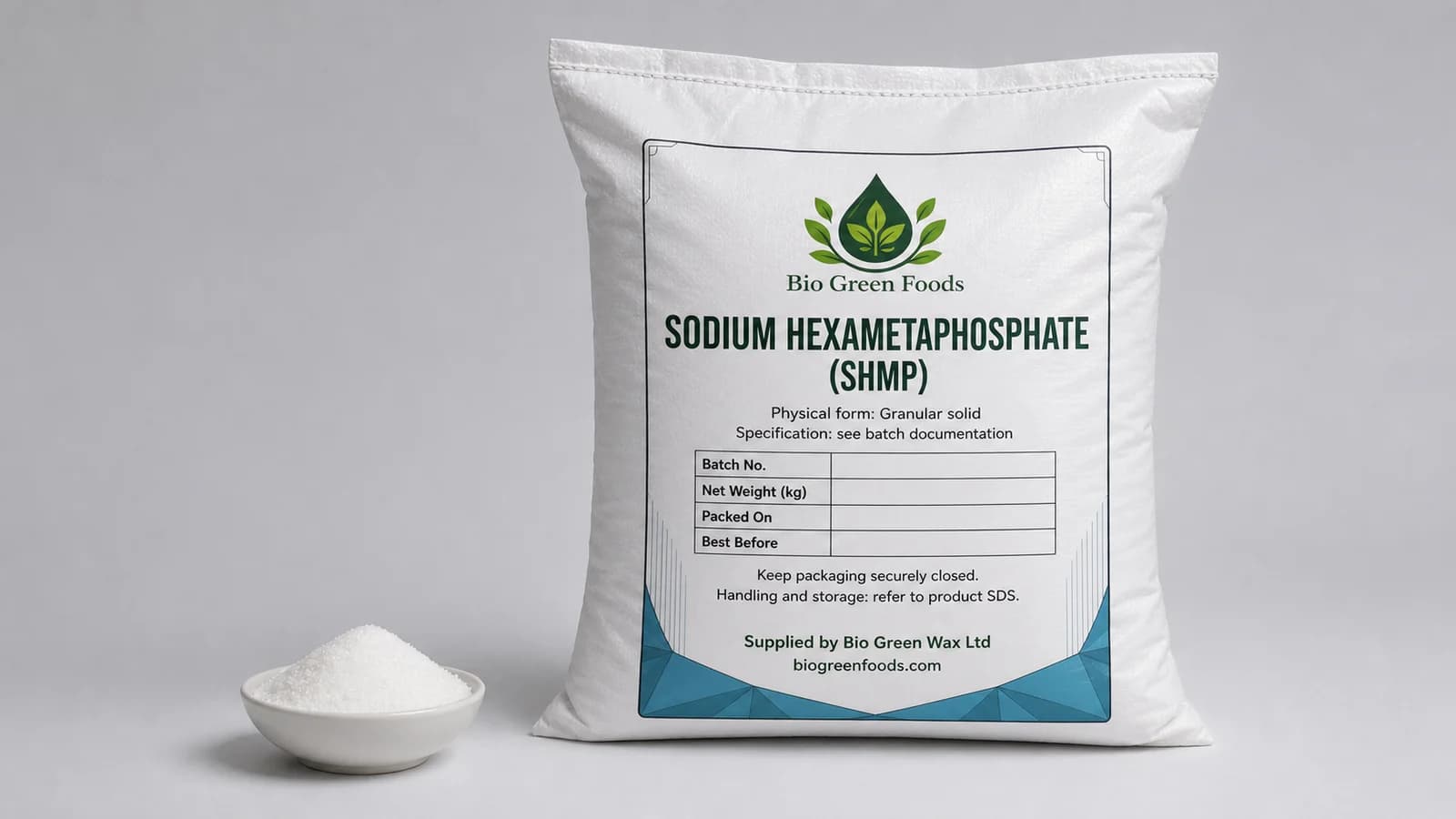
Natriumhexametaphosphat (SHMP)
Natriumhexametaphosphat (E452i, CAS 10124-56-8) ist ein glasartiges Polyphosphat, das Metallionen außerordentlich stark bindet. Es komplexiert Calcium in hartem Wasser, hält Feuchtigkeit in Fleisch und Meeresfrüchten und verhindert das Ausfällen von Mineralstoffen in Getränken.
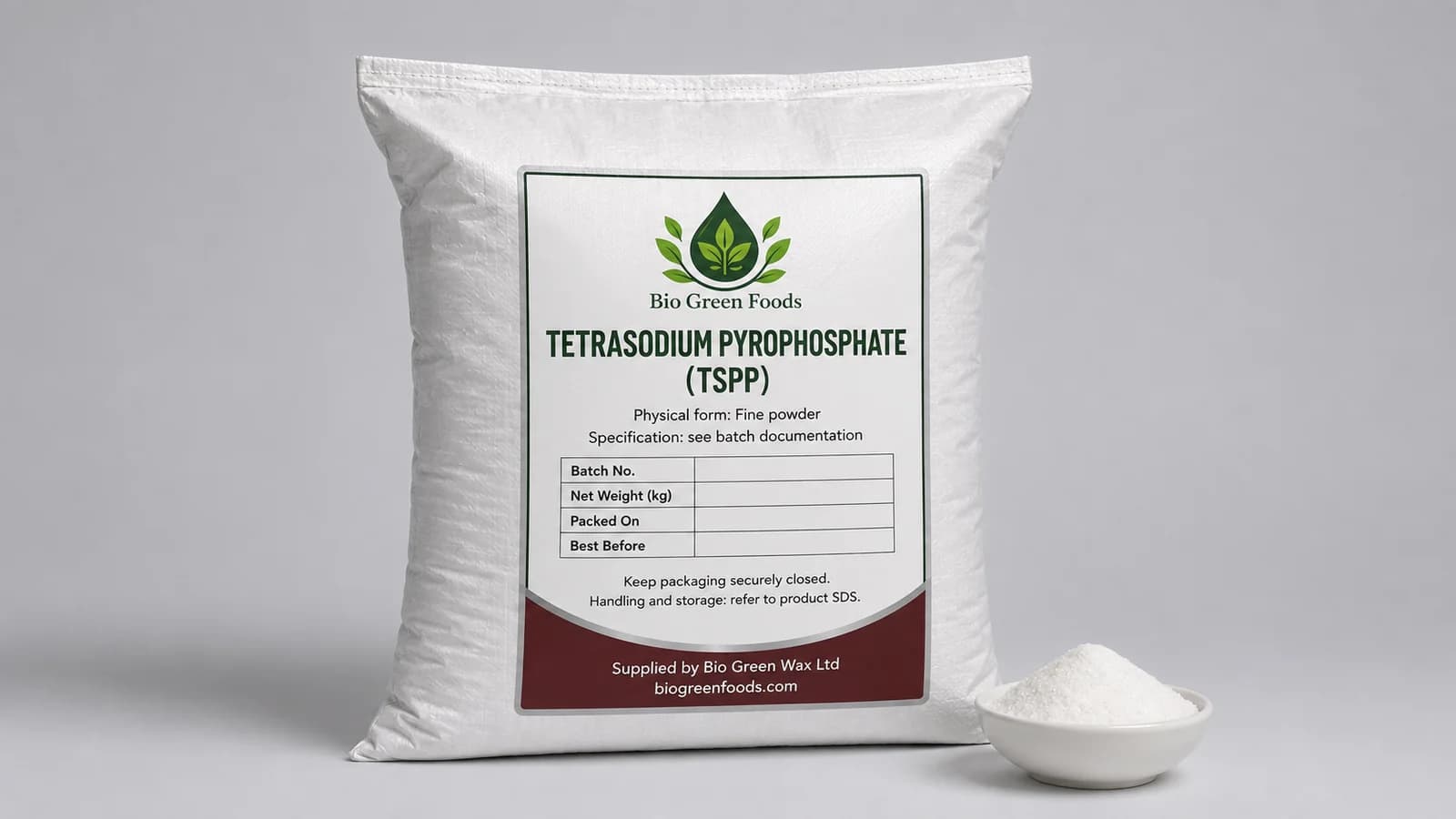
Tetranatriumdiphosphat (TSPP)
Tetranatriumdiphosphat (E450iii, CAS 7722-88-5) ist ein alkalisches kondensiertes Phosphat. Es dickt Instantpuddings ohne Erhitzen ein, bindet Metallionen und verbessert Wasserbindung und Textur in Fleisch und Meeresfrüchten.
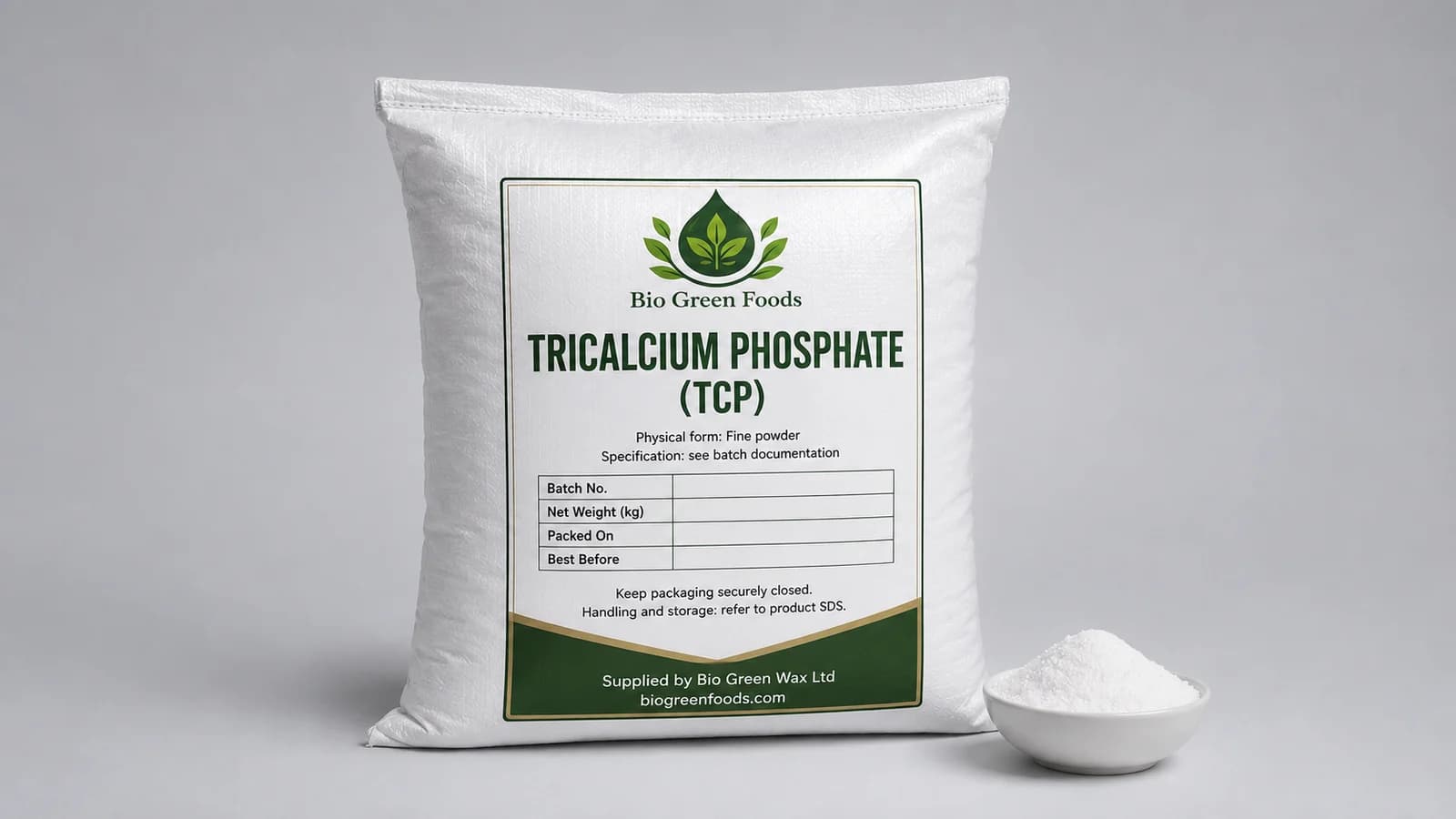
Tricalciumphosphat (TCP)
Tricalciumphosphat (E341iii, CAS 7758-87-4) ist ein weißes, praktisch unlösliches Calciumsalz. Diese Unlöslichkeit macht es sowohl zu einem geschmacksneutralen Calcium-Anreicherungsstoff als auch zu einem der wirksamsten Trennmittel für Pulver und Speisesalz.
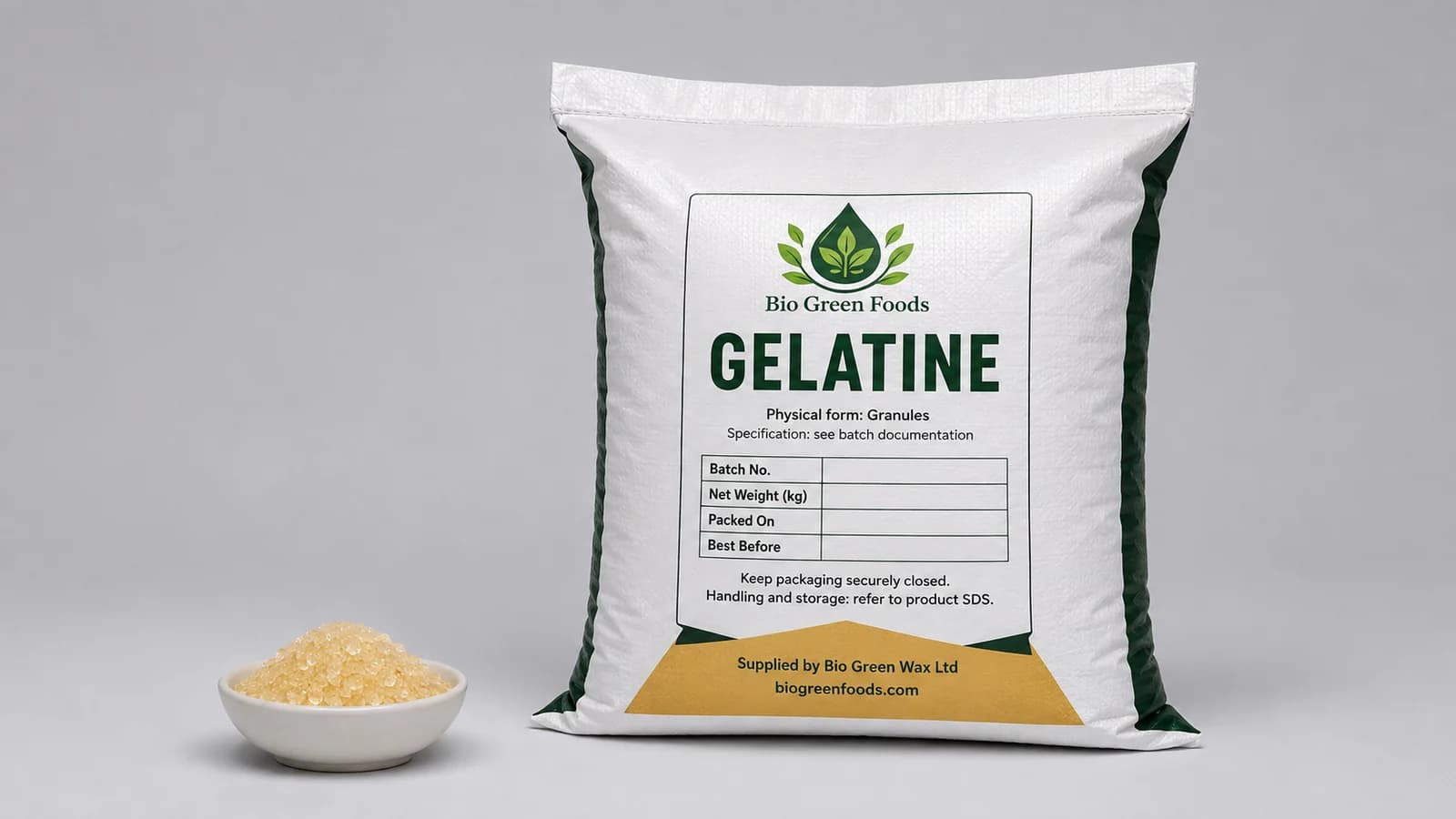
Gelatine
Gelatine (E441, CAS 9000-70-8) ist teilweise hydrolysiertes Kollagen aus Tierhaut und -knochen. Sie wird nach der Bloomzahl eingestuft, und ihr Schmelzpunkt knapp unterhalb der Körpertemperatur verleiht Gelierprodukten ihr charakteristisches Schmelzverhalten im Mund.
Start with the recipe and the market
- Finished food, target function and process conditions
- Required grade, physical form and critical limits
- Destination market and permitted-use requirements
- Quantity, packaging and delivery destination
Confirm the evidence before ordering
Food-grade identity alone does not establish permission for every food or country. Confirm permitted use, limits and labelling requirements for the intended market. Certification availability must be checked for the nominated product and manufacturing site.
Product illustrations show representative material and packaging. The quotation confirms the actual source, grade, pack size and labelling.
Review documentation