
Bio Green Foods / Food Ingredients & Additives
Our Food Ingredients
Browse our range of preservatives, acidulants, sweeteners, hydrocolloids and phosphates
Showing 41–60 of 94 products
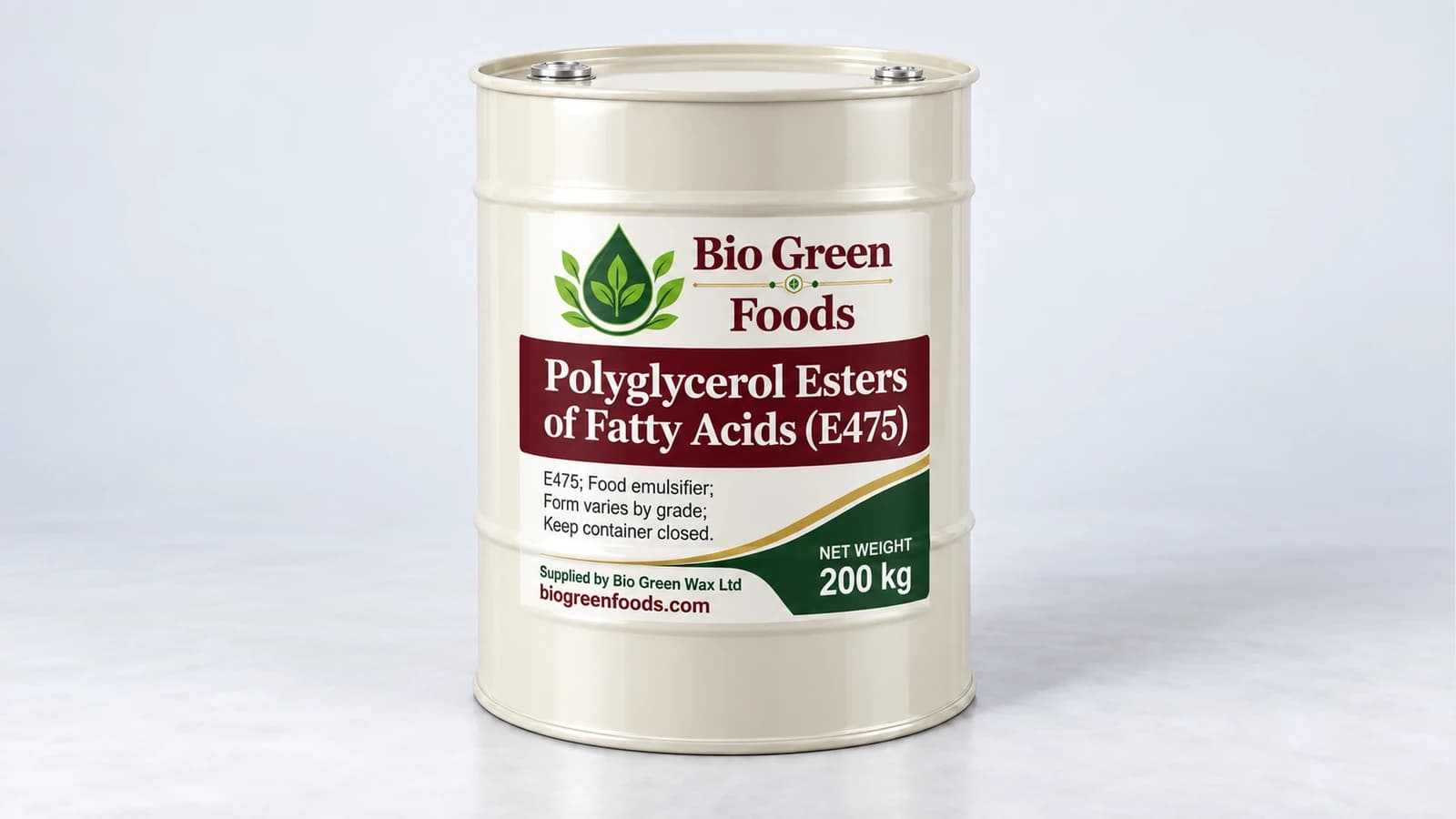
Polyglycerol Esters of Fatty Acids (E475)
E475, the emulsifier whose HLB can be dialled from lipophilic to hydrophilic by changing how many glycerol units are joined together. Used for cake aeration, chocolate viscosity and crystal control in fats.
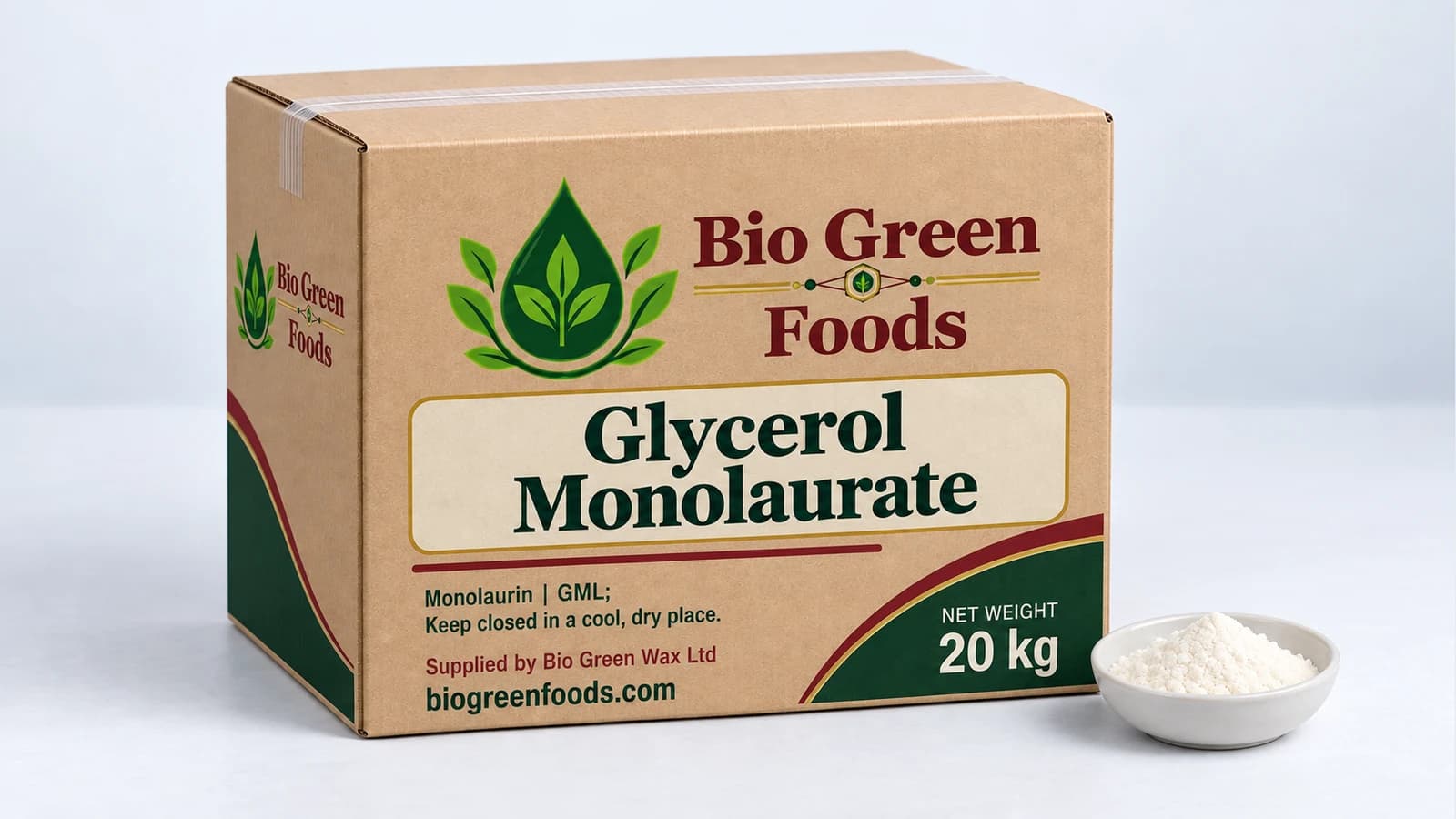
Glycerol Monolaurate
The C12 monoglyceride, also called monolaurin: an emulsifier that is also a broad-spectrum antibacterial, active against Gram-positive organisms at a few hundred parts per million. It preserves without reading as a preservative on a label.
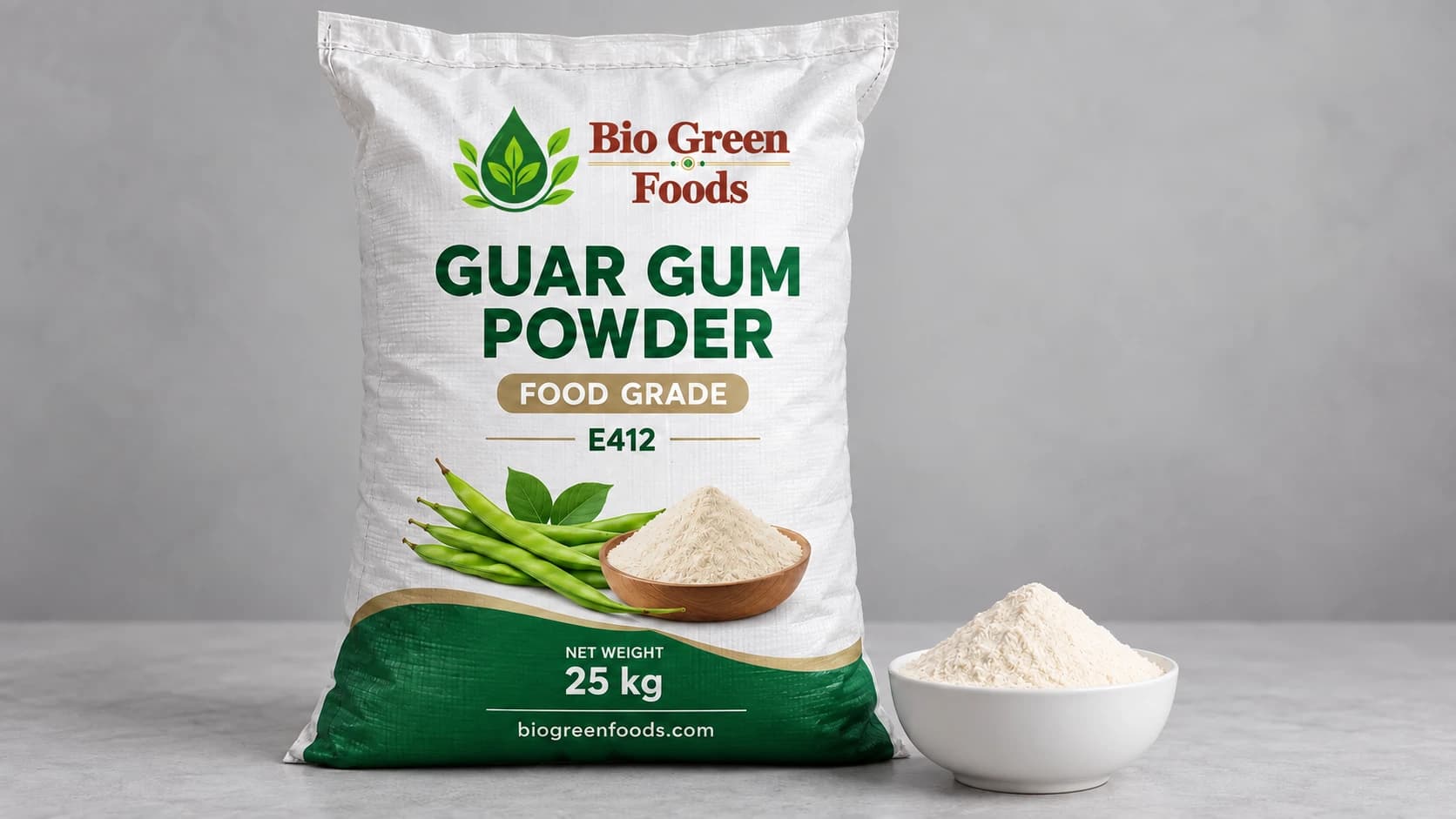
Guar Gum Food Grade
Food-grade guar gum powder (E412) for viscosity control, stabilisation and water binding in bakery, dairy, beverages, sauces, confectionery, frozen foods and noodles.
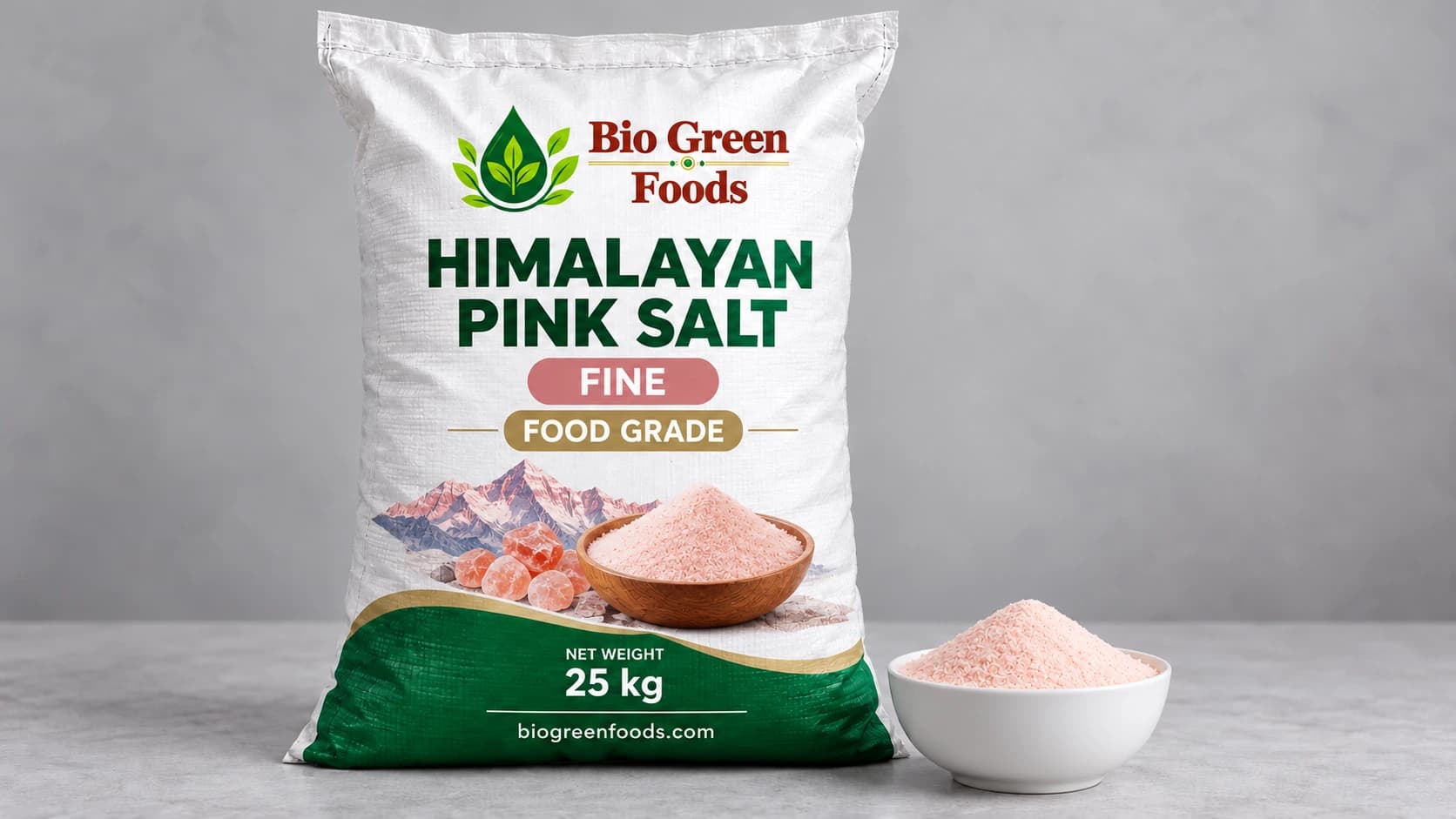
Himalayan Pink Salt Fine
Fine Himalayan pink salt for dry blending, seasoning mixes, snacks, bakery toppings and food-service applications requiring a smaller crystal size.
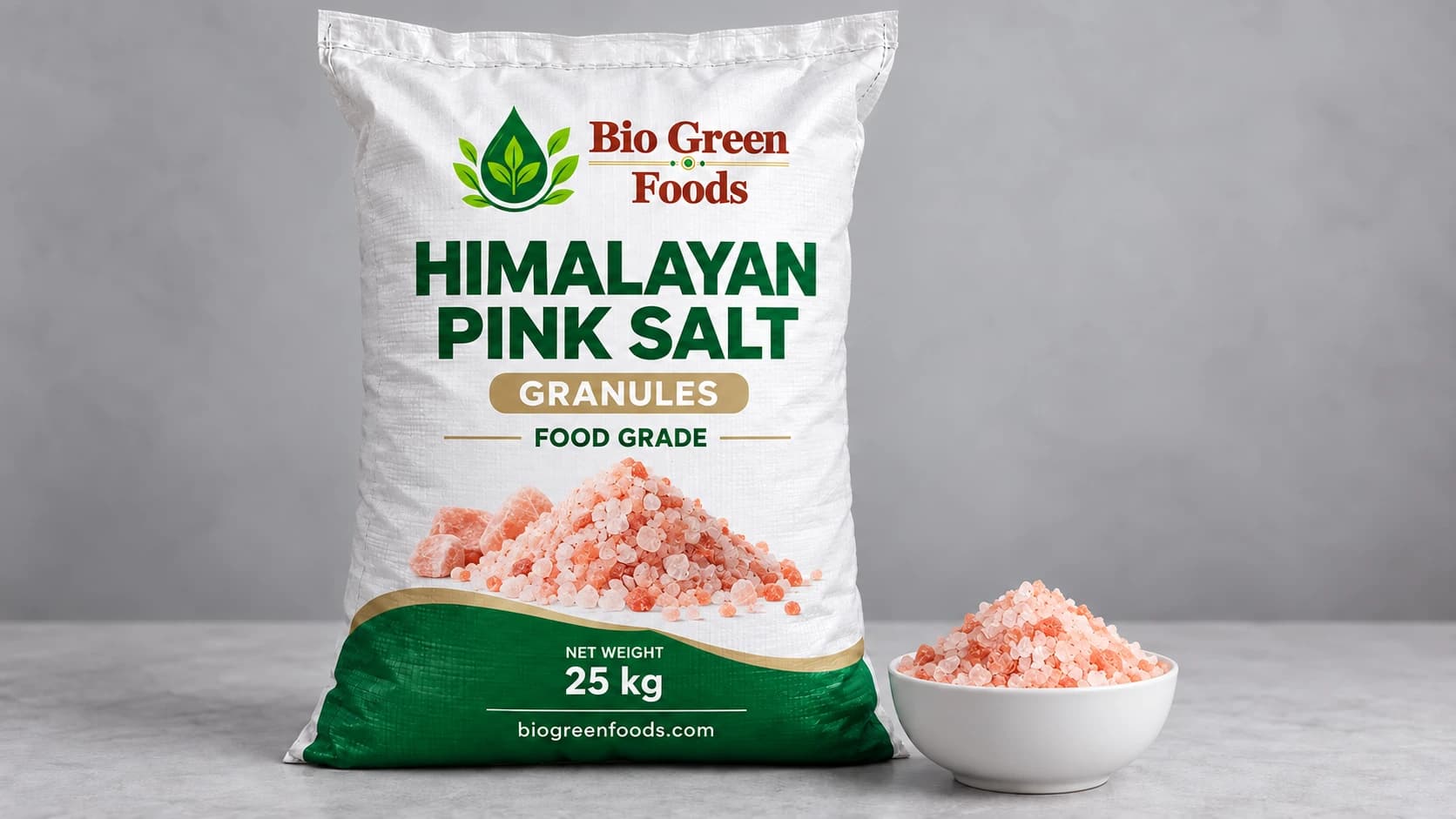
Himalayan Pink Salt Granules
Coarse Himalayan pink salt granules for grinders, food-service finishing, seasoning packs and applications where visible crystals are preferred.
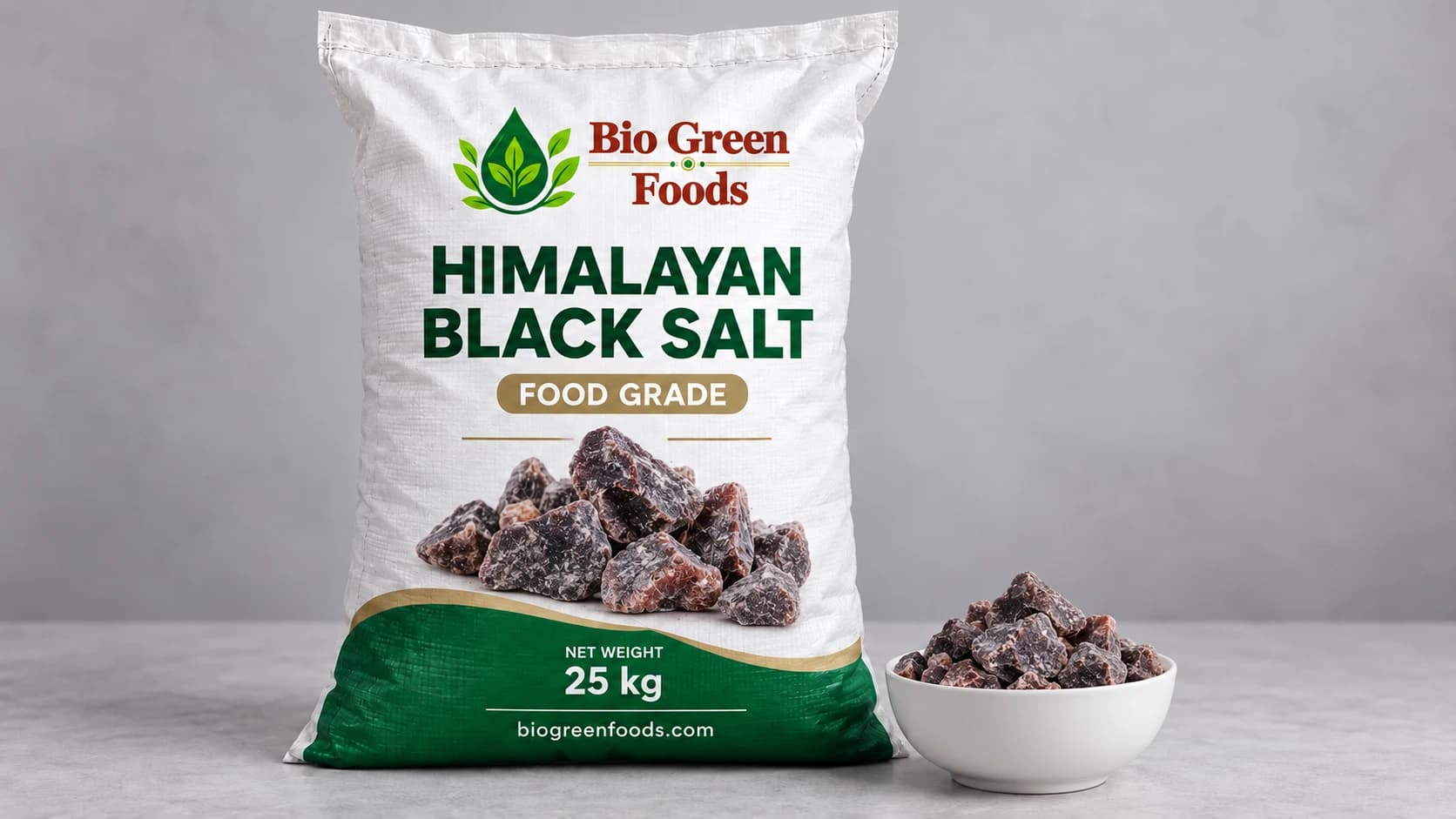
Himalayan Black Salt
Food-grade Himalayan black salt, also known as kala namak, for savoury seasoning blends, snack flavours, chutneys, vegan egg-style profiles and food-service use.
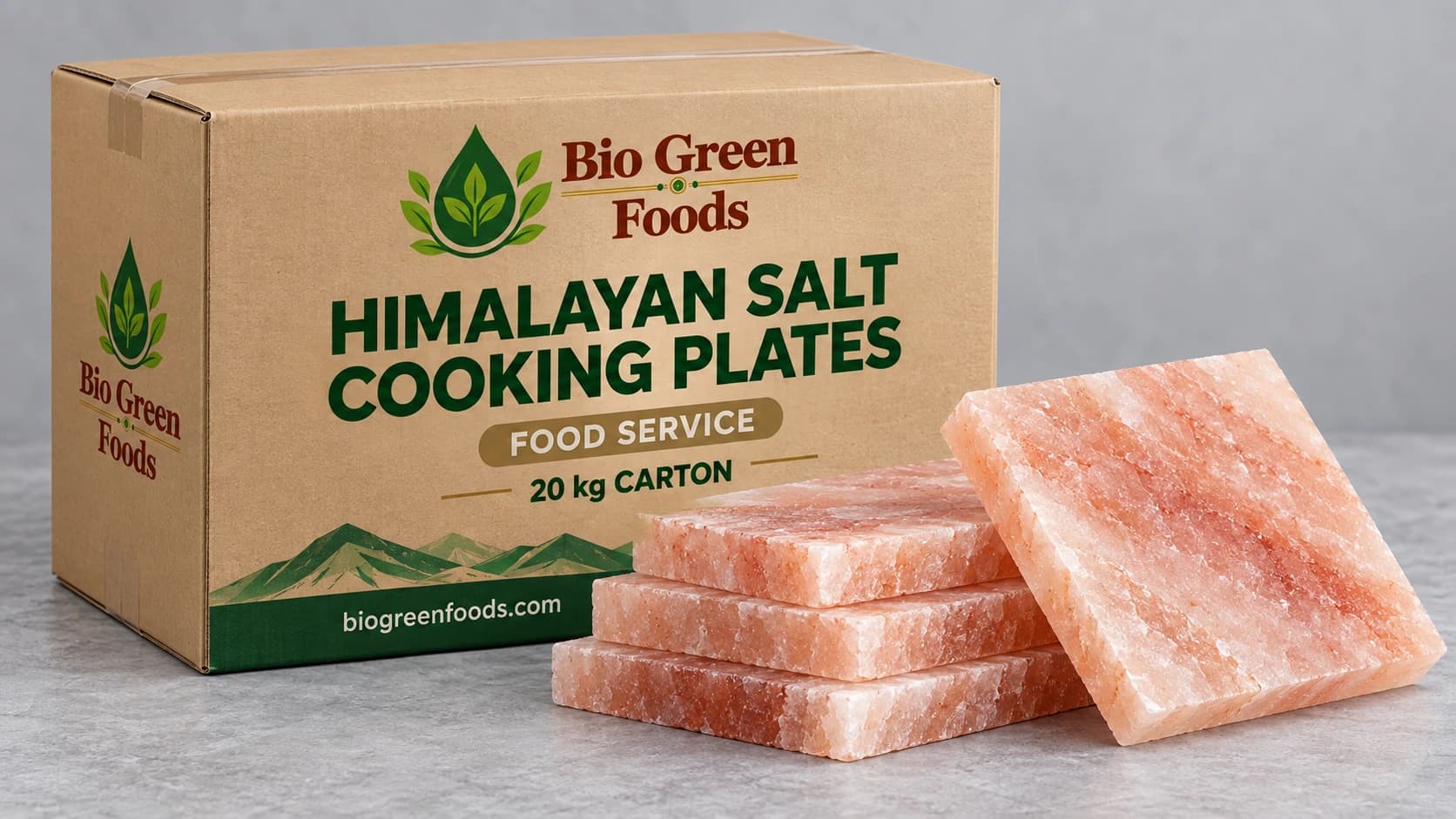
Himalayan Salt Cooking Plates
Himalayan salt cooking plates for food-service grilling, chilling, curing and presentation applications where food-contact salt slabs are required.
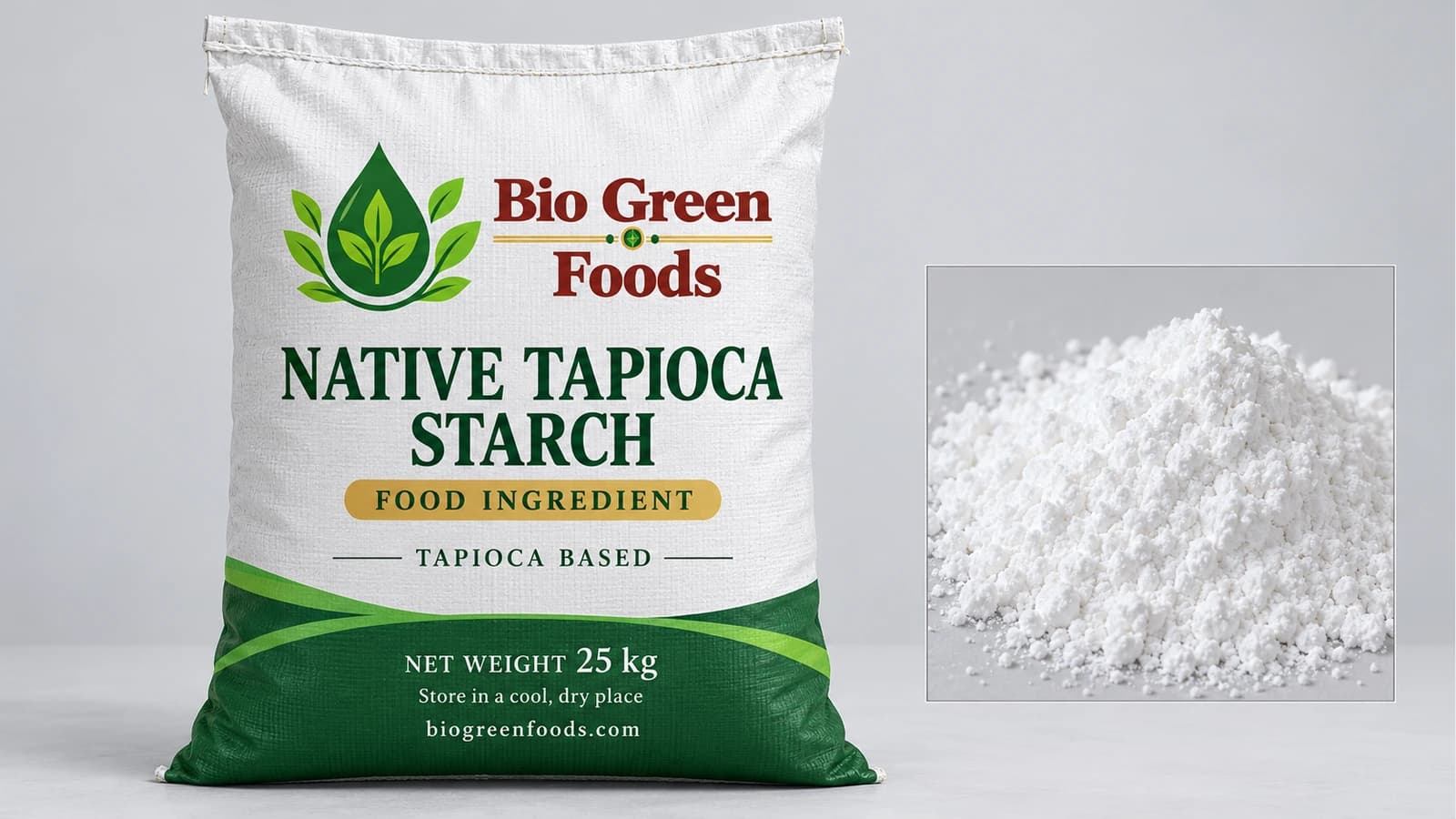
Native Tapioca Starch
Unmodified starch extracted from the cassava root, with a bland flavour, a clear cohesive paste and a gelatinisation temperature several degrees below maize starch. The default thickener where a neutral taste and a translucent finish matter.
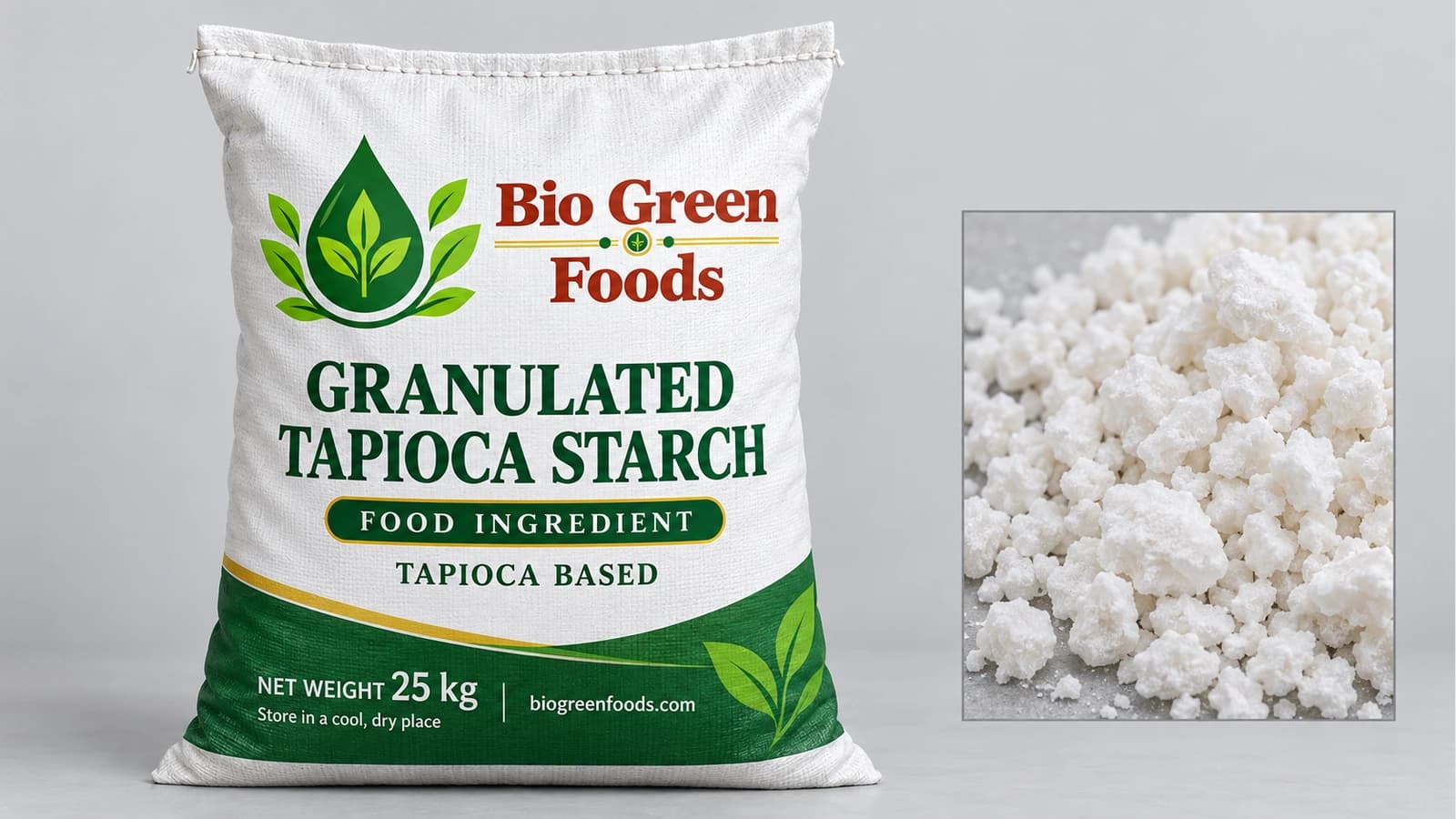
Granulated Tapioca Starch
Agglomerated tapioca starch in free-flowing coarse granules, used dry as a coating for fried foods. It adheres without a wet batter and fries to an open, brittle crust that stays crisp as the piece cools.
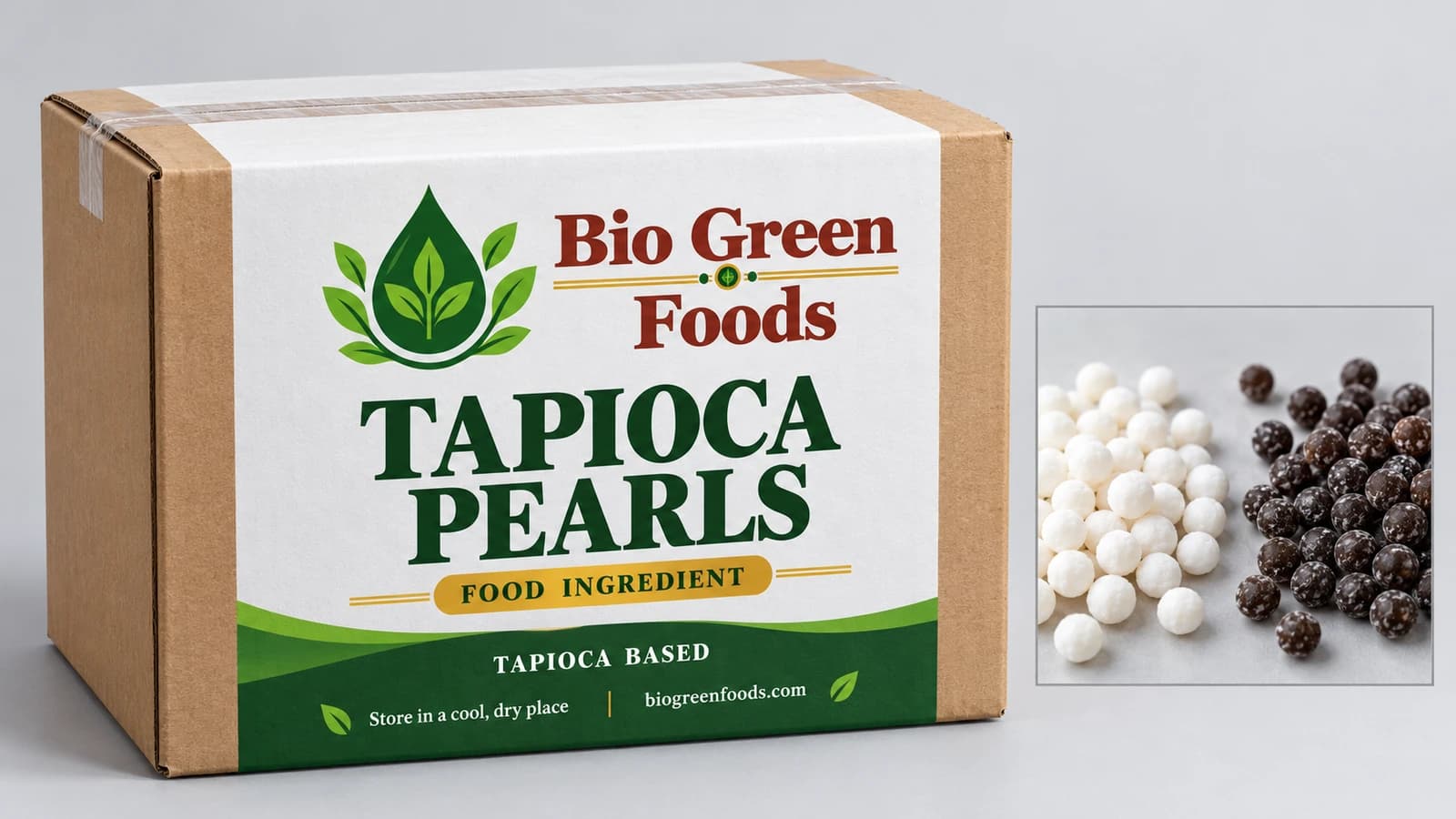
Tapioca Pearls
Spherical tapioca starch pearls for bubble tea and dessert manufacture, cooked to the elastic chewy bite the trade calls QQ. Supplied in black and white grades across a range of diameters.
Bleached Starch (E1403)
Tapioca starch treated to raise whiteness and lower microbial count without meaningfully shortening the starch chain. Specified where colour is the product, and deliberately not the same thing as oxidised starch E1404.
Oxidised Starch (E1404)
Tapioca starch depolymerised by controlled hypochlorite oxidation. Carboxyl groups and shorter chains give a low-viscosity, high-solids, strongly adhesive paste that sets clear and resists retrogradation.
Distarch Phosphate (E1412)
Cross-linked tapioca starch with no stabilising substitution. The phosphate bridges hold the granule together through heat, shear and acid, which is what a retort or a high-speed mixer demands.
Acetylated Distarch Phosphate (E1414)
Dual-modified tapioca starch, cross-linked with phosphate and stabilised with acetyl groups. Holds body through retorting and holds clarity through the cold chain, which single-modified grades cannot do together.
Starch Acetate (E1420)
Tapioca starch stabilised by acetylation with no cross-linking. Gelatinises lower than native, pastes clearer and resists retrogradation in the cold chain, but carries none of the shear or acid tolerance of a cross-linked grade.
Acetylated Distarch Adipate (E1422)
Dual-modified tapioca starch cross-linked with adipate rather than phosphate. The lighter bridge gives a shorter, creamier body than E1414 at comparable process tolerance, which suits dressings and dairy.
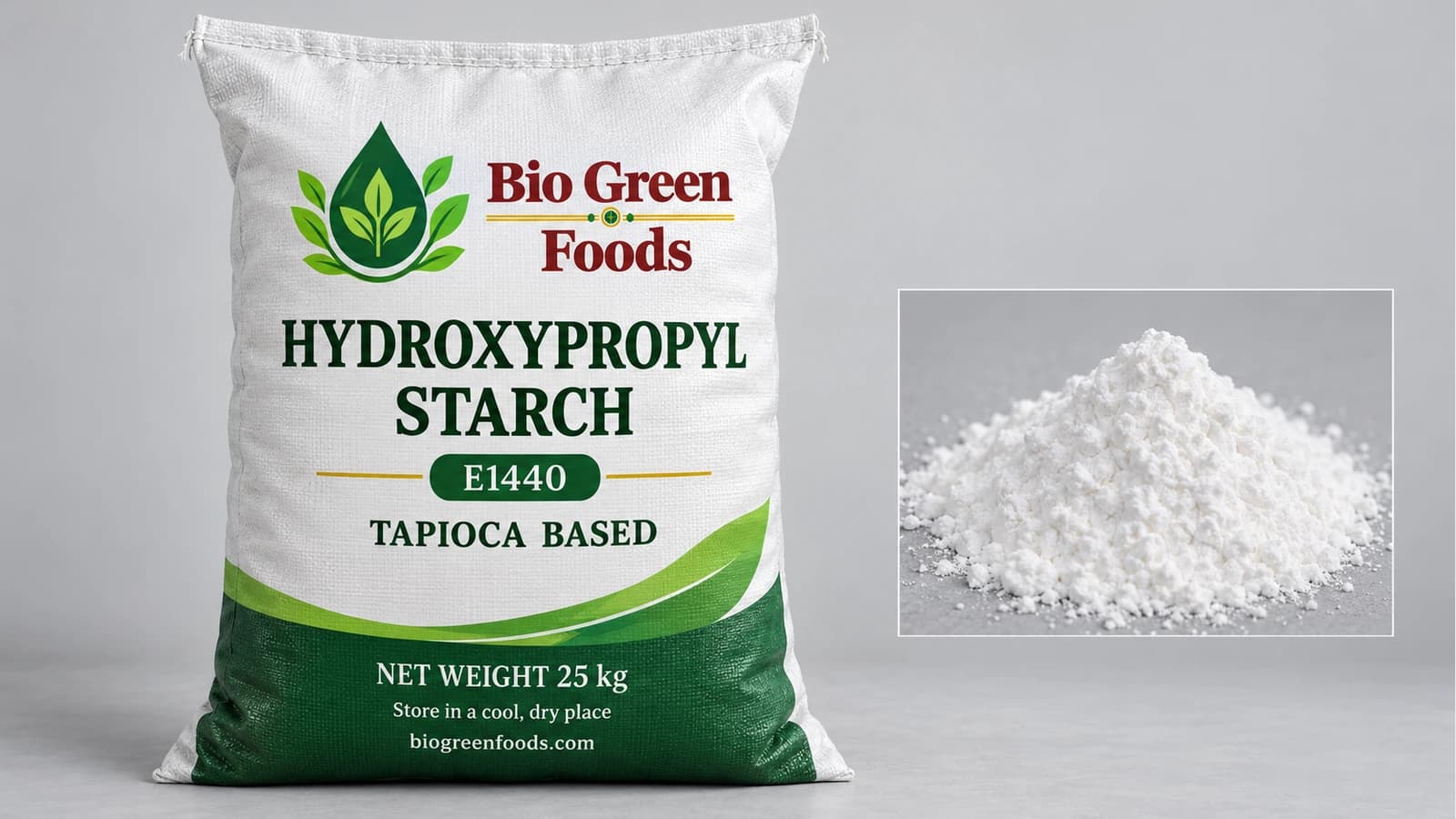
Hydroxypropyl Starch (E1440)
Tapioca starch etherified with propylene oxide and not cross-linked. The ether linkage resists hydrolysis where an acetyl ester does not, giving the most durable cold-storage stability available from a single modification.
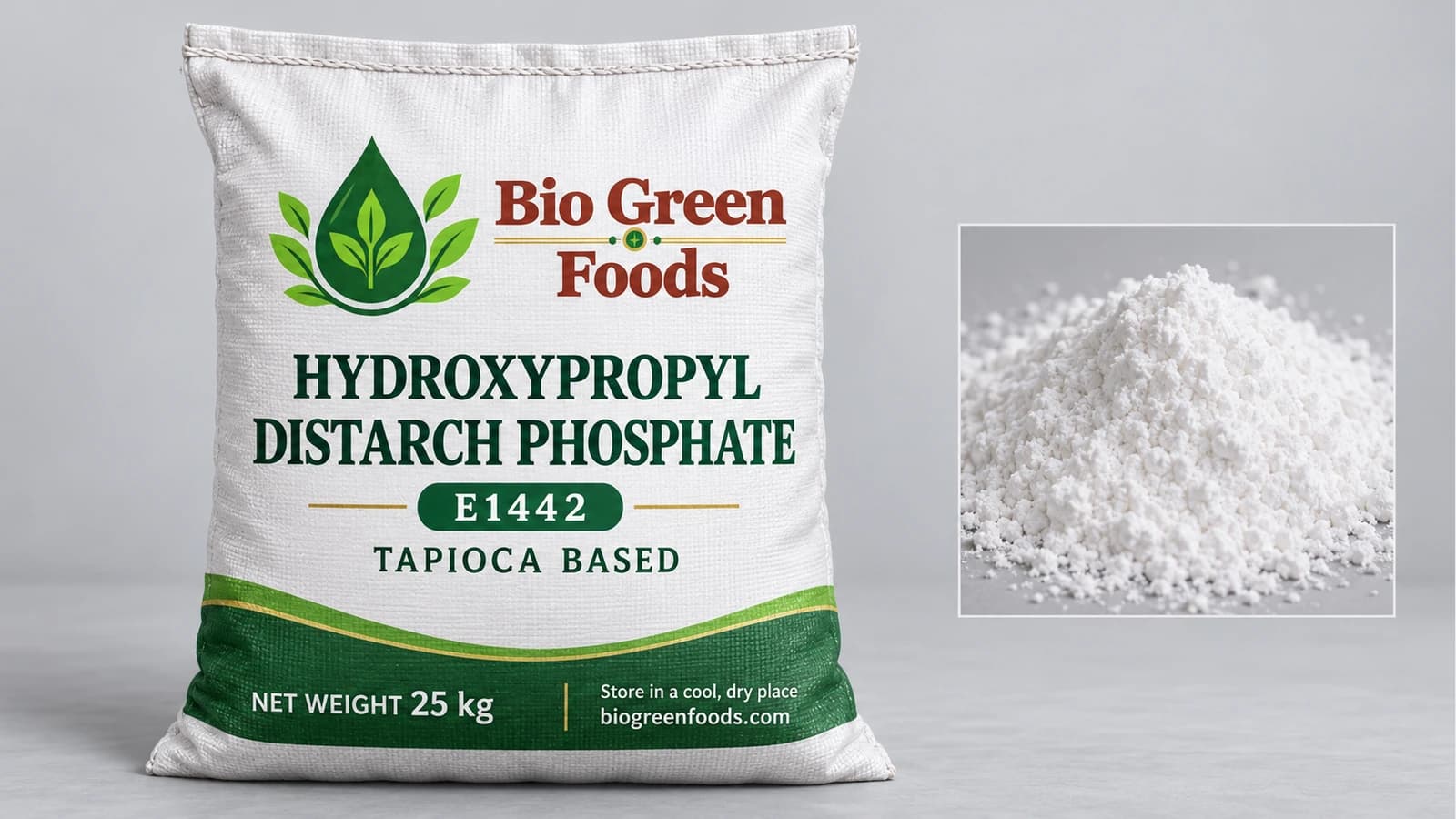
Hydroxypropyl Distarch Phosphate (E1442)
The most capable grade in the range: cross-linked with phosphate and etherified with propylene oxide. Survives retorting, shear and low pH, and keeps its stability through a long cold-chain life.
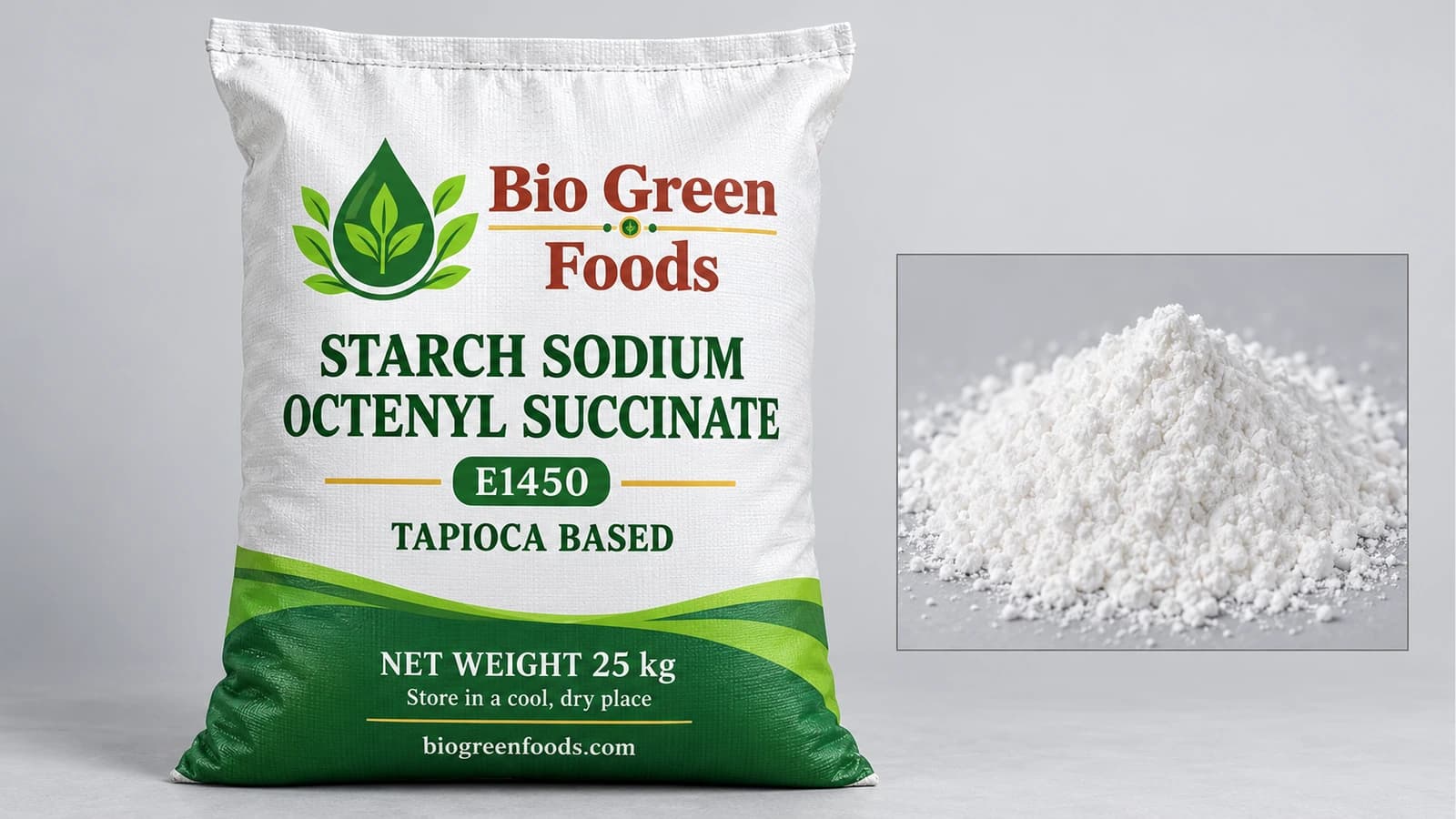
Starch Sodium Octenyl Succinate (E1450)
OSA-modified tapioca starch carrying a hydrophobic alkenyl chain, which makes it an emulsifier rather than a thickener. The standard replacement for gum arabic in beverage emulsions and spray-dried flavour.
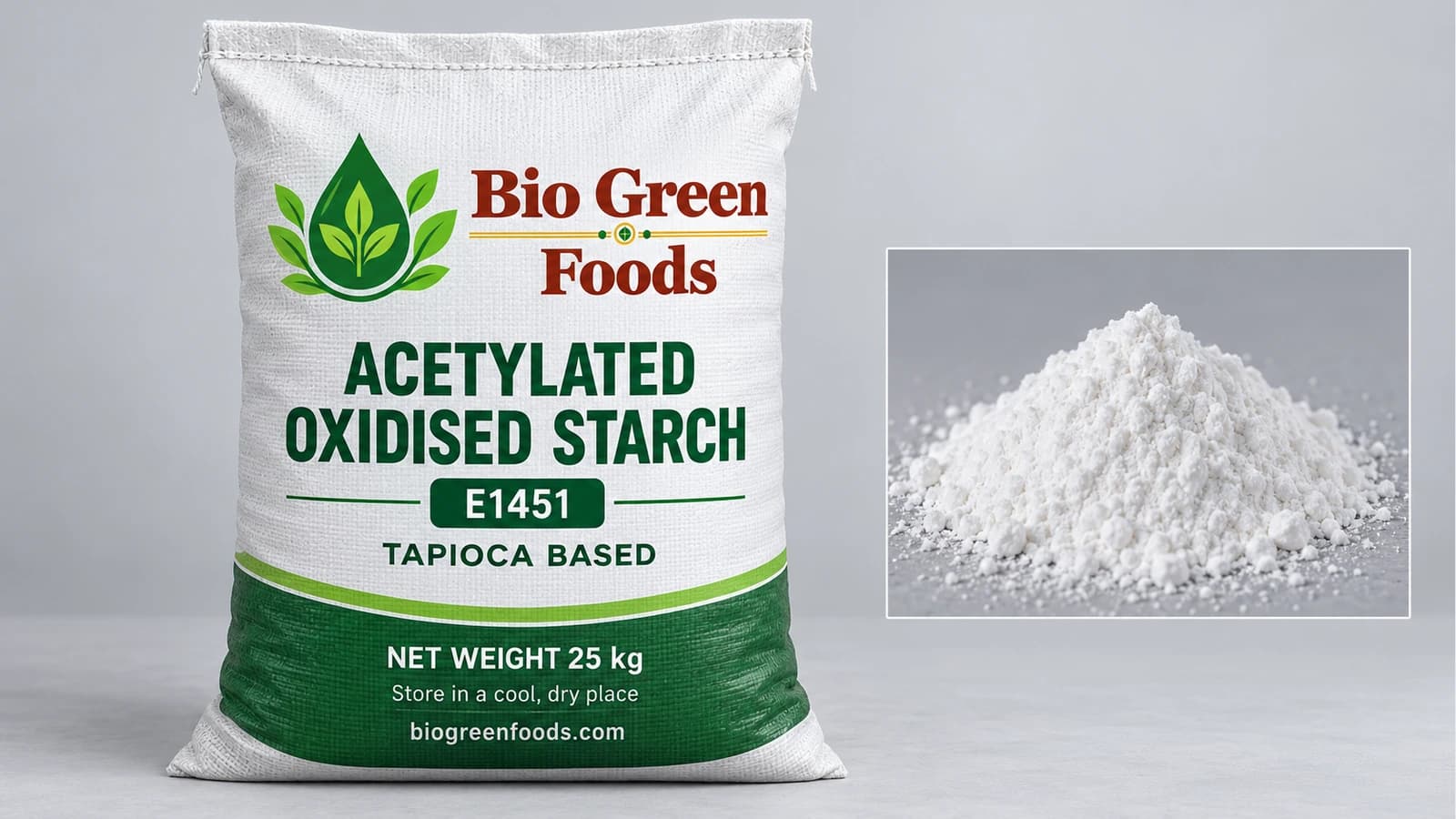
Acetylated Oxidised Starch (E1451)
Tapioca starch oxidised and then acetylated, combining the high-solids pumpability of an oxidised grade with the clarity and cold stability of a stabilised one. A film former and adhesive first, a thickener second.
Start with the recipe and the market
- Finished food, target function and process conditions
- Required grade, physical form and critical limits
- Destination market and permitted-use requirements
- Quantity, packaging and delivery destination
Confirm the evidence before ordering
Food-grade identity alone does not establish permission for every food or country. Confirm permitted use, limits and labelling requirements for the intended market. Certification availability must be checked for the nominated product and manufacturing site.
Product illustrations show representative material and packaging. The quotation confirms the actual source, grade, pack size and labelling.
Review documentation