Acetylated Distarch Phosphate (E1414)
About This Product
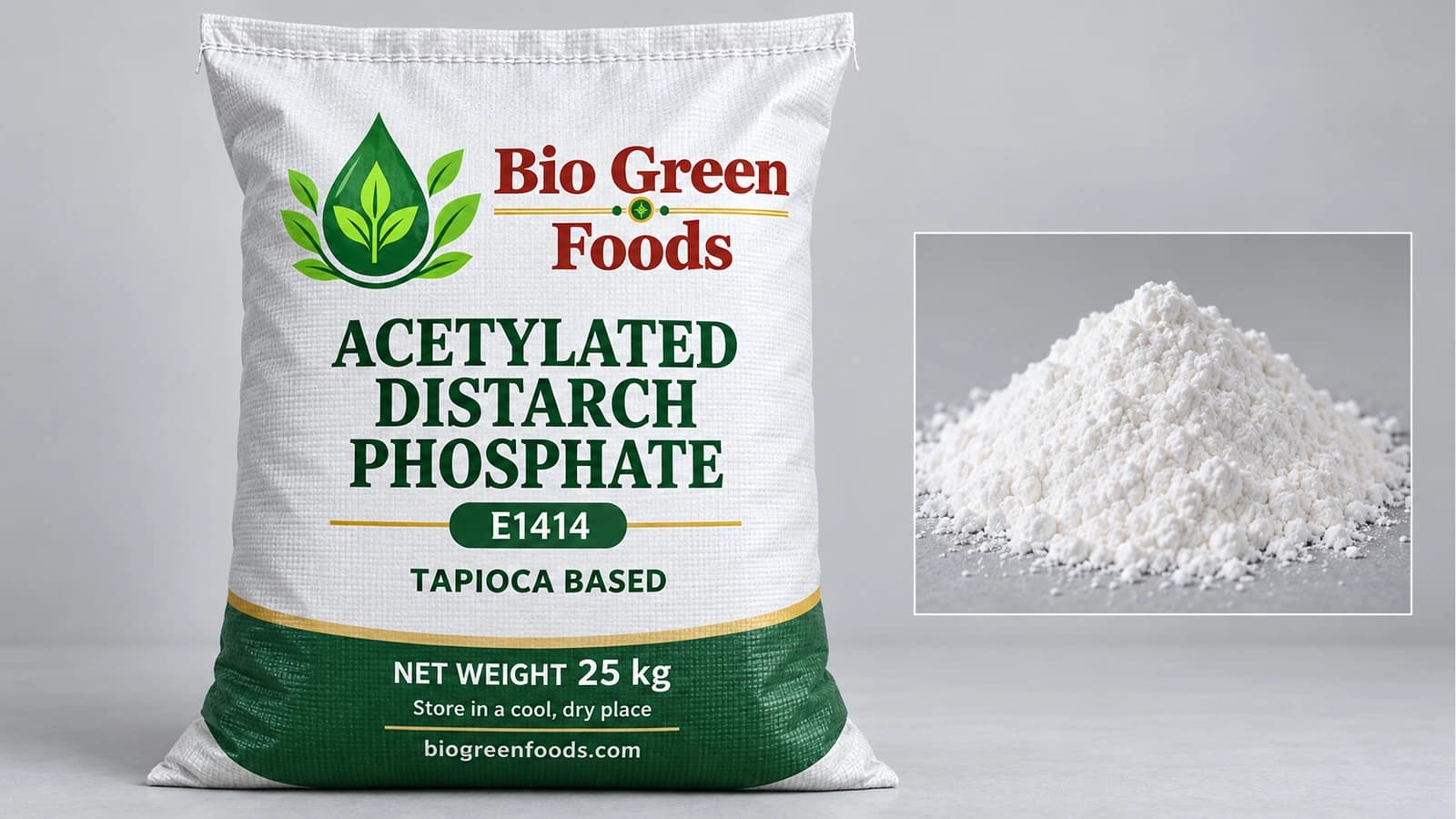
Acetylated distarch phosphate is tapioca starch that has been both cross-linked with a phosphate reagent and stabilised by acetylation with acetic anhydride or vinyl acetate. It carries the additive number E1414, INS 1414, with acetyl groups limited to 2.5 per cent. It is the most widely used dual-modified starch in food manufacturing, and the reason is that the two modifications solve two different problems.
The phosphate cross-links do what they do in E1412: they tie the chains together so the granule survives retorting, prolonged shear and low pH without bursting and losing viscosity. The acetyl groups do something entirely different. They are small, bulky substituents hung off the chain that physically obstruct the amylose fraction from re-associating as the product cools and sits. Retrogradation is what makes a starch-thickened sauce turn cloudy, firm up into a gel and weep water over a week in a chiller or a cycle through a freezer, and acetylation is the cheapest effective way to stop it.
Together they produce a starch that can be cooked hard and then stored cold, which covers most of the modern ready-meal and chilled-sauce market. A retorted tomato sauce that is then sold refrigerated, a frozen lasagne that is reheated, a cream cheese or processed cheese that must stay smooth through its shelf life, a canned soup that is chilled on the shelf in summer: all of these punish a starch at both ends, and E1414 is specified because it is the economical answer to both.
Its limit is hydrolytic. The acetyl group is an ester, and esters are slowly cleaved at low pH over long shelf lives and at high temperature. For a product that is both strongly acidic and long-dated, the ether linkage of hydroxypropyl distarch phosphate E1442 is more durable and is worth its higher cost; for everything else E1414 is the better value.
Bio Green Foods supplies acetylated distarch phosphate, E1414, in 25 kg bags and jumbo bags. Acetyl content, residual phosphate, degree of cross-linking, viscosity profile and freeze-thaw performance are confirmed on the agreed specification and on the batch certificate of analysis. It is gluten free and non-GM.
Specifications
Applications
Packaging Options
- 25 kg bag
- Jumbo bag
Indicative price: $0.45–1.40/kg
Indicative bulk guide only. Prices are market-linked and updated regularly - please request a quote for current pricing and volume rates.


Start with the recipe and the market
- Finished food, target function and process conditions
- Required grade, physical form and critical limits
- Destination market and permitted-use requirements
- Quantity, packaging and delivery destination
Confirm the evidence before ordering
Food-grade identity alone does not establish permission for every food or country. Confirm permitted use, limits and labelling requirements for the intended market. Certification availability must be checked for the nominated product and manufacturing site.
Product illustrations show representative material and packaging. The quotation confirms the actual source, grade, pack size and labelling.
Review documentation