
Bio Green Foods / Food Ingredients & Additives
Our Food Ingredients
Browse our range of preservatives, acidulants, sweeteners, hydrocolloids and phosphates
Showing 81–94 of 94 products
Xanthan Gum
Xanthan gum (E415, CAS 11138-66-2) is a polysaccharide produced by fermenting sugar with Xanthomonas campestris. It is strongly shear-thinning, so a sauce thickened with it pours easily yet holds solids in suspension at rest.
Ammonium Bicarbonate
Ammonium bicarbonate (E503ii, CAS 1066-33-7), known in baking as hartshorn or baker's ammonia, is a chemical leavening agent that decomposes entirely to gas on heating and leaves no residual salt in the finished biscuit.
Sodium Bicarbonate
Sodium bicarbonate (E500ii, CAS 144-55-8), known as baking soda, is the primary chemical leavening agent. It releases carbon dioxide when it meets an acid, so a recipe using it must supply that acid or the residue will taste soapy.
Ammonium Propionate
Ammonium propionate (CAS 17496-08-1) is the ammonium salt of propionic acid, supplied as a solution or on a carrier. It inhibits mould and provides non-protein nitrogen, which makes it a common preservative for feed and bakery use.
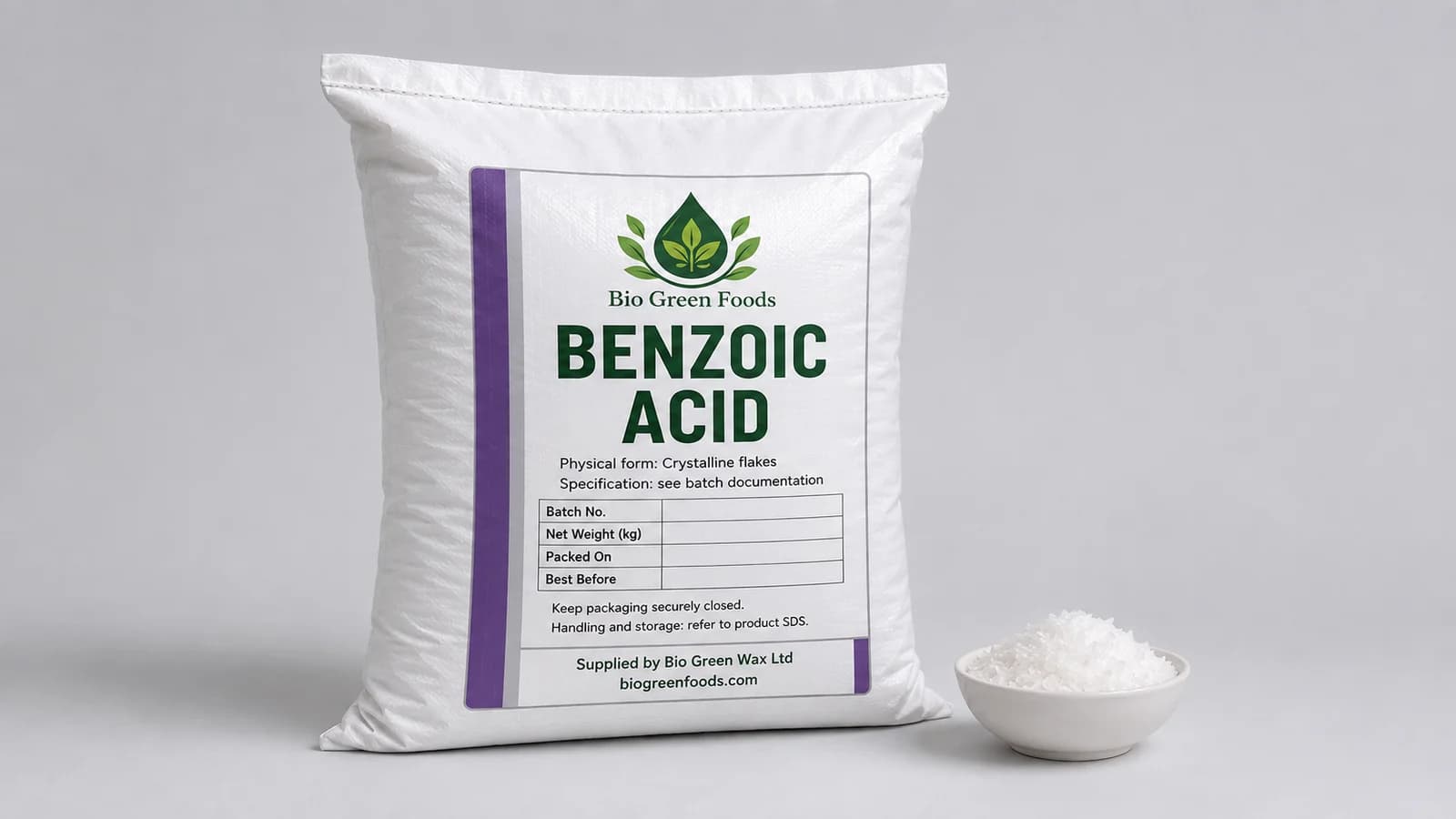
Benzoic Acid
Benzoic acid (E210, CAS 65-85-0) is a food-grade antimicrobial preservative supplied as a white crystalline powder. It controls yeasts and moulds in acidic foods and drinks and works only below about pH 4.5, which makes it the standard choice for soft drinks and pickles.
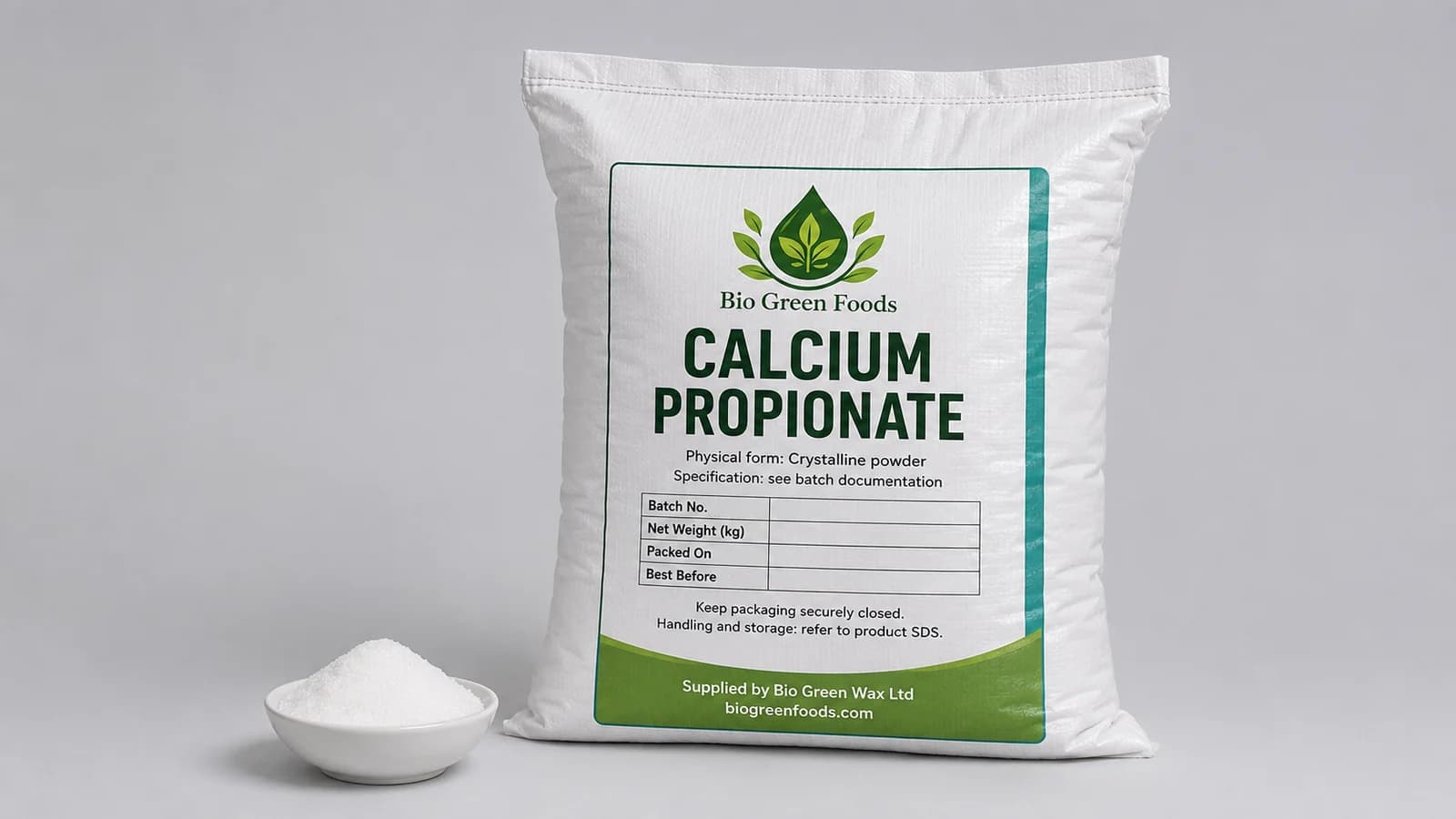
Calcium Propionate
Calcium propionate (E282, CAS 4075-81-4) is the standard mould inhibitor in bread, because it suppresses mould and rope bacteria at the near-neutral pH of dough while leaving baker's yeast largely unaffected, so the loaf still rises.
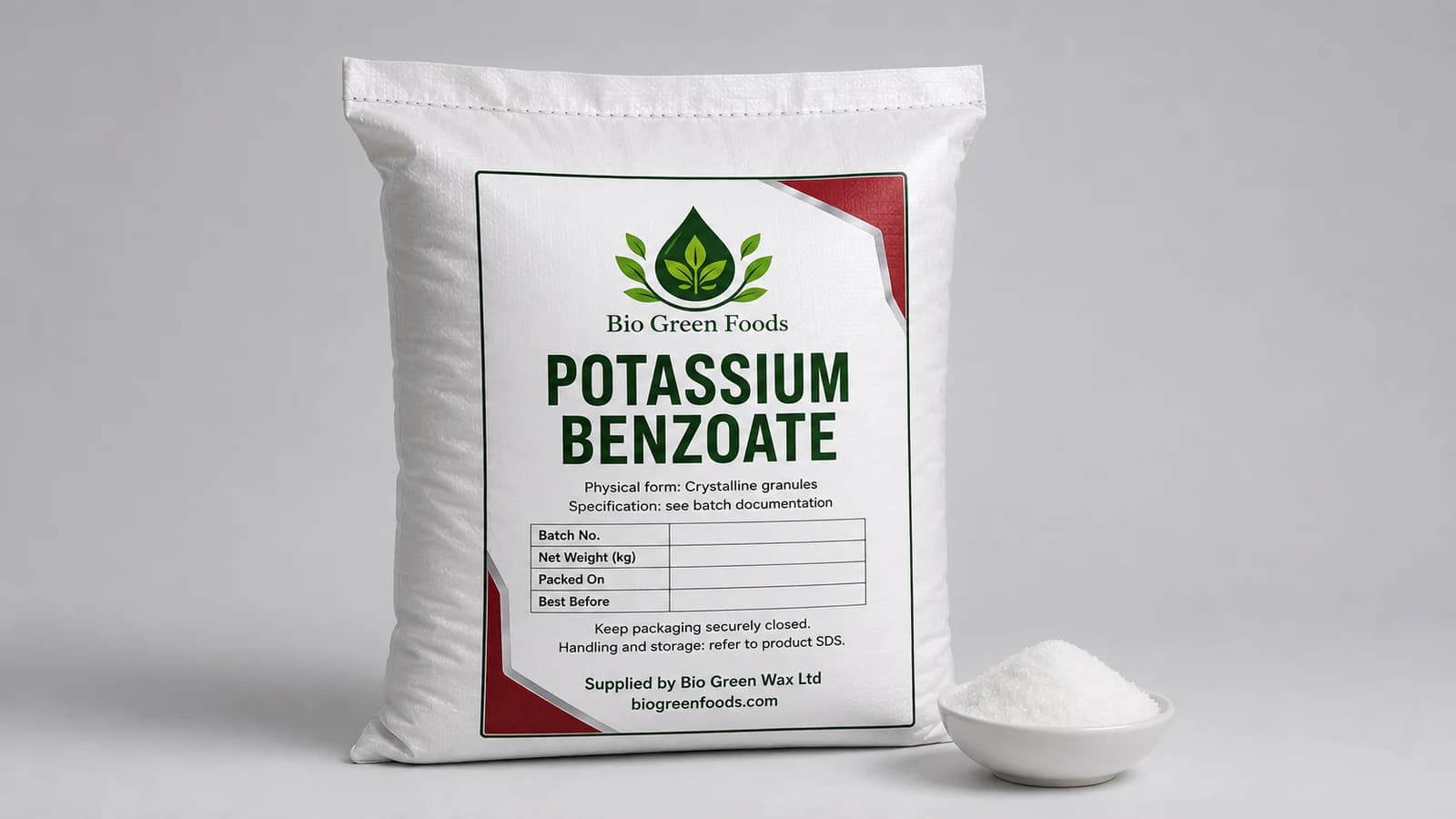
Potassium Benzoate
Potassium benzoate (E212, CAS 582-25-2) is the potassium salt of benzoic acid, used where the same preservation is wanted without added sodium. Like all benzoates it is only effective below about pH 4.5.
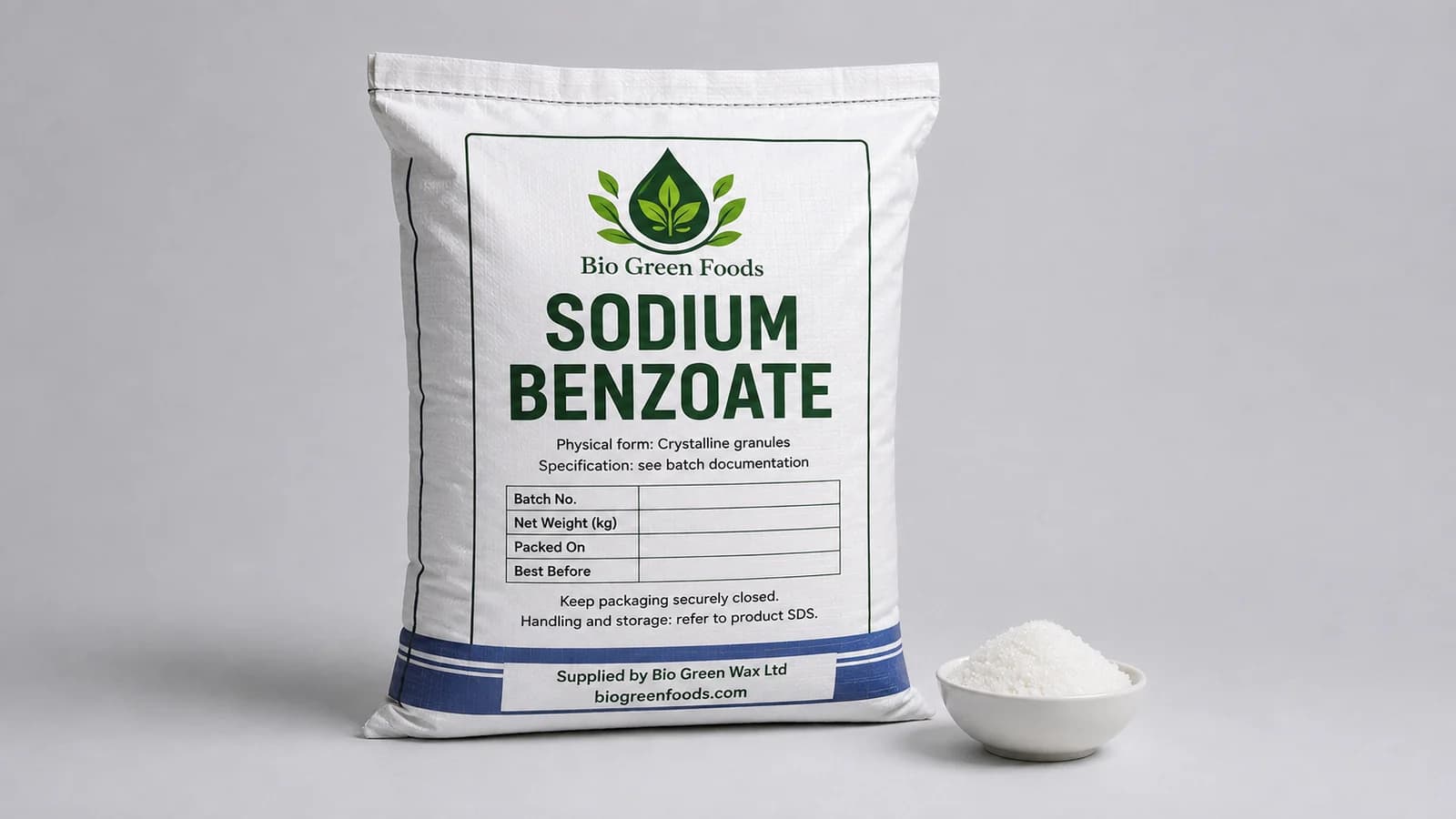
Sodium Benzoate
Sodium benzoate (E211, CAS 532-32-1) is the most widely used soft drink preservative in the world. It is far more soluble than benzoic acid, which is why it is the practical choice in water-based products, but it still only works below about pH 4.5.
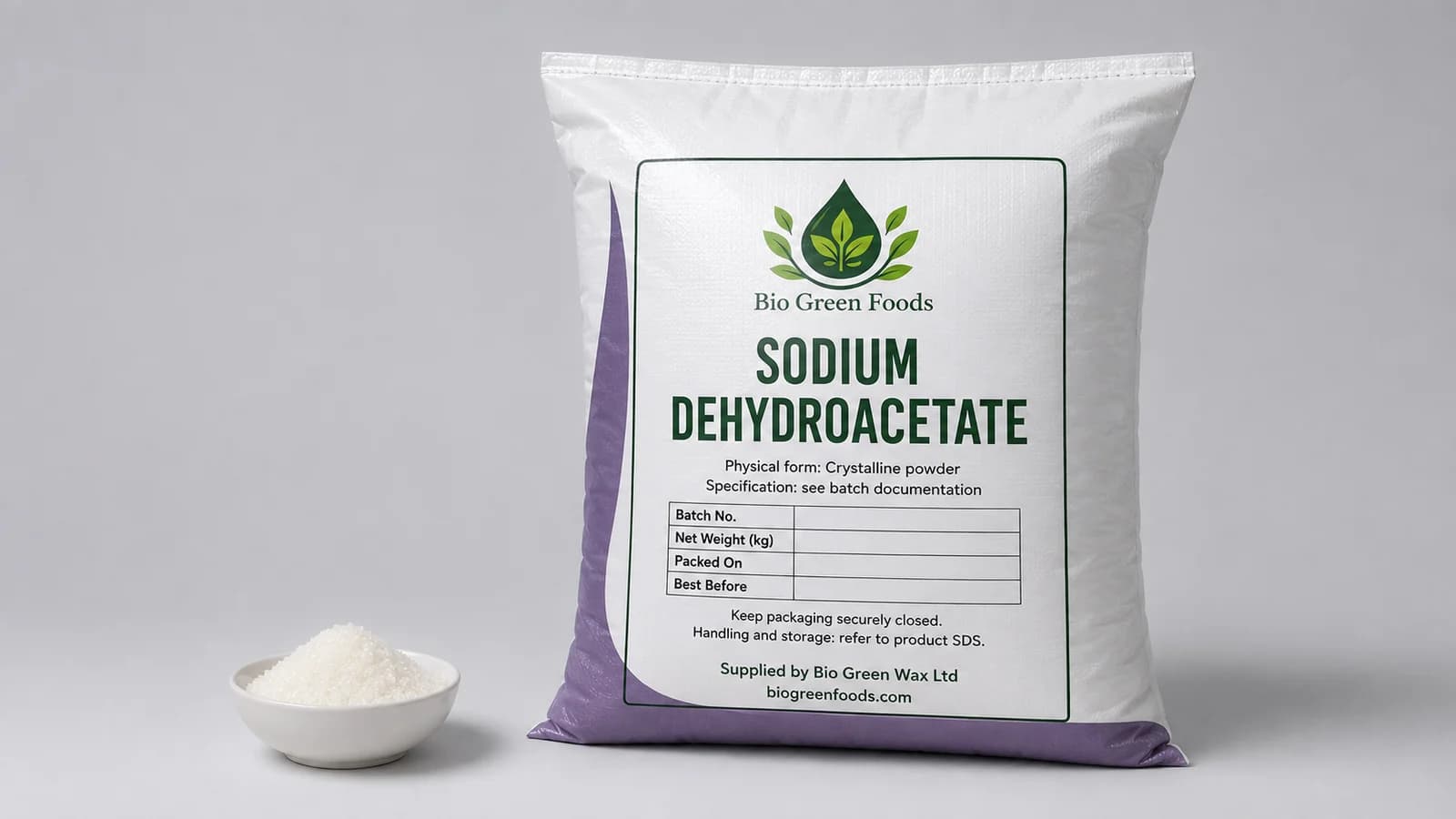
Sodium Dehydroacetate
Sodium dehydroacetate (E266, CAS 4418-26-2) is a broad-spectrum antimicrobial that, unlike benzoate and sorbate, stays active at near-neutral pH. Its permitted status in food differs sharply between markets and must be confirmed before use.
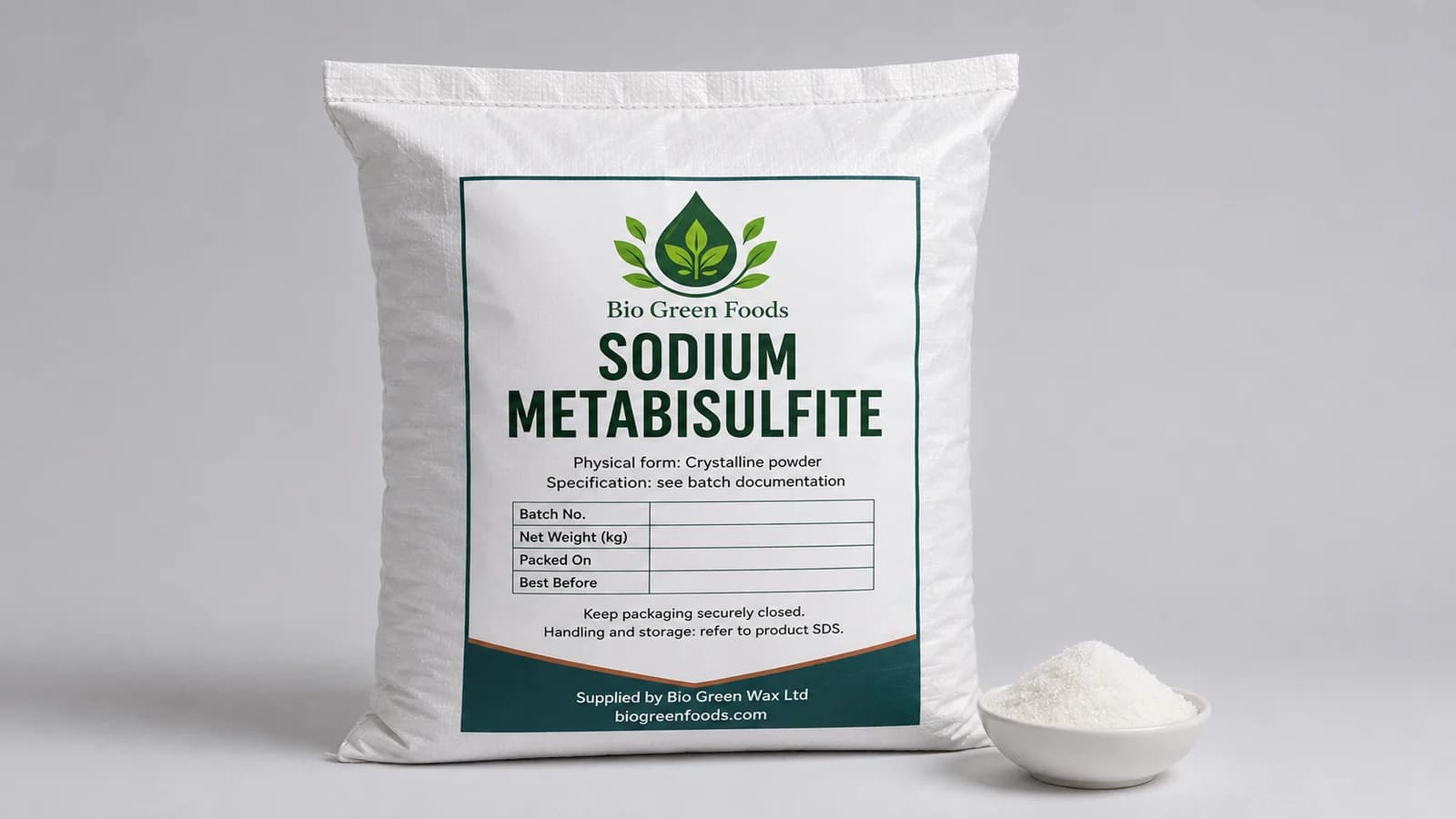
Sodium Metabisulfite
Sodium metabisulfite (E223, CAS 7681-57-4) releases sulphur dioxide in solution, which acts as an antioxidant, antimicrobial and anti-browning agent. Residual SO2 above 10 mg/kg must be declared, as sulphites are a recognised allergen.
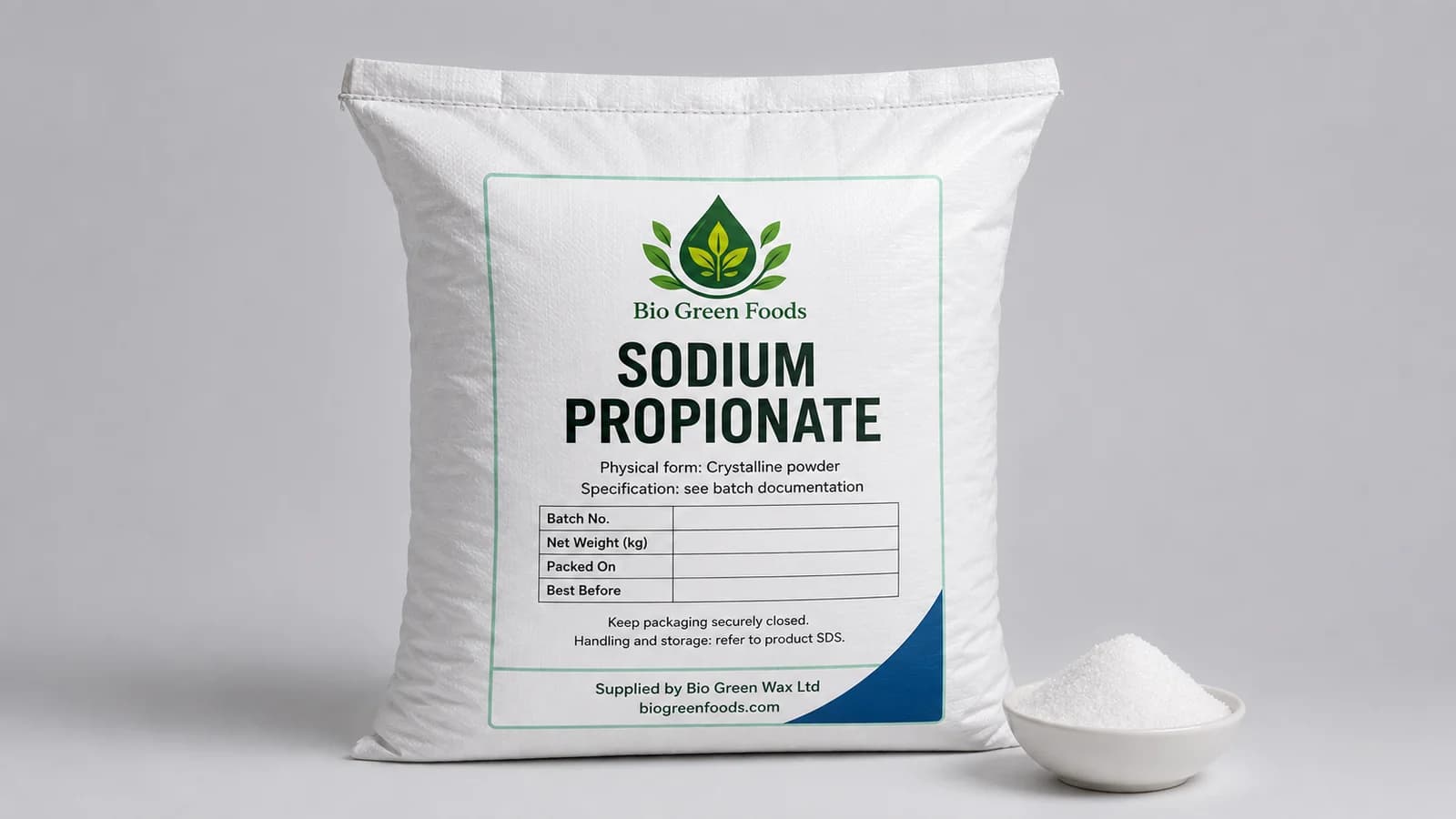
Sodium Propionate
Sodium propionate (E281, CAS 137-40-6) is the sodium salt of propionic acid, used as a mould and rope inhibitor where the calcium form would interfere. In chemically leavened baking it is preferred, because added calcium disrupts the leavening reaction.
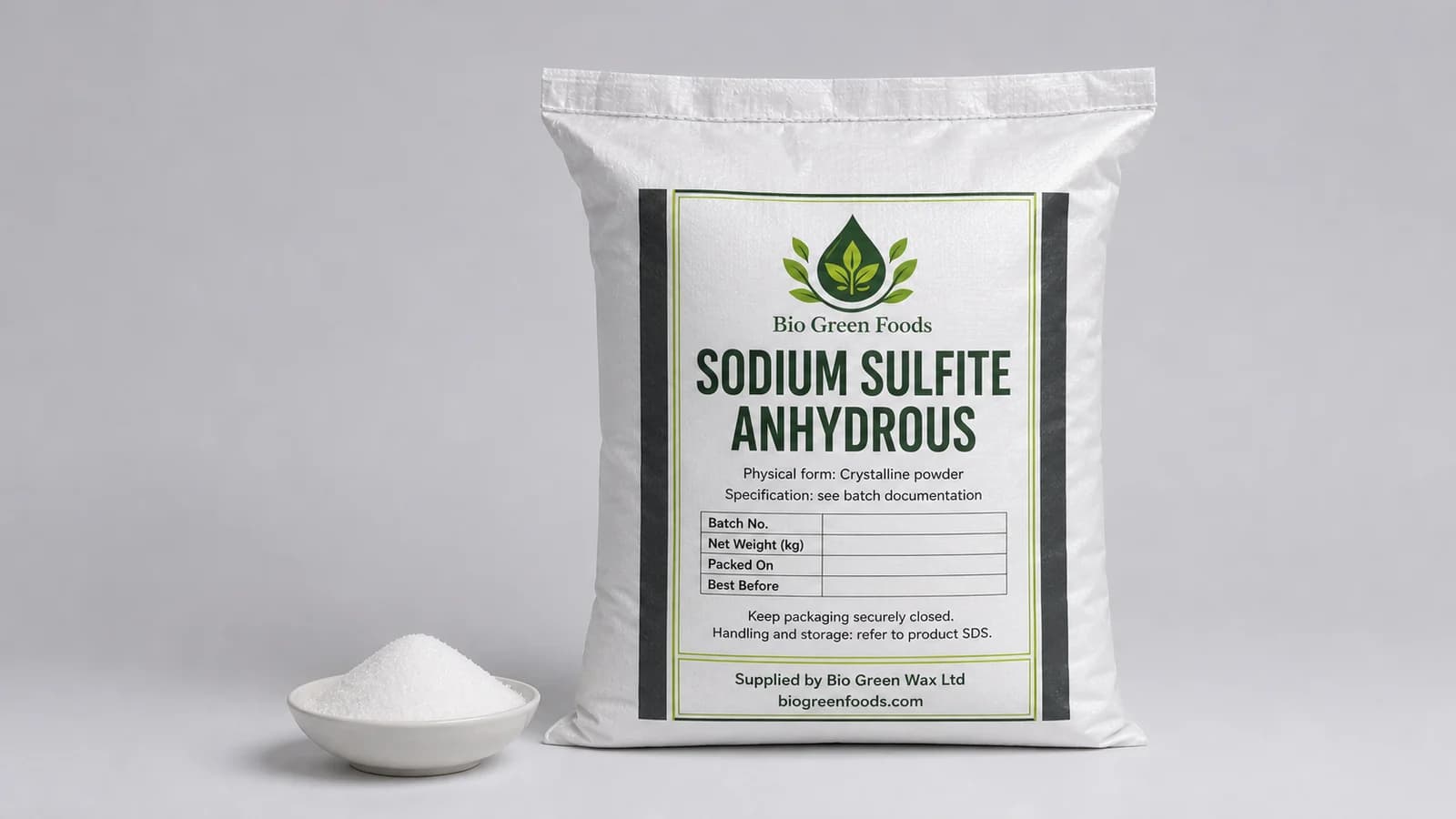
Sodium Sulfite Anhydrous
Sodium sulfite anhydrous (E221, CAS 7757-83-7) is a sulphiting agent supplied as a white powder. It scavenges oxygen and inhibits browning, and like all sulphites it must be declared as an allergen above 10 mg/kg as SO2.
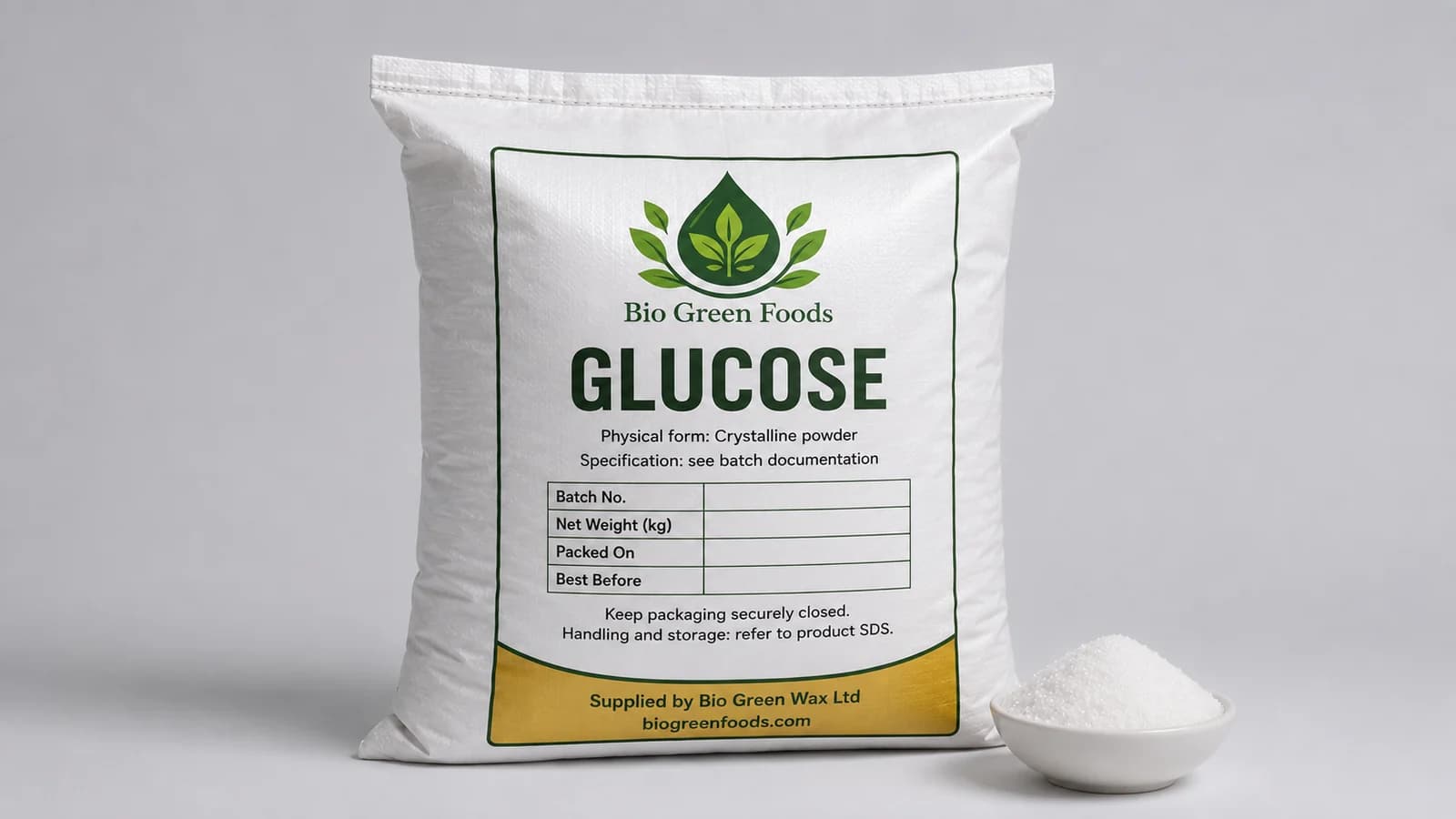
Glucose
Glucose, also called dextrose (CAS 50-99-7), is the simple sugar obtained by fully hydrolysing starch. It is about 70 percent as sweet as sucrose, browns readily in baking, and lowers freezing point more than sucrose at equal weight.
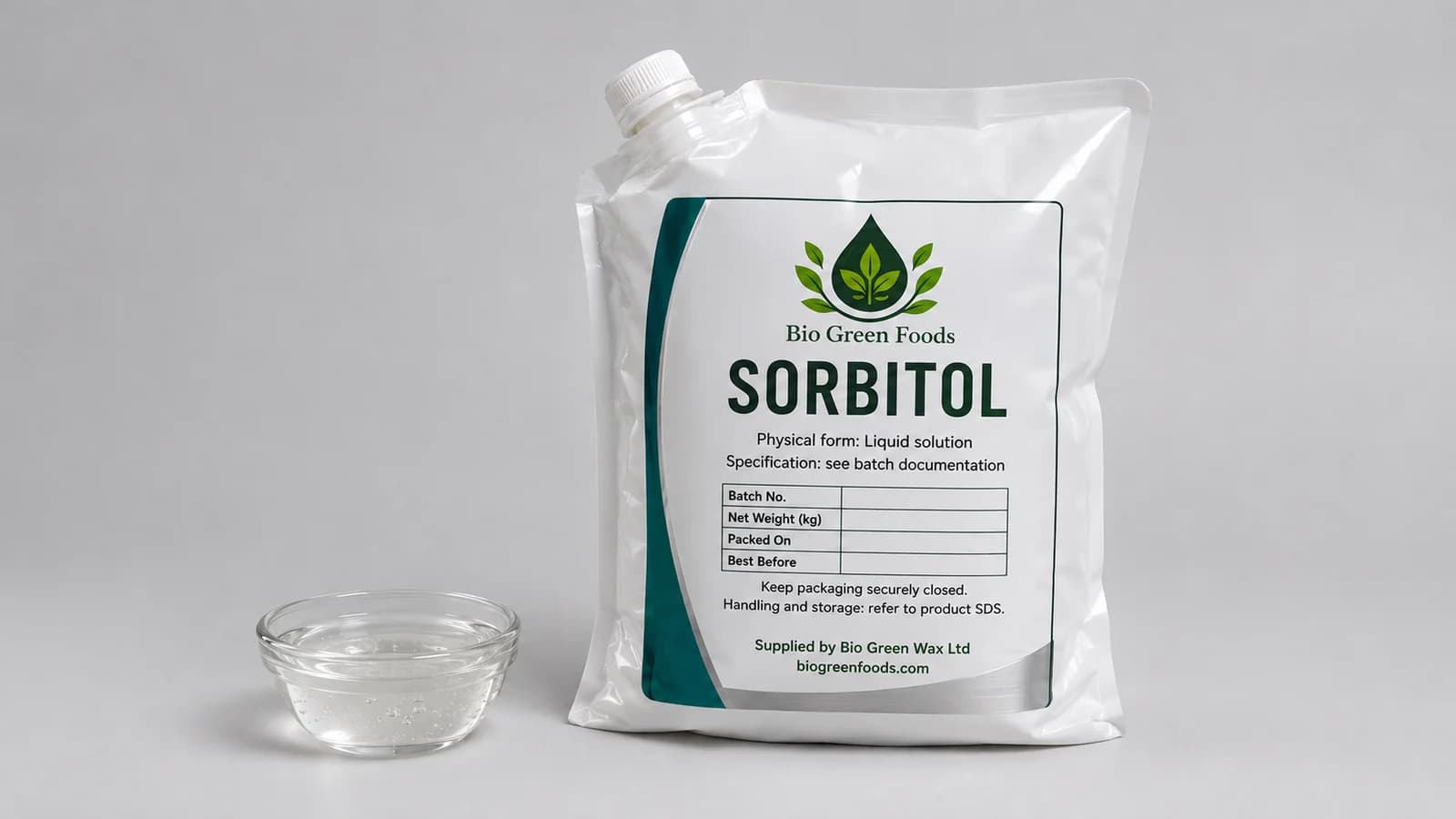
Sorbitol
Sorbitol liquid (E420ii, CAS 50-70-4) is a 70 percent solution of the six-carbon sugar alcohol. Strongly hygroscopic, it is used less as a sweetener than as a humectant, holding moisture in confectionery, baked goods and toothpaste.
Start with the recipe and the market
- Finished food, target function and process conditions
- Required grade, physical form and critical limits
- Destination market and permitted-use requirements
- Quantity, packaging and delivery destination
Confirm the evidence before ordering
Food-grade identity alone does not establish permission for every food or country. Confirm permitted use, limits and labelling requirements for the intended market. Certification availability must be checked for the nominated product and manufacturing site.
Product illustrations show representative material and packaging. The quotation confirms the actual source, grade, pack size and labelling.
Review documentation