
Bio Green Foods / Food Ingredients & Additives
Our Food Ingredients
Browse our range of preservatives, acidulants, sweeteners, hydrocolloids and phosphates
Showing 61–80 of 94 products
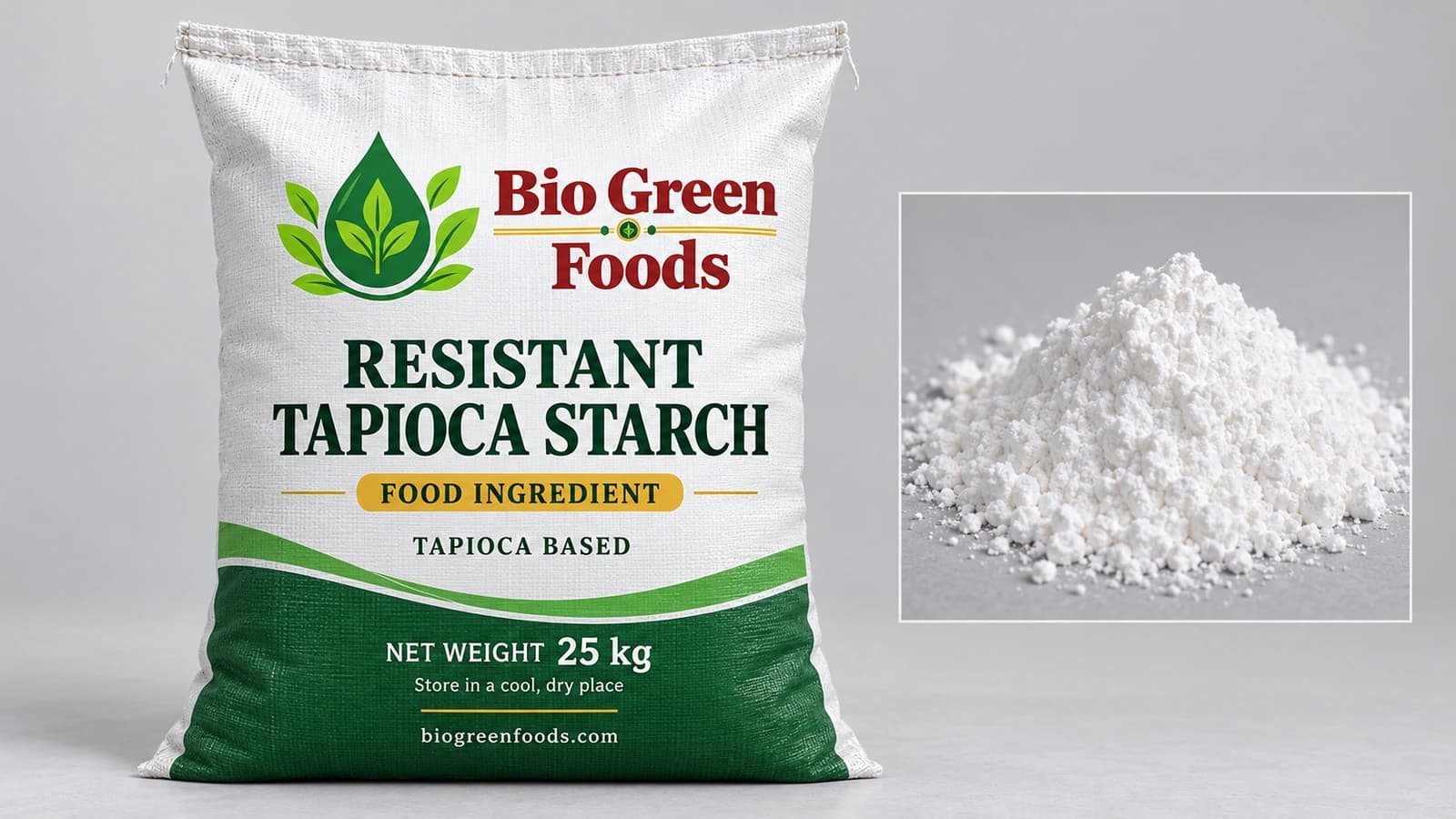
Resistant Tapioca Starch
Tapioca starch that passes undigested to the colon and counts as dietary fibre on the label. A white, bland, low-water-binding powder that raises fibre and lowers available carbohydrate without the texture penalty of bran or inulin.
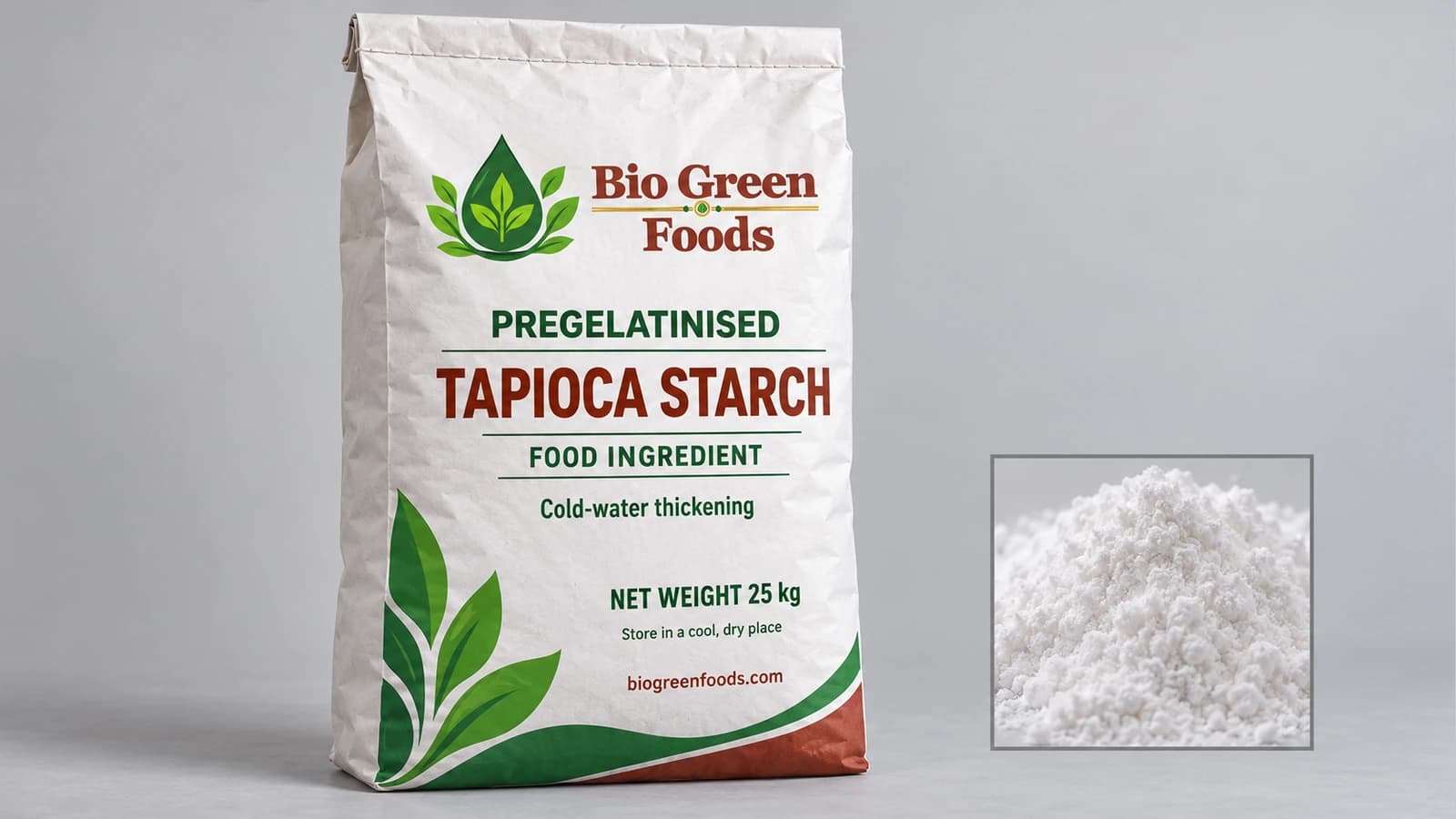
Pregelatinised Tapioca Starch
Tapioca starch that has already been cooked and dried, so it hydrates and thickens in cold water with no heat at all. Supplied at 8 per cent moisture against the 14 per cent of the uncooked grades.
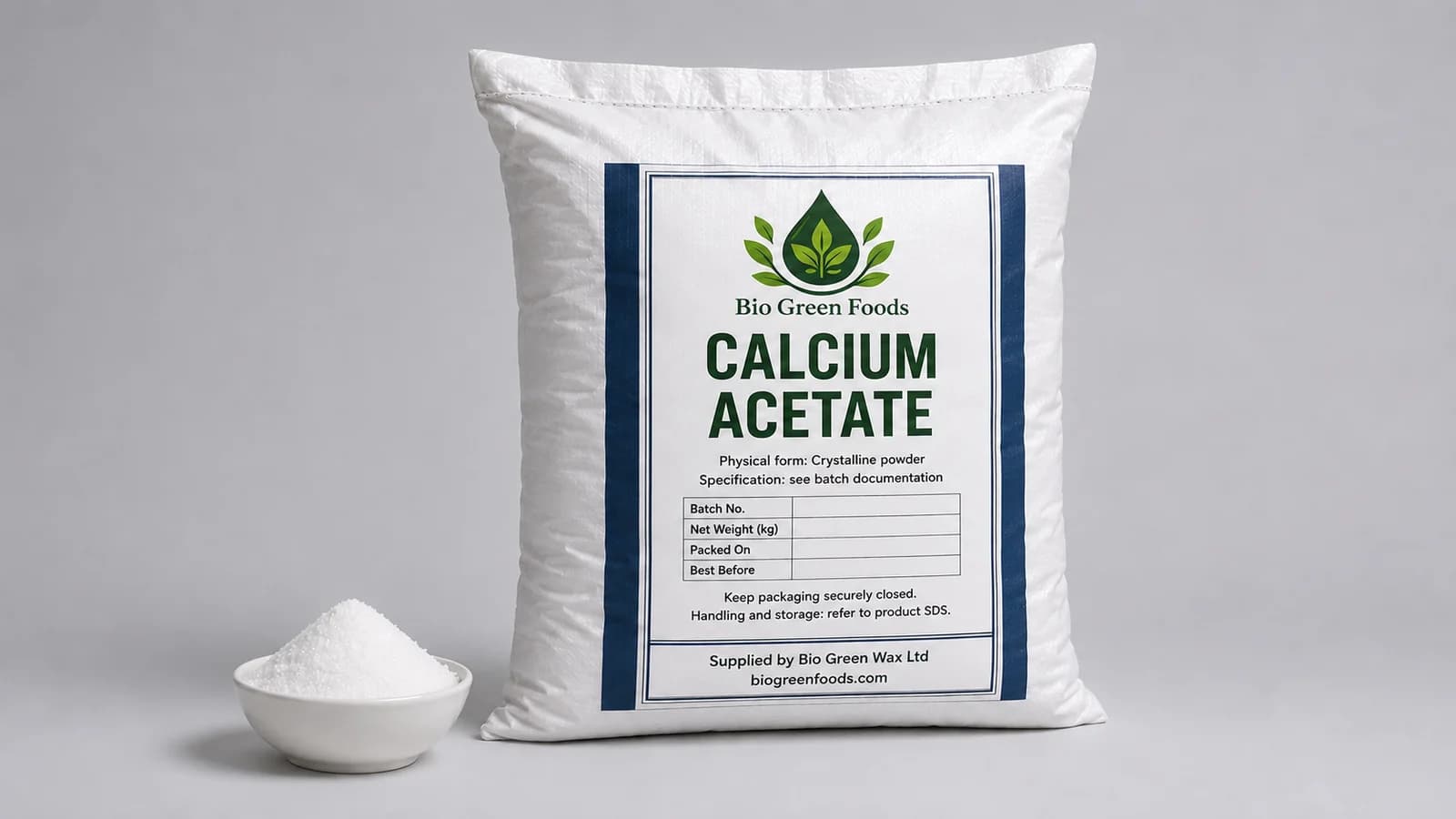
Calcium Acetate
Calcium acetate (E263, CAS 62-54-4) is the calcium salt of acetic acid, a white hygroscopic powder. In food it works on two fronts at once: it inhibits mould and rope in bread while contributing calcium and firming plant tissue.
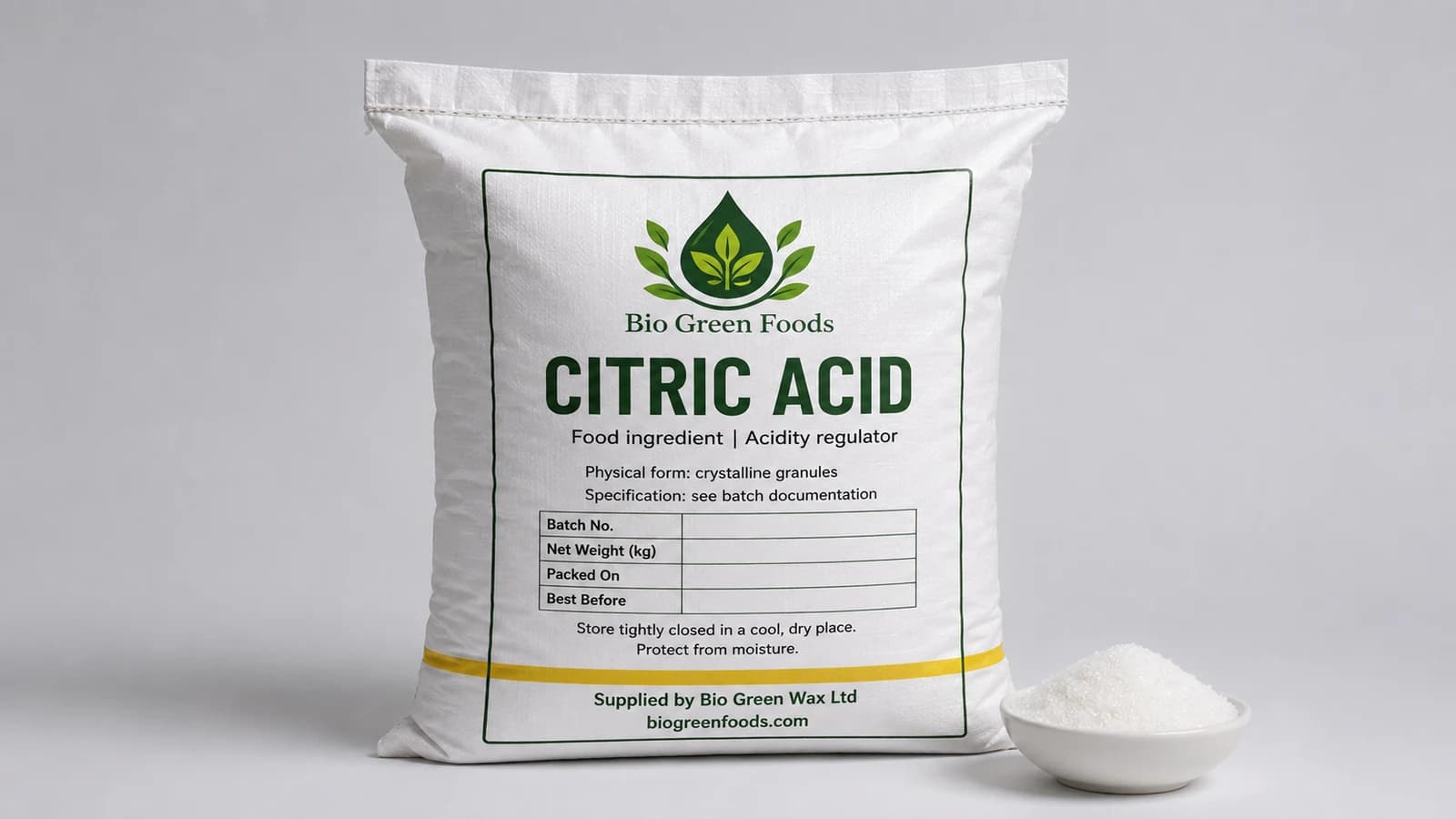
Citric Acid
Citric acid (E330, CAS 77-92-9) is the most widely used food acidulant in the world. Produced by fermenting sugar with Aspergillus niger, it provides a clean sour taste, controls pH and sequesters metal ions that would otherwise spoil flavour and colour.
Potassium Acetate
Potassium acetate (E261, CAS 127-08-2) is the potassium salt of acetic acid, a white deliquescent solid. It buffers acidity and inhibits microbial growth while adding potassium rather than sodium, which suits salt-reduction reformulation.
Potassium Carbonate
Potassium carbonate (E501i, CAS 584-08-7) is a strongly alkaline white salt, historically called potash. In food it is used where alkalinity itself is the objective: dutching cocoa, making ramen noodles springy, and speeding the drying of grapes.
Sodium Acetate
Sodium acetate (E262i, CAS 127-09-3) is the sodium salt of acetic acid. Together with its diacetate form it provides the vinegar note in salt and vinegar seasoning and is a standard antimicrobial in ready-to-eat meat.
Sodium Carbonate (Soda Ash)
Sodium carbonate (E500i, CAS 497-19-8), commonly called soda ash, is considerably more alkaline than bicarbonate. In food it is used for alkaline treatment rather than leavening, notably in noodle making and cocoa processing.
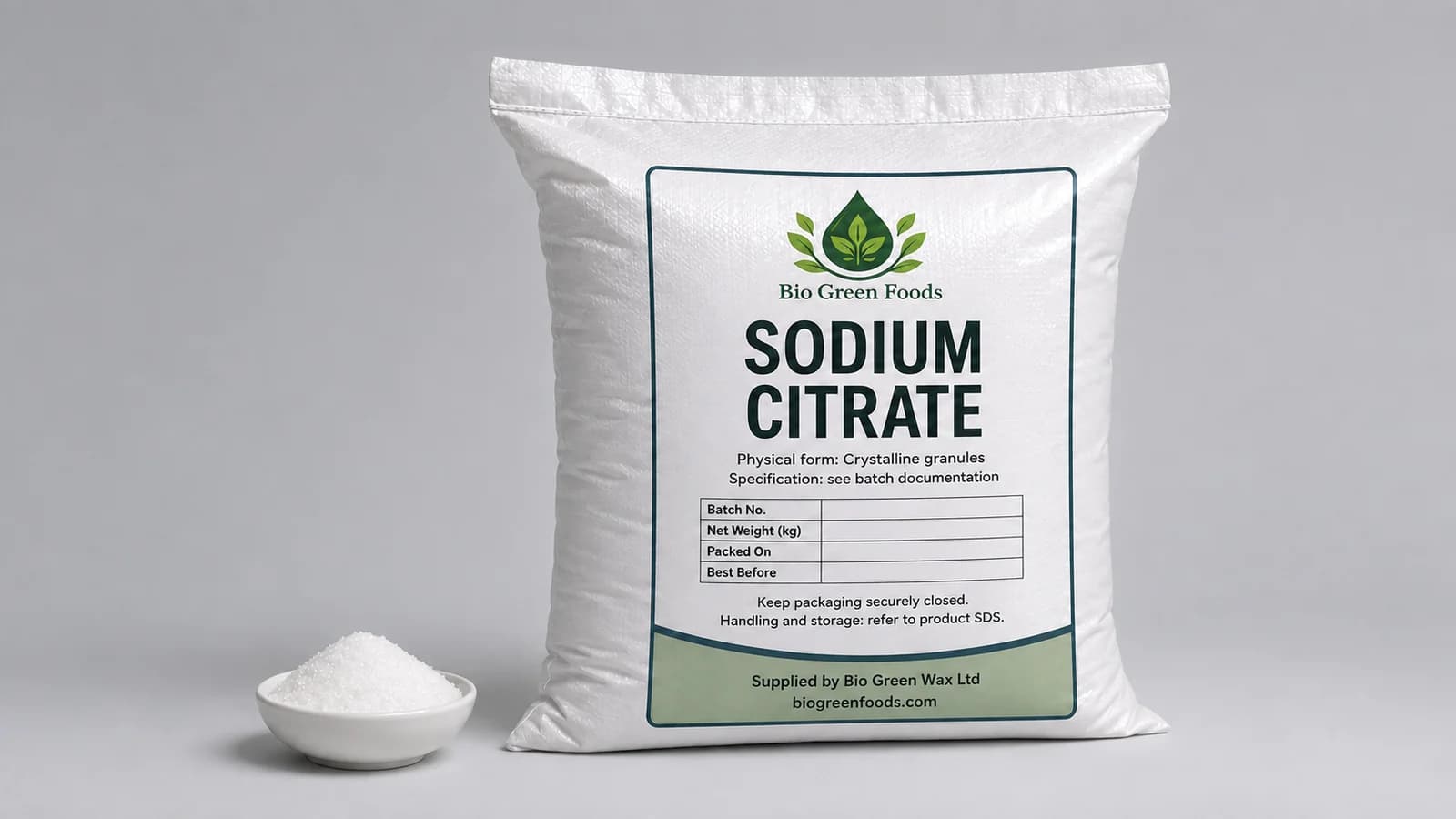
Sodium Citrate
Sodium citrate (E331, CAS 68-04-2) is the sodium salt of citric acid, used as a buffer, sequestrant and emulsifying salt. It is the ingredient that makes a smooth, non-splitting cheese sauce possible from ordinary hard cheese.
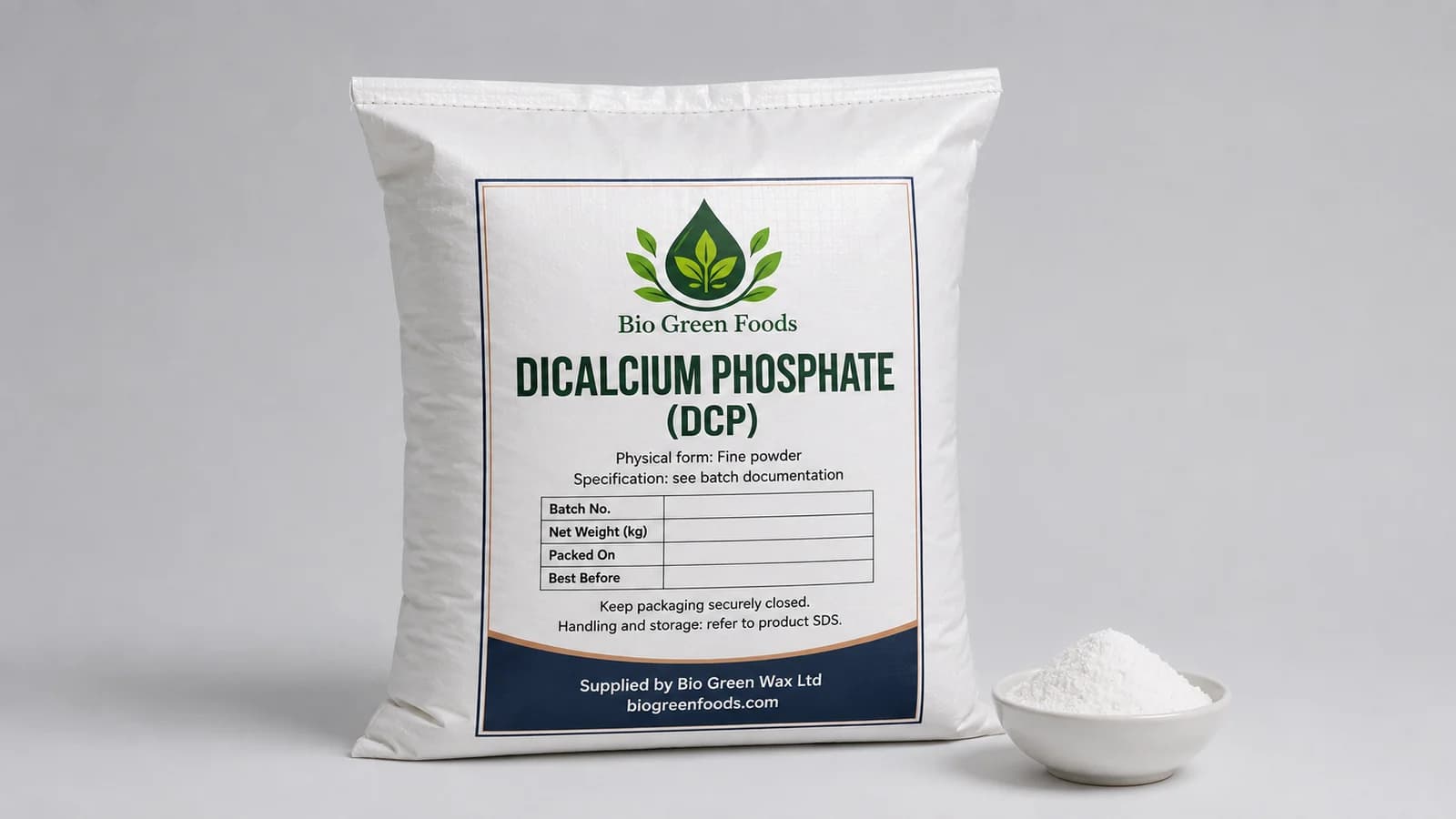
Dicalcium Phosphate (DCP)
Dicalcium phosphate (E341ii, CAS 7757-93-9) is calcium hydrogen phosphate, a white insoluble powder. It is both a calcium and phosphorus fortificant and a slow-acting leavening acid that releases gas late, during baking rather than mixing.
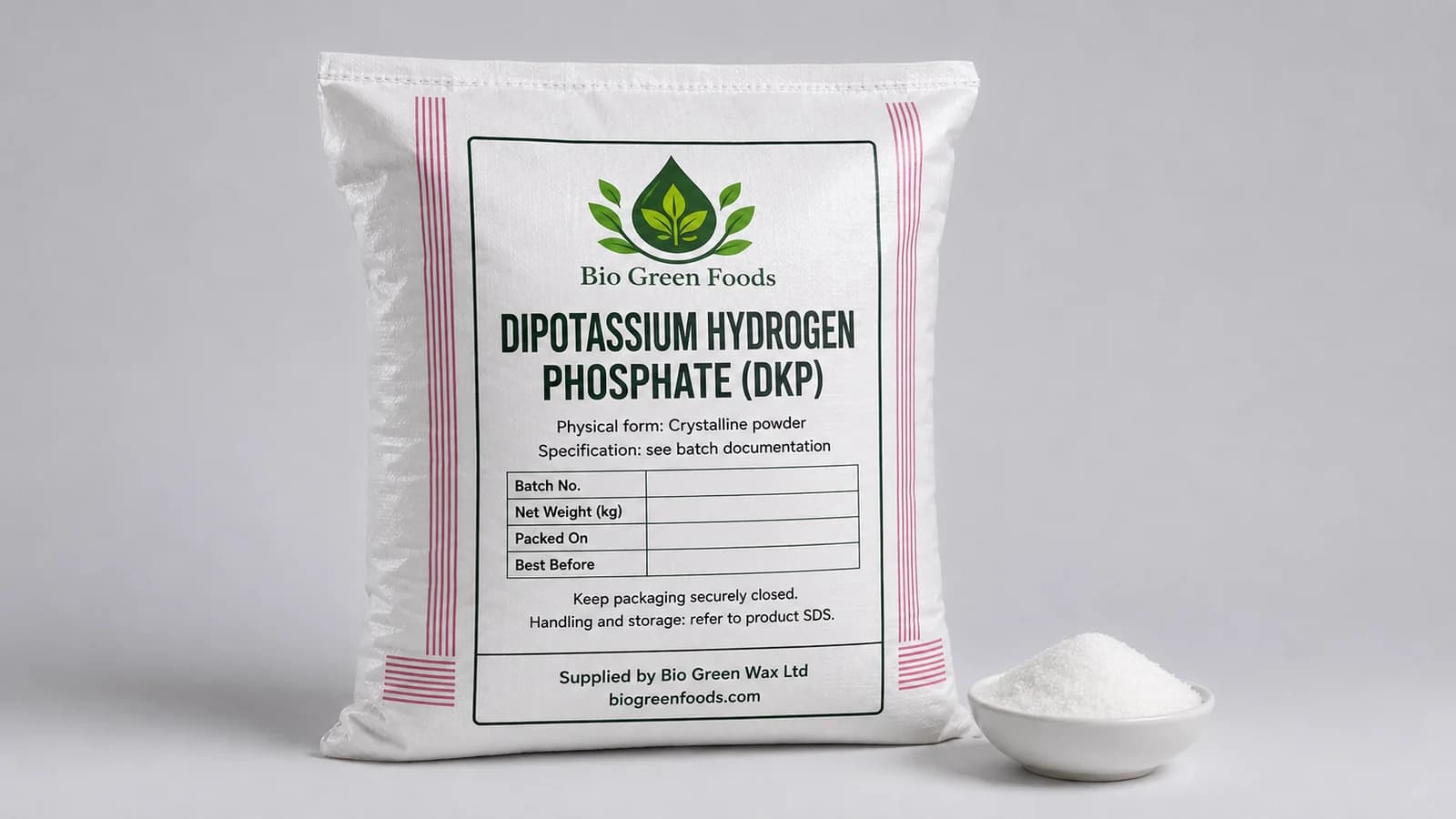
Dipotassium Hydrogen Phosphate (DKP)
Dipotassium hydrogen phosphate (E340ii, CAS 7758-11-4) is an alkaline buffering salt. Its best-known job is stopping non-dairy creamer from feathering when it hits hot coffee, by holding the pH above the point where the proteins curdle.
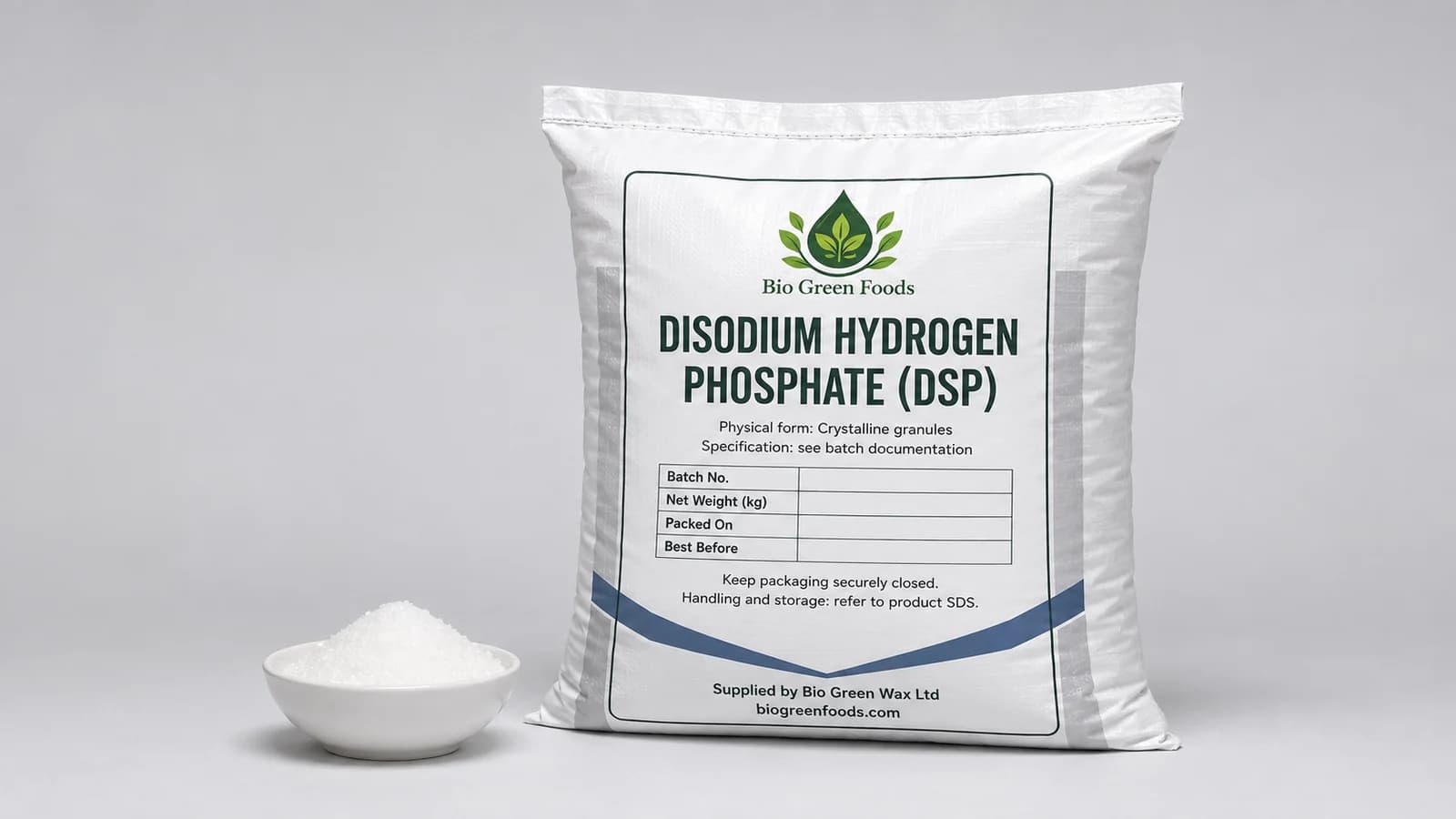
Disodium Hydrogen Phosphate (DSP)
Disodium hydrogen phosphate (E339ii, CAS 7558-79-4) is an alkaline phosphate buffer and emulsifying salt. In processed cheese it releases casein from its calcium bonds, which is what lets the cheese melt smoothly instead of separating into oil and curd.
Maltodextrin
Maltodextrin (CAS 9050-36-6) is starch hydrolysed only partway, to a dextrose equivalent below 20. It is bland rather than sweet, dissolves readily and is used as a bulking agent, carrier and fat replacer rather than as a sugar.
Sorbitol Powder
Sorbitol powder (E420i, CAS 50-70-4) is the crystalline form of the same sugar alcohol, used where a dry, direct-compressible bulk sweetener is needed. Unlike the liquid grade it is comparatively non-hygroscopic in the crystalline state.
Potassium Dihydrogen Phosphate (MKP)
Potassium dihydrogen phosphate (E340i, CAS 7778-77-0) is the acidic potassium phosphate, giving a solution near pH 4.5. It is used as a buffer, a mineral source and a fermentation nutrient where sodium must be avoided.
Sodium Dihydrogen Phosphate (MSP)
Sodium dihydrogen phosphate (E339i, CAS 7558-80-7) is the acidic sodium phosphate, giving a solution near pH 4.5. It is used as a buffer, a sequestrant and an acidulant, and in meat processing to help retain moisture.
Sodium Hexametaphosphate (SHMP)
Sodium hexametaphosphate (E452i, CAS 10124-56-8) is a glassy polyphosphate that binds metal ions exceptionally strongly. It sequesters calcium in hard water, holds moisture in meat and seafood, and prevents mineral precipitation in beverages.
Tetrasodium Pyrophosphate (TSPP)
Tetrasodium pyrophosphate (E450iii, CAS 7722-88-5) is an alkaline condensed phosphate. It thickens instant puddings without heat, binds metal ions, and improves water retention and texture in meat and seafood.
Tricalcium Phosphate (TCP)
Tricalcium phosphate (E341iii, CAS 7758-87-4) is a white, practically insoluble calcium salt. That insolubility makes it both a taste-neutral calcium fortificant and one of the most effective anticaking agents for powders and table salt.
Gelatine
Gelatine (E441, CAS 9000-70-8) is partially hydrolysed collagen from animal skin and bone. It is graded by Bloom strength, and its melting point just below body temperature is what gives gelled products their distinctive melt-in-the-mouth release.
Start with the recipe and the market
- Finished food, target function and process conditions
- Required grade, physical form and critical limits
- Destination market and permitted-use requirements
- Quantity, packaging and delivery destination
Confirm the evidence before ordering
Food-grade identity alone does not establish permission for every food or country. Confirm permitted use, limits and labelling requirements for the intended market. Certification availability must be checked for the nominated product and manufacturing site.
Product illustrations show representative material and packaging. The quotation confirms the actual source, grade, pack size and labelling.
Review documentation