Acetylated Oxidised Starch (E1451)
About This Product
Acetylated oxidised starch is tapioca starch that has first been oxidised with sodium hypochlorite and then esterified with acetic anhydride. It carries the additive number E1451, INS 1451, with acetyl groups limited to 2.5 per cent. It is the least familiar grade in this range and the one most often overlooked, because it is usually described as a combination when it is better understood as a specialist.
The oxidation step does what it does in E1404: it cleaves the chain, drops viscosity sharply and introduces carboxyl groups that give adhesion and suppress retrogradation. The acetylation step adds stabilisation on top, further blocking amylose re-association and improving clarity and freeze-thaw behaviour. The result is a starch that can be cooked at high solids and remain fluid, sets to a clear film, sticks firmly to protein and cellulose, and then holds all of that through refrigeration rather than clouding and cracking.
That combination is specific. A plain oxidised starch is an excellent adhesive but will stiffen and lose clarity in a chilled product. A plain acetylated starch stays clear in the cold but is far too viscous to apply at the solids a coating line needs. E1451 is the grade for applications that need both, and it is worth specifying rather than compromising on one of the single-modified options.
In practice that means coating and glazing systems applied at high solids and then chilled or frozen: batter and breading for frozen fried products, where adhesion must survive both the fryer and the freezer; clear glazes on chilled bakery and confectionery; jelly and gum confectionery deposited hot at high solids and then cooled; and film-forming carriers in encapsulation. It is also used as a binder in chilled and frozen meat preparations.
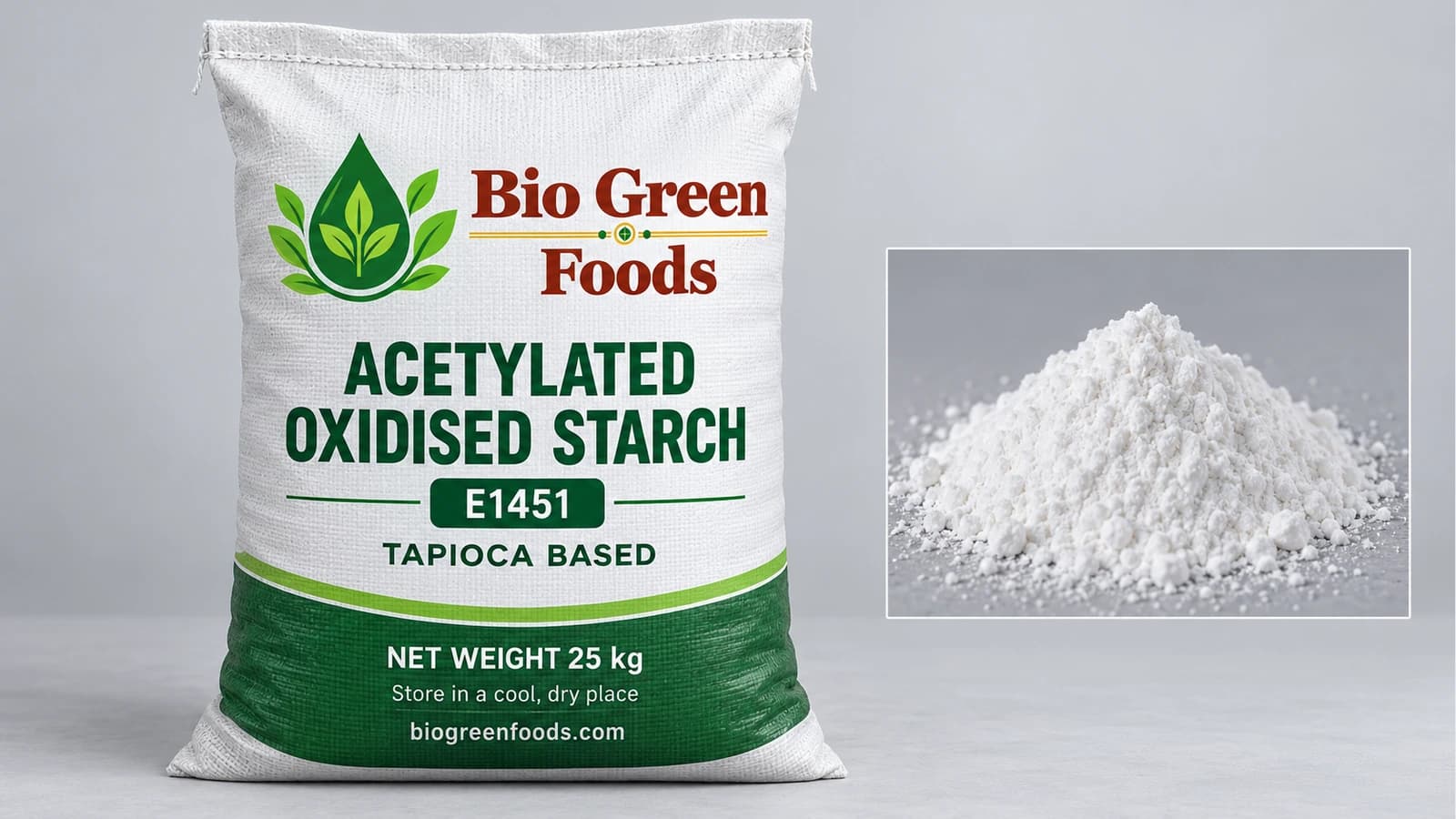
Bio Green Foods supplies acetylated oxidised starch, E1451, in 25 kg bags and jumbo bags. Carboxyl and acetyl content, viscosity at working solids, film strength, clarity and residual chlorine are confirmed on the agreed specification and on the batch certificate of analysis. It is gluten free and non-GM.
Specifications
Applications
Packaging Options
- 25 kg bag
- Jumbo bag
Indicative price: $0.45–1.40/kg
Indicative bulk guide only. Prices are market-linked and updated regularly - please request a quote for current pricing and volume rates.


Start with the recipe and the market
- Finished food, target function and process conditions
- Required grade, physical form and critical limits
- Destination market and permitted-use requirements
- Quantity, packaging and delivery destination
Confirm the evidence before ordering
Food-grade identity alone does not establish permission for every food or country. Confirm permitted use, limits and labelling requirements for the intended market. Certification availability must be checked for the nominated product and manufacturing site.
Product illustrations show representative material and packaging. The quotation confirms the actual source, grade, pack size and labelling.
Review documentation