Preservatives
Sodium Benzoate, Potassium Benzoate, Calcium Propionate, Sodium Propionate, Sodium Metabisulfite.


Certificates of analysis, allergen, GMO and origin statements with every consignment.
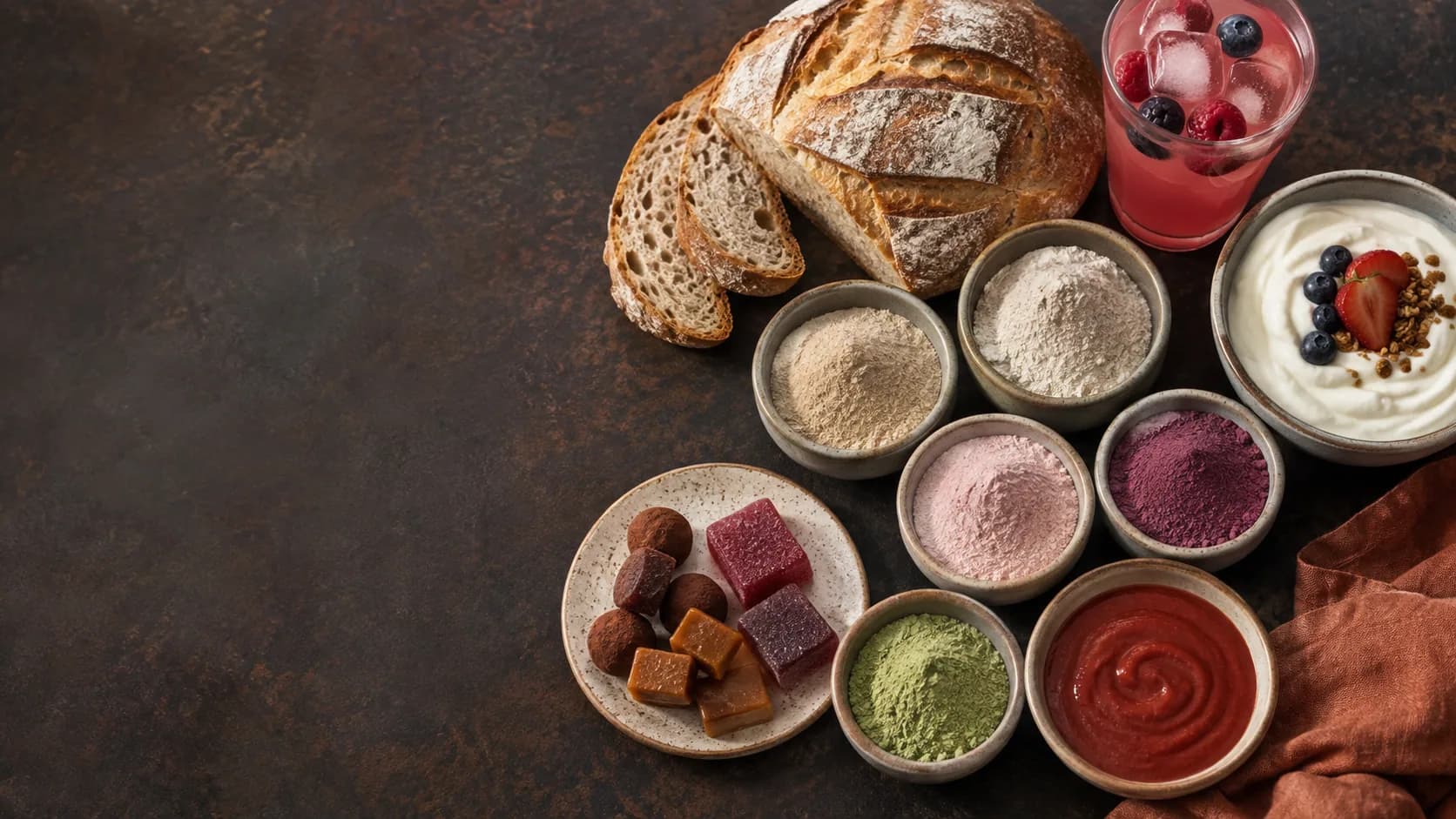
Assay, particle size and microbiological limits agreed against the target your recipe has to hit.
Four product families for food and beverage manufacturers - each leading directly to grades, specifications, documents, samples, and quotation support.
Sodium Benzoate, Potassium Benzoate, Calcium Propionate, Sodium Propionate, Sodium Metabisulfite.
Citric acid, sodium citrate and selected food salts for acidity and buffering.
Glucose, Maltodextrin, Sorbitol Liquid and Powder.
Xanthan Gum, Gelatine, and functional stabiliser systems for texture control.
Share your finished food, target function and processing conditions. Our team reviews available grades and documentation against the formulation brief before you approve a source.
We match preservative system, pH range, solubility, mesh size and dosage constraints to the finished food and its process conditions.
Specifications, certificates of analysis, allergen and GMO statements, origin declarations and available halal or kosher evidence are checked before nomination.
We compare qualified manufacturing sources against the agreed food grade and document set, with change control discussed before a source substitution.
Samples and trial quantities are coordinated against the target recipe before pallet, container or liquid bulk supply is scheduled.
A clear 5-step B2B support journey - from product enquiry to grade recommendation, documents, sample evaluation and shipment coordination.
Product, application, quantity and destination.
Grade matching by technical parameters.
COA, SDS/MSDS, TDS and specifications.
Lab evaluation and trial-lot coordination.
Packing, shipment and export support.
Support for technical, procurement, R&D and compliance teams. Availability depends on product, grade, origin and supplier certification status.
Request DocumentsCOA
Batch quality
SDS / MSDS
Safety data
TDS
Technical data
Specification Sheet
Grade details
Origin / Supplier Declaration
Traceability
RSPO / REACH / Halal / Kosher where applicable
Where applicable
Ingredient systems selected around the processing, shelf-life and texture requirements of each food category.
Propionates, bicarbonates and phosphates for bakery formulation, leavening and shelf-life evaluation in bread, cake and biscuit production. Start with the finished product, baking conditions, target texture and required shelf life. Leavening and preservation requirements differ between bread, cakes and low-moisture biscuits. Review the selected ingredient in the actual recipe, and agree physical form, packing and permitted use before ordering.
Citric acid, citrates and benzoates for pH control, flavour balance and microbial stability in soft drinks, juices and syrups. Define the drink's acidity, sweetness, clarity and processing conditions before choosing an ingredient. A carbonated soft drink, dairy-style beverage and concentrated syrup may need different buffering or stabilisation systems. Provide the target market and process so grade and permitted-use requirements can be checked.
Phosphates, citrates and hydrocolloids for emulsion stability, mouthfeel and suspension in dairy and plant-based drinks. Share the protein source, thermal process, target texture and mineral requirements. Citrates, phosphates and hydrocolloids are considered against the complete formulation, not as interchangeable solutions. Plant-based claims, allergens and source documents need review for the selected ingredient.
Gelatine, sorbitol, glucose and acidulants for gelling, humectancy, sweetness and controlled water activity. Describe the confectionery format, texture, moisture target and processing method. Syrups, polyols, acidulants and gelatine have different roles in hard sweets, chewy products and gels. Confirm physical form and, for animal-derived ingredients, the required origin and certification documents.
Phosphates, acetates and sulfites for water binding, yield, colour retention and shelf life. Define the raw material, processing step and finished product before considering water-binding, acidity or colour-management ingredients. Additive permissions and labelling depend on the product category and market. The final formulation and dosage require the manufacturer's regulatory review.
Xanthan gum, acidulants and preservatives for viscosity, suspension and ambient stability. Share the target viscosity, acidity, oil phase and filling or heat-treatment conditions. Thickening, suspension and preservation should be evaluated in the finished sauce rather than inferred from an ingredient name. Request the grade's specification and test it under your process conditions.
Ingredients selected by function and formulation
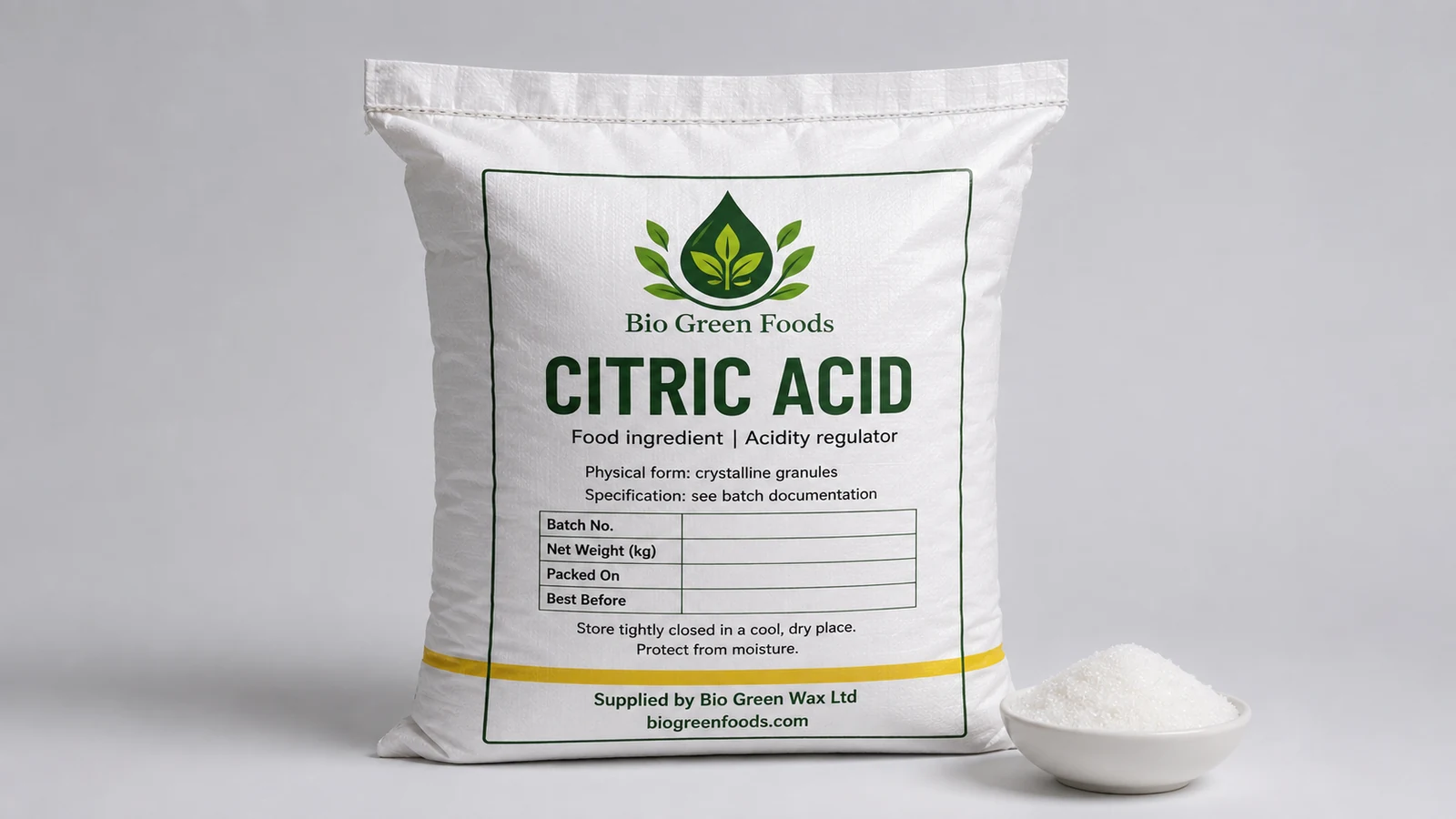
Citric acid (E330, CAS 77-92-9) is the most widely used food acidulant in the world. Produced by fermenting sugar with Aspergillus niger, it provides a clean sour taste, controls pH and sequesters metal ions that would otherwise spoil flavour and colour.
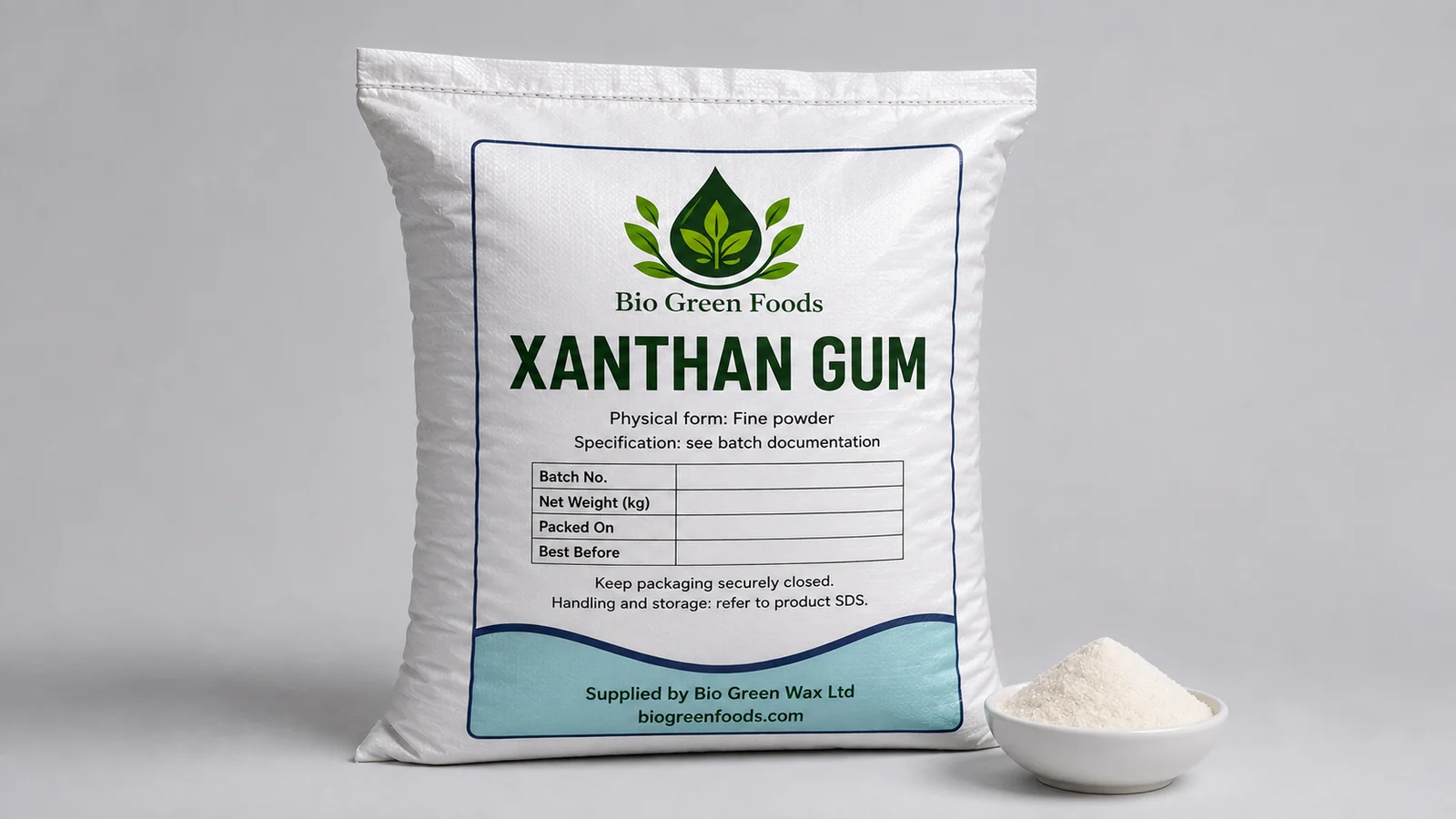
Xanthan gum (E415, CAS 11138-66-2) is a polysaccharide produced by fermenting sugar with Xanthomonas campestris. It is strongly shear-thinning, so a sauce thickened with it pours easily yet holds solids in suspension at rest.
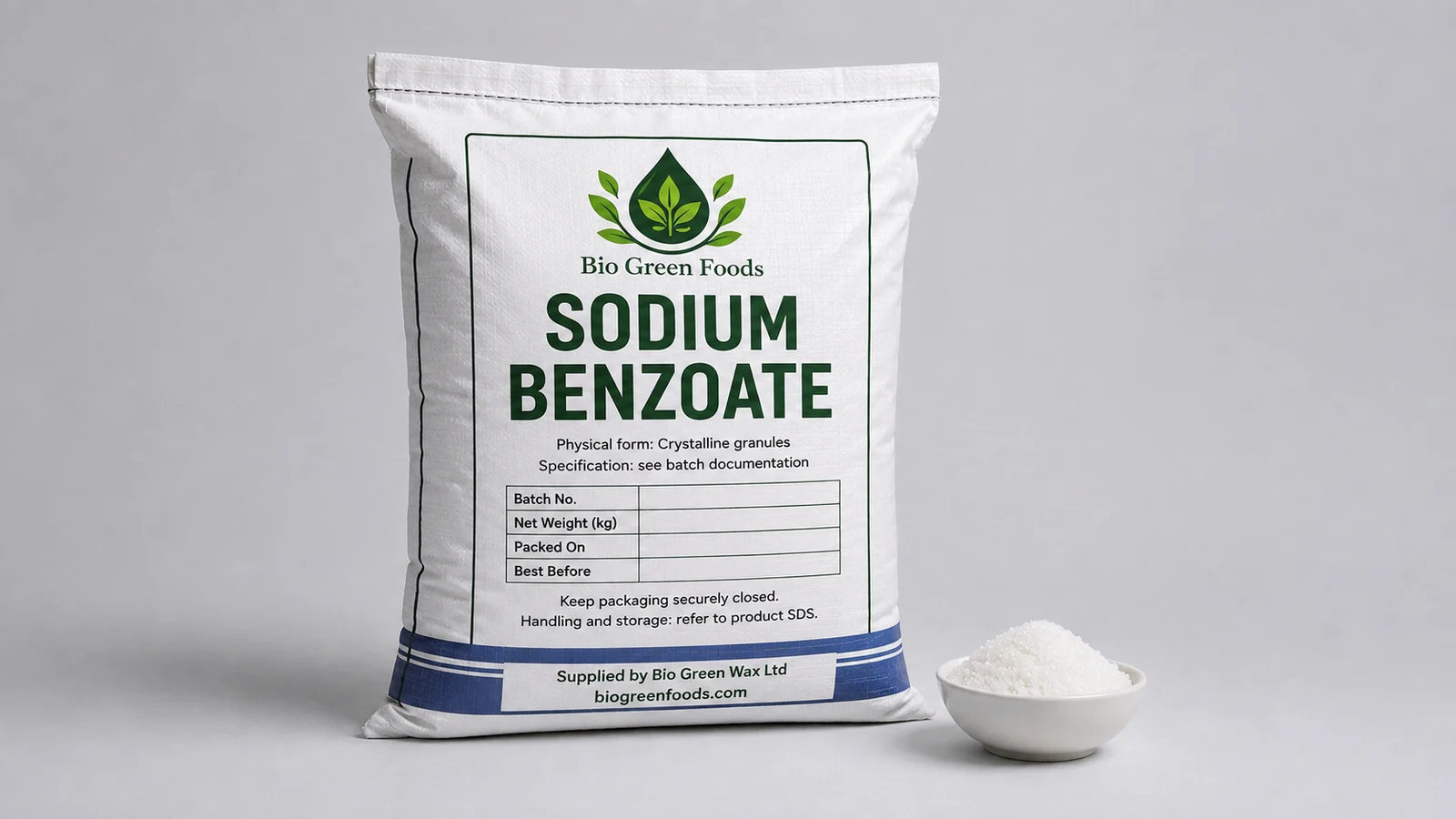
Sodium benzoate (E211, CAS 532-32-1) is the most widely used soft drink preservative in the world. It is far more soluble than benzoic acid, which is why it is the practical choice in water-based products, but it still only works below about pH 4.5.
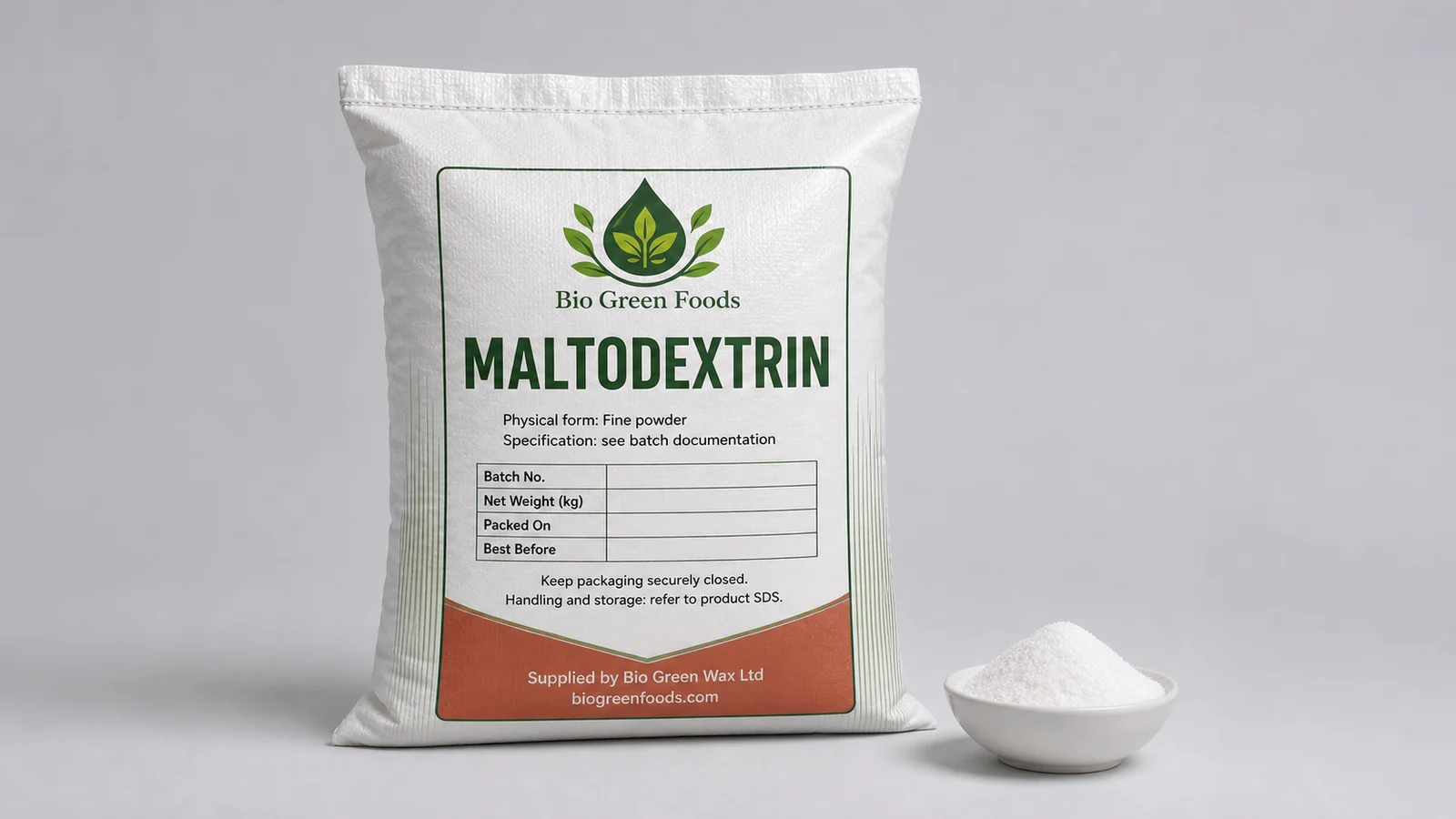
Maltodextrin (CAS 9050-36-6) is starch hydrolysed only partway, to a dextrose equivalent below 20. It is bland rather than sweet, dissolves readily and is used as a bulking agent, carrier and fat replacer rather than as a sugar.
A focused ingredient desk backed by documented specifications, practical trials and international shipment coordination.
Stay updated with company news and industry developments

How to organise ingredient specifications, analysis and source certificates for supplier review without treating every document as interchangeable.

A practical checklist for specifying food ingredients: function, physical form, critical limits, market, documentation and trial requirements.
Share the application, target function, specification, annual volume and destination so our team can nominate a suitable grade.